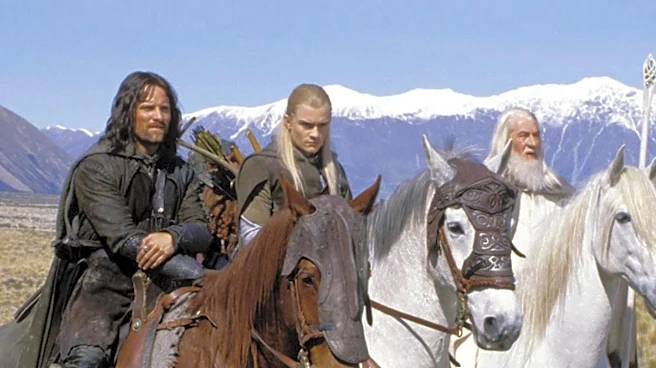









Worldbuilding is a fundamental process in speculative fiction, involving the creation of an imaginary world or setting. This intricate task is crucial for many science fiction and fantasy writers, who aim to develop fictional universes with coherent and realistic characteristics. The scope of worldbuilding can be vast, encompassing everything from a world's history and geography to its ecology, inhabitants, technology, and societal customs. It often
includes the invention of languages, known as conlangs, and constructed cultures, or concultures, which add depth and authenticity to the fictional setting.
The term "world-building" itself has a history, first appearing in the Edinburgh Review in December 1820. It was later used in Arthur Eddington's 1920 work, "Space Time and Gravitation: An Outline of the General Relativity Theory," to describe the thought experiment of imagining hypothetical worlds governed by different physical laws. By the 1960s, the study of fantastic worlds began to focus on contextualizing universes within their mediums and narratives. However, in the 2000s, worldbuilding gained significant popularity in cinema, shifting from creating single characters for multiple stories to crafting entire worlds capable of hosting numerous characters and narratives, as seen in the Marvel Universe.
Methodologies: Top-Down, Bottom-Up, and Inferred Approaches
Worldbuilding can be approached in several ways: top-down, bottom-up, or through a combination of these methods. The official guidelines for "Dungeons & Dragons" refer to these as "outside-in" and "inside-out" approaches, respectively. In the top-down method, the designer begins with a general overview of the world, establishing broad characteristics such as the types of inhabitants, technological level, major geographic features, climate, and history. From these foundational elements, the rest of the world is developed with increasing detail, moving from continents to civilizations, nations, cities, and towns. This approach tends to create a well-integrated world where individual components fit together cohesively.
Conversely, the bottom-up approach focuses on a small, specific part of the world that is essential for the creator's immediate needs. This localized area is then developed in great detail, covering aspects like local geography, culture, social structure, government, politics, commerce, and history. Important local personalities and their relationships are also described. Surrounding areas are then detailed with less specificity, becoming more general as the distance from the initial location increases. This method allows for the world to be enriched later with new regions or concepts, such as fictional currencies or references to fictional books, adding further depth. Terry Pratchett, for instance, suggested that bottom-up worldbuilding, which considers practicalities like water supply and waste disposal, is often more fruitful than the top-down method.
The Role of Narrative and Immersion
From a narrative perspective, the evolution of the story's universe, including natural balances and inter-people relationships, is crucial. This evolution can mirror the development of characters or, conversely, provide a contrast. John Truby emphasizes that the story's universe should be intrinsically linked to the story's concept and thematic line. Building the story's universe, therefore, involves crafting the most suitable setting to express character evolution and support narrative progression. The protagonist's journey within the universe can also carry significant meaning and influence the worldbuilding itself. Truby identifies four ways characters can traverse the story's universe: narrowing (starting broad and then focusing), linear travel (a quest or journey), looping (a quest or journey returning to the starting point), and springboard (moving from one arena to another).
Another technique is "inferred worldbuilding," which provides enough detail about various elements of a universe or location for the reader to extrapolate and construct their own vision of the undescribed details. This method is particularly useful in role-playing games, where specific details might need to be created on a case-by-case basis for the story to function. While this approach allows for almost instantaneous use of the setting with relevant detail, it can also lead to inconsistencies. Combining top-down and bottom-up approaches can help leverage the advantages of both, depending on the desired outcome. Ultimately, for J.R.R. Tolkien, the purpose of worldbuilding was to create immersion, or "enchantment," where descriptions of the universe could be entirely disconnected from the story and narrative, allowing the world to be explored for its own sake.