
The original Polaroid Corporation, a company once synonymous with instant photography, faced a significant turning point in its history when it filed for federal Chapter 11 bankruptcy protection on October
11, 2001. This event marked the end of an era for the company that had been founded in 1937 by Edwin H. Land. The bankruptcy proceedings quickly led to a restructuring of the company's assets and brand, setting the stage for a complex series of ownership changes and a redefinition of what the Polaroid name would represent in the years that followed.
The Immediate Aftermath: Sale and Rebranding
Within ten months of filing for bankruptcy, the majority of Polaroid's business operations, including the valuable "Polaroid" name itself and its non-bankrupt foreign subsidiaries, were sold to Bank One's One Equity Partners (OEP). This acquisition led to the formation of OEP Imaging Corporation, which subsequently changed its name to Polaroid Holding Company (PHC). Despite being a new entity, PHC chose to operate under the familiar name of its bankrupt predecessor, Polaroid Corporation, aiming to leverage the established brand recognition. This initial sale and rebranding effort highlighted the enduring value of the Polaroid name, even as the original corporate structure dissolved.
The original company, which had its headquarters in Cambridge, Massachusetts, and later Minnetonka, Minnesota, was officially listed as defunct in 2001 due to bankruptcy and liquidation. Its fate was to have its brand sold to One Equity Partners, and the company changed its name to Primary PDC, Inc. However, the successor company, Polaroid B.V., continued the legacy. The company's peak employment was 21,000 in 1978, and its peak revenue reached $3 billion in 1991, showcasing the scale of its operations before its decline.
A Shifting Landscape: Multiple Owners and New Ventures
Following the initial sale to OEP, the Polaroid brand and its assets embarked on a journey through multiple ownership changes. This period saw various entities acquiring and managing the iconic name, each attempting to navigate the evolving consumer electronics market. The brand's journey eventually led to its acquisition by Polish billionaire Wiaczesław Smołokowski in 2017. This particular acquisition proved to be a pivotal moment for the brand's resurgence in the instant photography space.
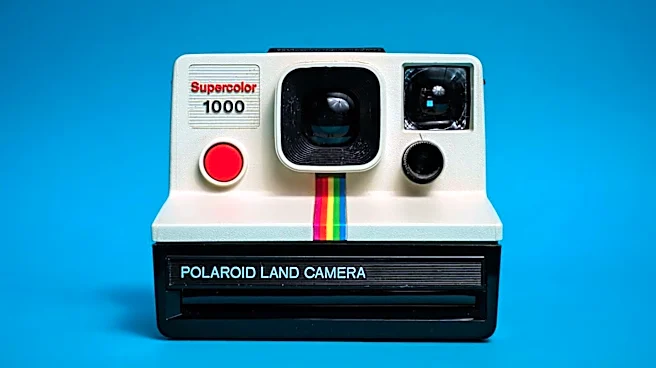
This 2017 acquisition by Smołokowski was instrumental in allowing the Impossible Project to rebrand. The Impossible Project had already been producing instant films for older Polaroid cameras since 2008, demonstrating a continued demand for the classic instant photography experience. With the acquisition, the Impossible Project first rebranded as Polaroid Originals in 2017, and then eventually simplified its name to just Polaroid in 2020. This move signaled a return to the brand's roots in instant film, while also embracing a modern identity. Beyond instant cameras and film, the Polaroid brand has also been licensed for other products, such as LCD televisions and DVD players, developed and released by various licensees globally since the original company's downfall, illustrating the broad appeal and recognition of the Polaroid name across different consumer electronics sectors.
The Legacy of Decline and Reinvention
The original Polaroid Corporation's decline was influenced by several factors, including the failure of products like the Polavision instant home movie camera in 1977, which arrived as videotape systems gained popularity. This product's poor sales contributed to Edwin Land's resignation after four decades. The company also struggled to adapt to new technologies in the 1980s and 1990s, such as one-hour color film processing, single-use cameras, videotape camcorders, and digital cameras. Although Polaroid was an early manufacturer of digital cameras with the PDC-2000 in 1996, it failed to capture a significant market share. The company also produced scanners, but these lines were discontinued with the 2001 bankruptcy. The sale of its landmark headquarters building for $10 million prior to bankruptcy further underscored its financial difficulties. The journey from bankruptcy to its current iteration as Polaroid, through various owners and strategic rebrandings, highlights a continuous effort to reinvent and adapt the brand in a rapidly changing technological landscape.