





The Professional Golfers' Association of America (PGA of America) stands today as a cornerstone of golf in the United States, an organization with over 30,000 members dedicated to elevating the standards of the profession and fostering growth in the sport. Its establishment in 1916 marked a pivotal moment for golf professionals, who had long been treated as second-class citizens by club members. The true catalyst for this monumental shift was Rodman
Wanamaker, a prominent businessman whose interest in golf, though not as a player, led him to host a crucial luncheon that set the wheels in motion for the creation of the first all-professional golf body in the U.S.
The Wanamaker Luncheon: A Strategic Gathering
The idea for a national association of golf professionals began to take shape on January 17, 1916, during a luncheon hosted by Rodman Wanamaker at his store on Ninth Street and Broadway in New York City. This event was orchestrated by the Taplow Club, an in-store business group within Wanamaker's, led by professional golfer Tom McNamara. McNamara, a talented player and salesman from Brookline, Massachusetts, was deeply concerned with the welfare of club professionals and recognized the opportune moment to unite them.
McNamara successfully convinced Wanamaker that bringing U.S. professionals together would generate advantageous publicity. Wanamaker, engaged in a retail battle with A.G. Spalding & Bros. for golf ball sales, enthusiastically endorsed the initiative. He tasked McNamara with arranging the luncheon, inviting influential amateur and professional golf leaders from across the country. The guest list for the Monday luncheon, held in Wanamaker's ninth-floor restaurant, included notable figures such as amateur great Francis Ouimet, writer and architect A.W. Tillinghast, and P.C. Pulver, a New York Evening Sun reporter who would later become the first editor of *The Professional Golfer*, now known as *PGA Magazine*. Top American professionals like Alex Smith, James Maiden, Robert White, Jack Mackie, and Alex Pirie, all of whom earned their livelihoods from golf facilities, were also in attendance.
Beyond the Meal: Wanamaker's Contributions and Vision
Rodman Wanamaker's involvement extended far beyond simply hosting a meal. Although he was not a golfer and reportedly never attended the luncheon himself, delegating the details to McNamara, his contributions were foundational. Joseph H. Appel, vice president of Wanamaker's foundation and the luncheon's toastmaster, presented Wanamaker's offer to sponsor a match play championship for professionals, drawing inspiration from Great Britain's News of the World Tournament. Appel also formally introduced the concept of a national association for professionals.
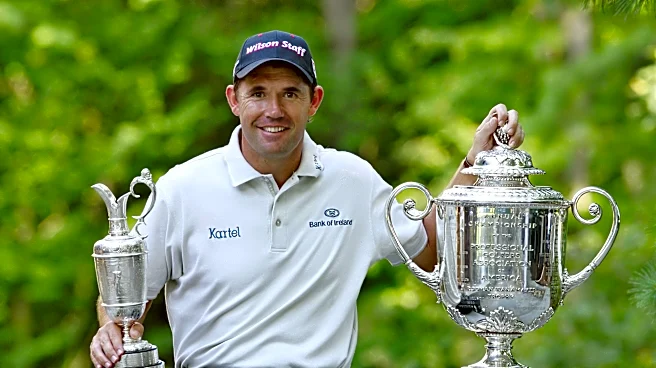
Wanamaker pledged to donate a cup and $2,580 in prize money for this championship, and he ultimately covered the travel expenses for the competitors. This "cup" evolved into the Rodman Wanamaker Trophy, and the tournament became the PGA Championship. The inaugural PGA Championship took place from October 10–14, 1916, at Siwanoy Country Club in Bronxville, New York, and was won by English-born Jim Barnes. Wanamaker's vision was not just about a tournament; he also believed that consolidating professionals would improve their social standing, addressing the long-standing issue of them being treated as second-class citizens by club members.
Forging Independence: The Birth of an Association
The idea of a national association was met with positive reception. During the luncheon, former British PGA Secretary James Hepburn suggested a format for the championship where the 32 lowest finishers in the U.S. Open would be paired for match play, a concept that contrasted with the United States Golf Association's (USGA) medal (stroke) play format. Wanamaker initially requested that the championship proposal be contingent upon approval from the USGA or other governing bodies.
However, A.W. Tillinghast strongly advocated for the professionals' independence, asserting that they should manage their own affairs and competitions separate from the USGA. Tillinghast's argument prevailed, leading to a follow-up organizational meeting planned for the next day at Wanamaker's store. This meeting led to the formation of a seven-person group tasked with drafting tentative bylaws for the new association. This organizational committee, chaired by Hepburn and including Maiden, White, Mackie, Gilbert Nicholls, John "Jack" Hobens, and Herbert Strong—all non-American born—drafted a constitution, seeking assistance from the British PGA. The agenda for these early discussions also focused on giving golf professionals a voice in the organization and staging of tournaments, as well as addressing other employment issues. The culmination of these efforts occurred on April 10, 1916, at the Hotel Martinique in New York City, where the Professional Golfers' Association of America was officially founded, with 78 members elected, including 35 PGA Charter Members, 28 of whom were born outside the U.S.
Early Structure and Evolution
The newly formed PGA of America began with seven PGA Sections: Metropolitan, Middle States, New England, Southeastern, Central, Northwestern, and Pacific. This foundational structure has since expanded significantly, with 41 PGA Sections now operating nationwide. The establishment of these sections was crucial for organizing and representing golf professionals across the vast expanse of the United States, allowing the association to grow its influence and reach. The initial framework laid down by Wanamaker and the founding members provided a robust platform for the PGA to fulfill its mission of elevating the profession and expanding the game of golf, a mission that continues to guide the organization today.