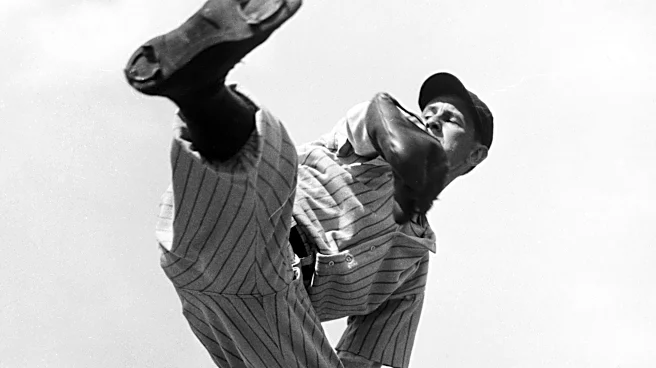


Hal Newhouser, known as "Prince Hal," etched his name into baseball history with a series of remarkable achievements during the 1940s, most notably becoming the first pitcher ever to win the Most Valuable Player (MVP) Award in consecutive years. His dominance during the World War II era, coupled with his continued excellence immediately after, solidified his status as one of the game's premier pitchers. These peak years were characterized by extraordinary
statistical performances, including a rare pitching Triple Crown, which collectively highlight a period of unparalleled individual success in Major League Baseball.
The Historic MVP Seasons of 1944 and 1945
Newhouser's ascent to superstardom began in earnest in 1944. That year, he delivered a phenomenal performance for the Detroit Tigers, securing 29 wins. This outstanding record was a key factor in the Tigers' second-place finish in the American League. His individual brilliance was recognized with his first American League MVP award, a significant honor that marked him as the league's most valuable player. This achievement set the stage for an even more spectacular season to follow.
The 1945 season saw Newhouser reach the pinnacle of his career. He not only repeated as the American League MVP, making him the first pitcher in MLB history to win the award in back-to-back seasons, but he also accomplished the coveted pitching Triple Crown. This meant he led the league in three critical statistical categories: wins, Earned Run Average (ERA), and strikeouts. Beyond these major accolades, Newhouser also topped the league in other significant metrics, including innings pitched, games started, complete games, and shutouts. His exceptional performance was instrumental in leading the Detroit Tigers to a World Series championship, where he personally contributed two victories, including the decisive Game 7.
Sustained Excellence Beyond the Wartime Era
While some critics suggested that Newhouser's wartime success was influenced by the absence of many star players serving in the military, he quickly dispelled such notions. In 1946, with the return of numerous top talents to Major League Baseball, Newhouser continued his dominant pitching. He once again led the league in wins, recording 26 victories, and maintained an impressive 1.94 ERA. This post-war performance demonstrated that his skills were not merely a product of a diluted league but rather a testament to his genuine talent and consistency.
Despite his stellar 1946 season, which included leading the league in two major categories, Newhouser finished second in the AL MVP voting to Ted Williams. Nevertheless, his consistent high-level play ensured that no pitcher won more games in the 1940s than his 170. His career was further celebrated with seven consecutive All-Star selections from 1942 to 1948, a testament to his enduring quality. Newhouser's remarkable run of achievements culminated in his induction into the National Baseball Hall of Fame and Museum in 1992, and the Detroit Tigers retired his number 16 jersey in 1997, cementing his legacy as a true baseball icon.