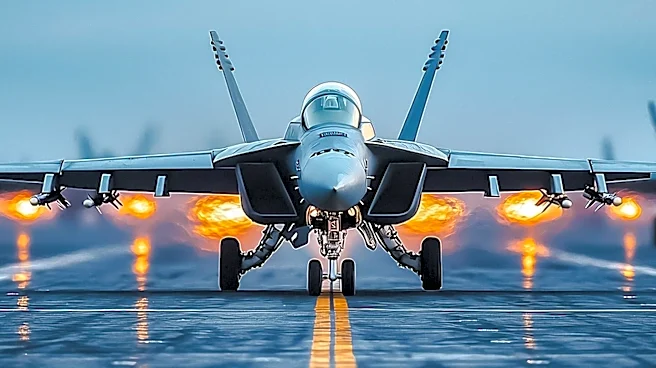






The McDonnell Douglas F/A-18 Hornet, while a cornerstone of U.S. Navy and Marine Corps aviation, also achieved significant international success, being adopted by several air forces worldwide. Its reputation for versatility and reliability made it an attractive option for nations seeking a multirole combat aircraft. These export versions of the Hornet were generally similar to their U.S. counterparts from the same manufacturing period, but often featured
specific adaptations to suit the operational needs and environments of their respective foreign operators. This global adoption underscores the F/A-18's robust design and its ability to meet diverse military requirements beyond carrier-based operations.
International Adoption and Modifications
One of the primary distinctions for export Hornets was the absence of an automatic carrier landing system, as none of the international customers operated aircraft carriers. This modification streamlined the aircraft for land-based operations. The Royal Australian Air Force (RAAF) went a step further, removing the catapult attachment on the nose gear, reflecting their specific operational context. The process for acquiring these aircraft also varied; with the exception of Canada, all export customers procured their Hornets through the U.S. Navy via the U.S. Foreign Military Sales program. In this arrangement, the U.S. Navy acted as the purchasing manager, facilitating the sales without incurring any financial gain or loss.
Canada emerged as the largest Hornet operator outside of the United States, demonstrating the aircraft's appeal to allied nations. The Royal Australian Air Force (RAAF) began operating the F/A-18 in 1984, having purchased 75 A and B variants in 1981 to replace their Dassault Mirage III fighters. The Hornets entered RAAF service between 1984 and 1990. A significant logistical feat for the RAAF involved the ferry flight of their first two Hornets, A21-101 and 102, from Naval Air Station Lemoore in California to RAAF Base Williamtown in New South Wales in May 1985. This non-stop journey required 15 in-flight refuelings from USAF McDonnell Douglas KC-10 Extender tankers, marking it as the longest single flight undertaken by F/A-18s as of 2005.
Operational History and Legacy Abroad
RAAF Hornets saw their first combat deployment as part of the Australian contribution to the 2003 invasion of Iraq, where 14 Hornets conducted patrols and close air support sorties. They also provided security for the American air base at Diego Garcia between late 2001 and early 2002 and protected high-profile events within Australia. Between 2015 and 2017, a detachment of RAAF Hornets was deployed to the Middle East, striking ISIL targets as part of Operation Okra. The RAAF initiated a series of upgrades for its Hornets starting in 1999 to enhance their effectiveness. However, facing increasing operational challenges and the risk of being outclassed, the RAAF began replacing them with Lockheed Martin F-35 Lightning II fighters. In 2019, 25 of the retired RAAF Hornets were sold to Canada, further extending the aircraft's international service life. The F/A-18's enduring presence in various air forces around the world highlights its successful adaptation from a carrier-based platform to a versatile land-based multirole fighter.