




Edward Hopper's 1942 oil on canvas painting, "Nighthawks," stands as one of the most recognizable and celebrated works in American art. Depicting four individuals in a downtown diner late at night, as seen through its large glass window, the painting masterfully uses light from the diner to illuminate an otherwise darkened and deserted urban streetscape. This iconic piece is often described as Hopper's best-known work and is a quintessential example
of the American Realism movement, capturing a specific moment in time with striking clarity and emotional depth.
Within months of its completion, "Nighthawks" was acquired by the Art Institute of Chicago for $3,000, a sum equivalent to approximately $59,110 in 2025. This swift acquisition underscores its immediate recognition and significance in the art world. The painting's enduring appeal lies in its ability to evoke a sense of quiet contemplation and, for some, a feeling of urban isolation, even though Hopper himself did not primarily view it as a lonely piece.
The Genesis and Inspiration Behind Nighthawks
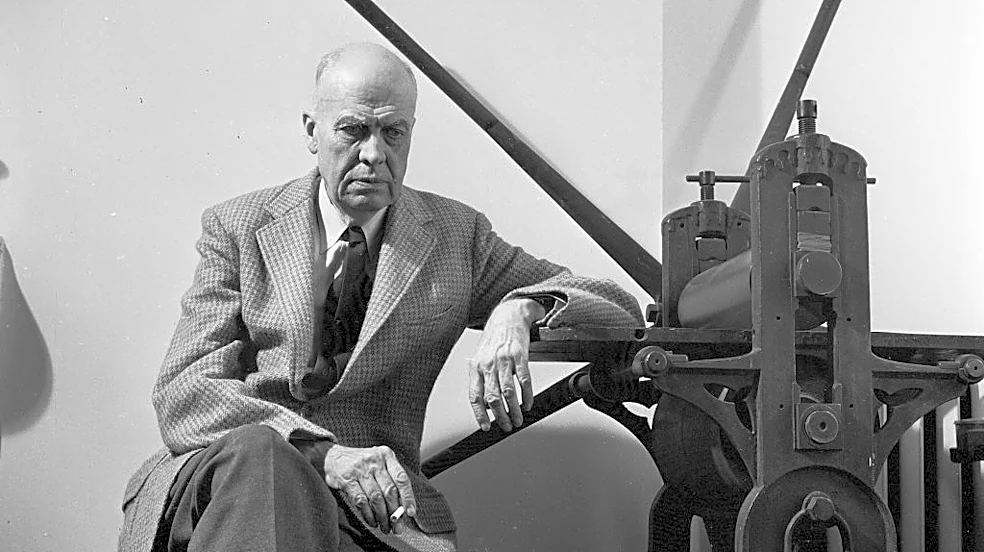
Hopper's creative process for "Nighthawks" involved meticulous planning and personal involvement. His wife, Josephine (Jo) Hopper, played a crucial role, not only by posing for the female figure in the painting but also by meticulously documenting details in a journal they kept. This journal, started shortly after their marriage in 1924, included sketch-drawings by Edward and detailed descriptions of technical aspects, with Jo adding information about the painting's theme.
According to Edward Hopper's handwriting in the journal, the intended name for the work was initially "Night Hawks," and it was completed on January 21, 1942. Jo's notes provide further insights, suggesting that the title might have been a reference to the beak-shaped nose of the man at the counter, or that the appearance of one of the "nighthawks" was adjusted to align with the original meaning of the word. She described the scene vividly: "Night + brilliant interior of cheap restaurant. Bright items: cherry wood counter + tops of surrounding stools; light on metal tanks at rear right; brilliant streak of jade green tiles 3/4 across canvas—at base of glass of window curving at corner. Light walls, dull yellow ocre [sic] door into kitchen right. Very good looking blond boy in white (coat, cap) inside counter. Girl in red blouse, brown hair eating sandwich. Man night hawk (beak) in dark suit, steel grey hat, black band, blue shirt (clean) holding cigarette. Other figure dark sinister back—at left. Light side walk outside pale greenish. Darkish red brick houses opposite. Sign across top of restaurant, dark—Phillies 5¢ cigar. Picture of cigar. Outside of shop dark, green. Note: bit of bright ceiling inside shop against dark of outside street—at edge of stretch of top of window."
Early Exhibition and Acquisition by the Art Institute of Chicago
Upon its completion in late winter 1941–42, "Nighthawks" was displayed at Rehn's, the gallery where Hopper typically exhibited his works for sale. It remained there for approximately a month. A pivotal moment occurred on St. Patrick's Day when Edward and Jo Hopper attended the opening of an exhibit of Henri Rousseau's paintings at New York's Museum of Modern Art. This exhibit was organized by Daniel Catton Rich, who was the director of the Art Institute of Chicago.
Rich was present at the event, along with Alfred Barr, the Museum of Modern Art director. Barr expressed enthusiasm for Hopper's earlier painting, "Gas," which he had completed a year prior. Jo Hopper seized the opportunity, telling Barr that he "just had to go to Rehn's to see Nighthawks." Ultimately, it was Rich who visited the gallery, declaring "Nighthawks" to be "fine as a [Winslow] Homer." He subsequently arranged for its purchase for Chicago, and the sale was finalized on May 13, 1942, for $3,000. This marked the beginning of the painting's long and distinguished tenure as a centerpiece of the Art Institute of Chicago's collection, solidifying its place in American art history.