







Amadeo Pietro Giannini, the visionary founder of the Bank of Italy, initiated a revolution in retail banking from San Francisco in the early 20th century. His institution, the precursor to the modern Bank of America, was established in 1904 with a distinct mission: to serve the working-class citizens, particularly the Italian American community in San Francisco's North Beach neighborhood. Giannini's innovative approach and his bank's resilience, especially
in the face of the devastating 1906 earthquake and fire, laid the groundwork for a financial empire that would profoundly reshape the banking industry and contribute significantly to the rebuilding and growth of California.
Founding Principles and Post-Earthquake Resilience
The Bank of Italy was founded on October 17, 1904, by Amadeo Pietro Giannini with a clear social purpose. Unlike many established banks of the era, it aimed to provide financial services to ordinary working people and immigrant communities, particularly Italian Americans, who were often underserved by traditional institutions. This focus on inclusivity was a cornerstone of Giannini's revolutionary vision for retail banking. The bank's initial location was in Jackson Square, though the original building no longer stands.
Giannini's foresight and determination were dramatically tested by the 1906 San Francisco earthquake and fire. As the disaster unfolded, Giannini famously took swift action, relocating the bank's assets to his San Mateo home using a horse-drawn cart, thereby safeguarding the funds of his customers. This act of quick thinking ensured the bank's survival when many other institutions faltered. In the aftermath of the widespread destruction, the Bank of Italy distinguished itself by being one of the first banks to offer crucial loans to businesses, playing a vital role in the monumental effort to rebuild the devastated city. This commitment to community and recovery solidified the bank's reputation and fostered deep trust among its clientele.
Establishing a New Headquarters and Pioneering Branch Banking
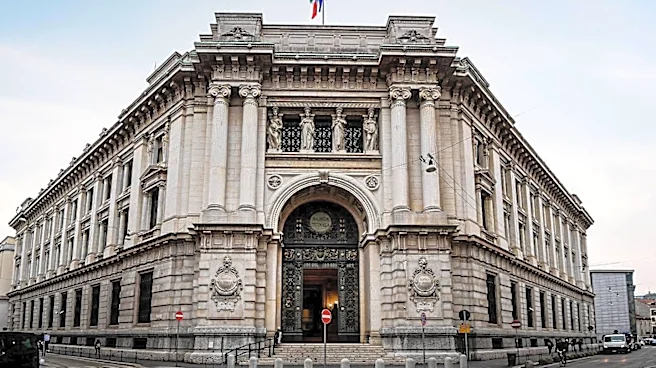
Following the destruction of its original premises, the Bank of Italy operated from temporary locations before Giannini and his directors decided to construct a new, permanent headquarters. This led to the opening of the Bank of Italy Building at the corner of Clay and Montgomery streets in 1908. This eight-story structure, which would later become a National Historic Landmark, served as a symbol of the bank's stability and its commitment to the city's future. Notably, Giannini himself maintained an office space in an open area on the first floor, reflecting his accessible and hands-on approach to banking.
A key innovation pioneered by Giannini was the concept of branch banking. In 1909, the Bank of Italy began opening branches in other cities, starting with San Jose. This strategic expansion allowed the bank to reach a broader customer base and extend its services across California. By 1918, the Bank of Italy had established 24 branches, making it the first statewide branch banking system. This network of branches was instrumental in the bank's rapid growth and its ability to serve diverse communities throughout the state, fundamentally changing how banking services were delivered to the public.
The Evolution into Bank of America and Lasting Legacy
The institution's growth continued unabated, leading to a significant transformation in its identity. In 1928, the Bank of Italy merged with the smaller Bank of America, Los Angeles. This merger was a strategic step towards creating an even larger and more influential financial entity. Just two years later, in 1930, Giannini made the pivotal decision to change the name from "Bank of Italy" to "Bank of America," signaling its broader national aspirations and appeal.
As chairman of the newly named Bank of America, Giannini continued his relentless drive for expansion. Under his leadership, the bank grew exponentially, becoming the world's largest commercial bank by 1945, boasting 493 branches across California and assets totaling $5 billion. Giannini continued to guide this financial giant until his death in 1949, leaving behind a profound legacy. His many innovations in banking, including his focus on retail customers and widespread branch networks, are still recognized today and even served as the basis for the classic 1932 Frank Capra movie "American Madness." The institution he founded, operating under the original charter for the Bank of Italy, continued to grow through subsequent mergers, including with NationsBank in 1998 and Fleet Boston in 2004, solidifying its position as a major force in global finance.