


O. J. Simpson's journey to becoming a household name in American football began long before his professional career. Born in San Francisco, Simpson's early life was marked by childhood health challenges, including rickets, which required him to wear leg braces until the age of five. His athletic talents began to emerge during his high school years at Galileo High School, where he played for the Galileo Lions football team. This foundational period
set the stage for a collegiate career that would establish him as one of the most electrifying players in the nation, earning him numerous accolades and setting records that underscored his exceptional skill.
Early Athletic Development and Junior College Success
After high school, Simpson continued his football career at the City College of San Francisco from 1965 to 1966. During this time, he showcased his versatility by playing both offense as a running back and defense as a defensive back. His performance was so impressive that he was nominated to the Junior College All-American team as a running back, signaling his potential for higher levels of competition. This period of development at junior college was crucial, allowing him to hone his skills and prepare for the demanding environment of NCAA Division I football.
His time at City College of San Francisco demonstrated his dual-threat capability, though it was his offensive prowess that would ultimately define his career. The recognition he received at this level confirmed that he was a standout talent, capable of making a significant impact on the field. This early success provided the momentum he needed to transition to a major university program.
USC Trojans: A Collegiate Legend Emerges
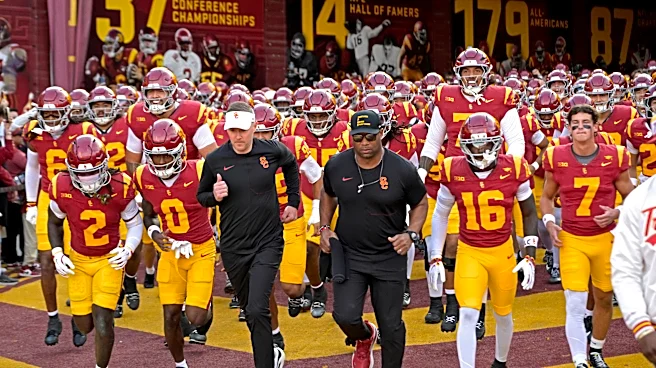
Simpson earned a sports scholarship to the University of Southern California (USC), where he played as a running back for the Trojans in 1967 and 1968. His impact was immediate and profound. In 1967, he led the nation in rushing yards, accumulating 1,451 yards and scoring 11 touchdowns. He repeated this feat in 1968, carrying the ball 355 times for 1,709 yards, further solidifying his status as the country's premier collegiate runner.
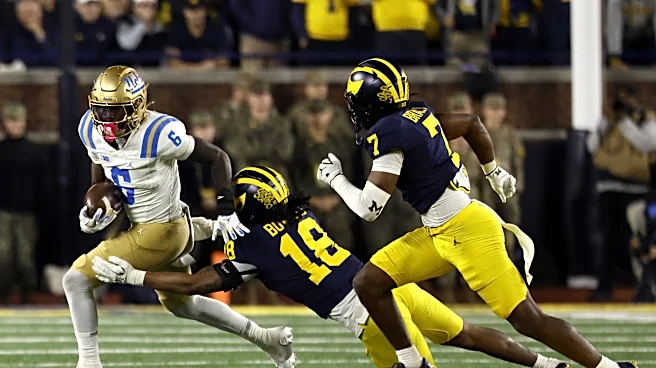
One of his most memorable collegiate performances came in 1967 during a game against UCLA. Simpson's 64-yard touchdown run in the fourth quarter tied the game at 20 points, leading to a 21-20 victory for USC after the extra point. This play was the longest of the game and is remembered as a highlight in one of the greatest college football games of the 20th century. Despite his stellar performance, he was nominated for the Heisman Trophy but did not win that year, with Gary Beban of UCLA taking the award.
Heisman Triumph and Record-Breaking Achievements
The 1968 season was a pinnacle for Simpson. He rushed for 1,709 yards and scored 22 touchdowns, earning him the prestigious Heisman Trophy, the Maxwell Award, and the Walter Camp Award. His Heisman victory was particularly dominant, as he still holds the record for the largest margin of victory for a Heisman winner, beating the second-place finisher by 1,750 points. This overwhelming recognition underscored his exceptional talent and impact on the college game.
Simpson's collegiate career concluded with the 1969 Rose Bowl, where the number 2 nationally ranked USC faced the number 1 ranked Ohio State. In his final college game, Simpson rushed for 171 yards, including an 80-yard carry, despite USC's 16-27 loss. Beyond football, Simpson also participated in track and field at USC, as part of the 4x100-meter relay team that broke the world record at the NCAA Men's Track and Field Championships in June 1967. His collegiate years were a testament to his athletic versatility and unparalleled football prowess, setting the stage for his professional career.