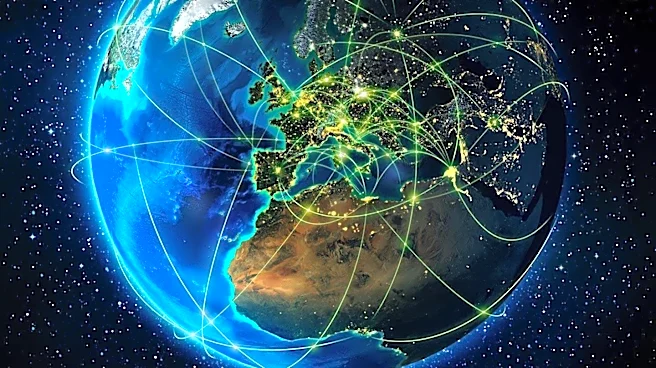









Submarine telegraph cables were a groundbreaking innovation that enabled rapid communication between continents, transforming global connectivity in the 19th century. The Electric Telegraph Company played a pivotal role in laying these cables, establishing communication links that spanned oceans and connected distant lands.
The Need for Submarine Cables
Before the advent of submarine cables, communication between continents was slow and unreliable, relying on ships to carry messages
across oceans. The development of submarine telegraph cables addressed this challenge by providing a direct and rapid means of communication. Beginning in 1850, these cables allowed for the first rapid communication between people on different continents, significantly impacting social and economic interactions.
The Electric Telegraph Company was heavily involved in laying submarine cables, including lines to the Netherlands, Ireland, the Channel Islands, and the Isle of Man. The company operated the world's first specialized cable-laying ship, the Monarch, which was equipped to handle the complex task of laying cables underwater.
Technological Innovations and Challenges
Laying submarine cables required overcoming significant technological challenges, including insulation and durability. The cables needed to withstand the harsh conditions of the ocean floor and maintain signal integrity over long distances. The ETC's innovations in cable technology, including the use of gutta-percha as an insulating material, were crucial in addressing these challenges.
The Monarch, the ETC's cable-laying ship, was equipped with advanced technology for handling and laying cables. It featured sheaves to run the cable out of the hold and a powerful brake to control the cable's release. These innovations set the standard for future cable-laying ships and contributed to the successful installation of submarine cables.
Impact on Global Communication
The successful installation of submarine telegraph cables had a profound impact on global communication, enabling nearly-instant transmission of messages across continents. This connectivity facilitated international trade, diplomacy, and cultural exchange, shrinking the world and bringing distant regions closer together.
The legacy of submarine telegraph cables is evident in the continued evolution of global communication networks. They laid the groundwork for modern undersea cables that carry internet and telecommunications traffic, highlighting the enduring significance of this innovation in connecting the world.
The Electric Telegraph Company's role in pioneering submarine cables demonstrated the transformative power of technology in bridging geographical divides and fostering global interaction.