


The Country Music Association (CMA) stands as a pivotal organization dedicated to the global promotion and development of country music. Established in Nashville, Tennessee, in 1958, the CMA was groundbreaking as the first trade organization specifically formed to champion a music genre. Its inception was partly a response to concerns within Music Row regarding the growing influence of rock and roll on country music. Over the decades, the CMA has
grown significantly from its initial 233 members, evolving into a comprehensive body that represents all facets of the music industry, and is widely recognized for its annual CMA Fest and the prestigious Country Music Association Awards.
Founding and Early Leadership
The CMA's formation in 1958 marked a significant moment for country music. Its initial Board of Directors comprised nine directors and five officers, laying the groundwork for its future operations. Wesley Rose, who was the president of Acuff-Rose Publishing, Inc., took on the role of the CMA's first chairman of the board, providing early leadership and direction. Connie B. Gay, a prominent broadcasting entrepreneur and executive, served as the founding president, bringing his industry expertise to the nascent organization. Mac Wiseman, who was the CMA's first secretary, also held the distinction of being the last surviving inaugural member, connecting the organization's early days to its later history.
The association's early structure included nine individual membership categories, reflecting the diverse roles within the country music landscape. This structure has since expanded to 15 categories, encompassing a broader range of industry professionals. Organizational memberships are also available, ensuring that various entities involved in country music can participate. The criteria for membership stipulate that individuals or organizations must be directly and substantially involved in country music, reinforcing the CMA's focus on its core mission.
Evolution of Leadership and Operations
The operational leadership of the CMA saw its first executive director, Harry Stone, serve from 1958 to 1960. Following his resignation, Jo Walker-Meador stepped into the role in 1962. Walker-Meador was the CMA's first full-time employee and her tenure as executive director was extensive, lasting until 1991. Her long service played a crucial role in shaping the organization's growth and influence over several decades.
Beyond its internal structure, the CMA quickly established its public-facing events. The first CMA Awards ceremony was held in Nashville in 1967, though it was not televised. Sonny James and Bobbie Gentry hosted this inaugural event, where Eddy Arnold was honored as the first "Entertainer of the Year." Jack Greene received "Male Vocalist of the Year," and Loretta Lynn was named "Female Vocalist of the Year." The awards gained broader visibility when the 1968 ceremony, hosted by Roy Rogers and Dale Evans at the Ryman Auditorium, was filmed and later televised on NBC. The first live telecast of the awards show occurred in 1969, solidifying its place as a major annual event in country music.
Key Events and Modern Initiatives
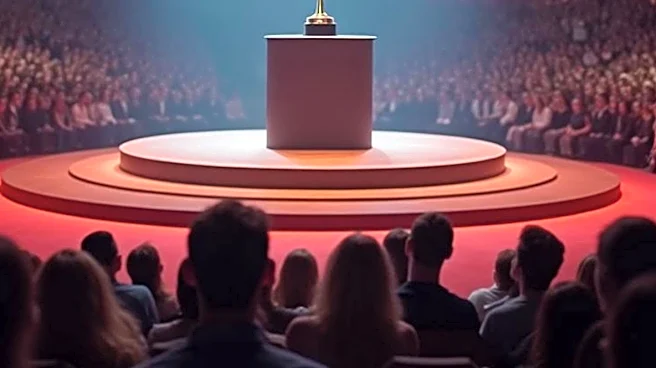
The CMA is renowned for several major annual events that promote country music to a wide audience. "Country Music's Biggest Week" is a cornerstone, culminating in the CMA Awards, typically held in early November. These awards recognize excellence across twelve categories, including Entertainer of the Year, Male Vocalist, Female Vocalist, New Artist of the Year, Vocal Group, Vocal Duo, Single, Album, Song, Music Event, Music Video, and Musician. Additionally, the CMA presents "CMA Broadcast Awards" to country-formatted radio stations, segmented by market size, acknowledging their role in promoting the genre.
Another significant event is CMA Fest, recognized as the longest-running Country Music festival globally. Held annually in downtown Nashville, it draws hundreds of thousands of fans to see hundreds of artists perform on numerous stages. The festival also includes Fan Fair X, offering fans opportunities to meet their favorite artists. The four-day event is later edited into a three-hour TV special broadcast on ABC. The CMA also produces "CMA Country Christmas," a holiday concert featuring country artists performing festive songs, which is re-edited for later broadcast by ABC. These events, along with the CMA's extended broadcast contract with ABC through 2026, underscore its ongoing commitment to promoting country music worldwide.