





STS-5 marked a significant turning point in NASA's Space Shuttle program, transitioning from purely test flights to officially "operational" missions. Launched on November 11, 1982, aboard the Space Shuttle Columbia, this fifth shuttle mission was notable for several firsts that laid groundwork for future space endeavors. It was the inaugural mission to deploy commercial communications satellites into Earth's orbit, signaling a new era of collaboration
between government space agencies and private industry. Furthermore, STS-5 carried the largest crew to date for a single spacecraft, a team of four astronauts, and introduced new protocols regarding crew attire during critical flight phases.
The Dawn of Commercial Satellite Deployment
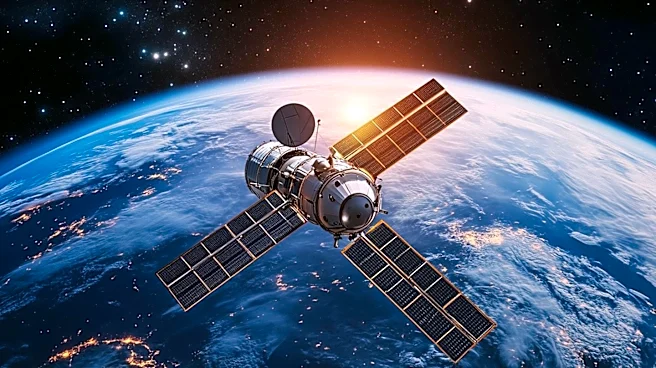
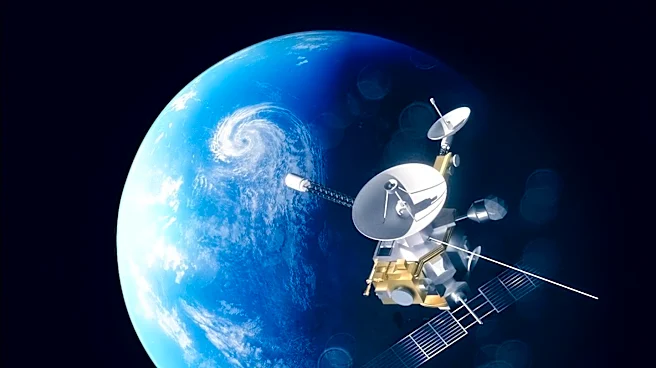
One of the primary objectives and most significant achievements of STS-5 was the successful deployment of two commercial communications satellites. These were the first of their kind to be launched from a Space Shuttle. The satellites, SBS-3, owned by Satellite Business Systems, and Anik-C3, belonging to Telesat Canada, were both Hughes-built HS-376-series models. After being released from Columbia's payload bay, these satellites were propelled into their operational geosynchronous orbits using McDonnell Douglas PAM-D kick motors. This successful deployment demonstrated the Space Shuttle's capability as a reliable platform for commercial payloads, opening up new possibilities for satellite communications and broadcasting.
Beyond the commercial satellites, STS-5 also carried a West German-sponsored microgravity Getaway Special (GAS) experiment canister in its payload bay. This addition showcased the shuttle's versatility in accommodating diverse scientific research alongside its commercial duties. The crew further engaged in educational outreach by conducting three student-designed experiments during their time in orbit, highlighting the mission's multifaceted contributions to science, commerce, and education.
Evolving Crew Procedures and Challenges
STS-5 was also groundbreaking in its approach to crew safety and comfort. It was the first Space Shuttle flight where the crew did not wear pressure suits during the launch, reentry, and landing phases. This decision mirrored practices seen in earlier Soviet Voskhod and Soyuz missions, prior to the tragic Soyuz 11 mission in 1971. This change represented a shift in operational philosophy, aiming for increased comfort and potentially reduced complexity for the astronauts during these critical flight segments.
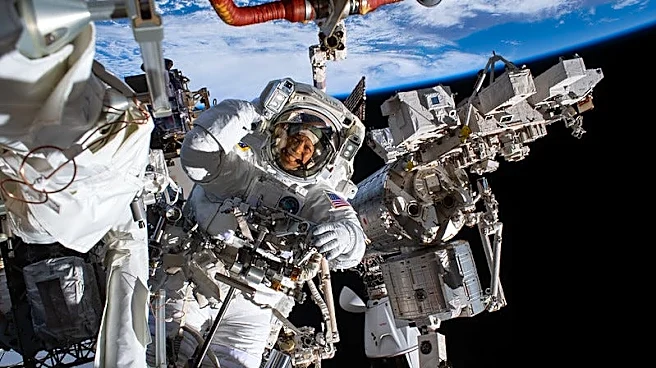
Despite these advancements, the mission encountered unexpected challenges, particularly concerning a planned spacewalk. Mission Specialists Lenoir and Allen were scheduled to perform the first spacewalk of the Space Shuttle program. This extravehicular activity (EVA) was intended to test newly developed space suits, designed as more cost-effective and simpler alternatives to the Apollo-era versions. However, the spacewalk faced multiple setbacks. Initially, it was delayed by one day due to Lenoir experiencing motion sickness. Subsequently, the EVA was canceled entirely because of equipment malfunctions: a poorly functioning oxygen regulator in Lenoir's suit and a broken recirculation fan in Allen's suit. This cancellation marked a historic moment, as it was the first time in the history of space exploration that an EVA had to be called off due to issues with the space suits themselves.
Mission Duration and Return
The STS-5 mission lasted for 5 days, 2 hours, 14 minutes, and 26 seconds. During this time, the Space Shuttle Columbia completed 81 orbits of Earth, traveling a total distance of 3,397,082 kilometers (2,110,849 miles). The mission concluded with a successful landing on Runway 22 at Edwards Air Force Base on November 16, 1982, at 06:33:26 a.m. PST. Following its successful flight, Columbia was transported back to Kennedy Space Center on November 22, 1982, ready for future missions. The achievements and lessons learned from STS-5, from its commercial deployments to its crew operational adjustments and spacewalk challenges, significantly contributed to the ongoing development and success of the Space Shuttle program.