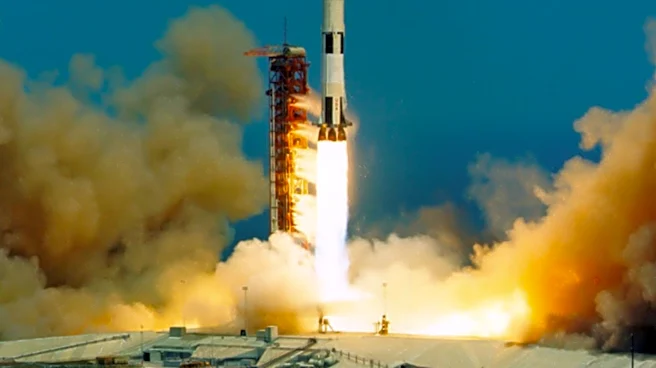

Gemini 12, officially designated Gemini XII, represented the culmination of NASA's ambitious Gemini program. Launched on November 11, 1966, this mission was not just another spaceflight; it was the tenth
and final crewed Gemini flight, the eighteenth crewed American spaceflight, and the twenty-sixth spaceflight overall, including X-15 flights exceeding 100 kilometers. Commanded by James A. Lovell, a veteran of Gemini VII, and featuring rookie Edwin "Buzz" Aldrin, Gemini 12 was tasked with achieving the remaining objectives of the program, particularly demonstrating the feasibility of astronauts working effectively outside their spacecraft. Its success was critical in setting the stage for the Apollo program's ultimate goal of landing humans on the Moon.
Overcoming EVA Challenges
One of the primary objectives of the Gemini program, and a significant challenge leading up to Gemini 12, was to prove that astronauts could perform extravehicular activities (EVAs) efficiently and safely. Previous Gemini missions had encountered difficulties, with astronauts finding it hard to work outside the spacecraft due to a lack of proper restraints and insufficient techniques. Gemini 12 was specifically designed to address these issues. In preparation, new and improved restraints were incorporated into the spacecraft's exterior, and a groundbreaking training method was introduced: underwater training. This technique, which would later become a standard for simulating spacewalks, allowed astronauts to practice in a neutral buoyancy environment, better preparing them for the conditions of space.
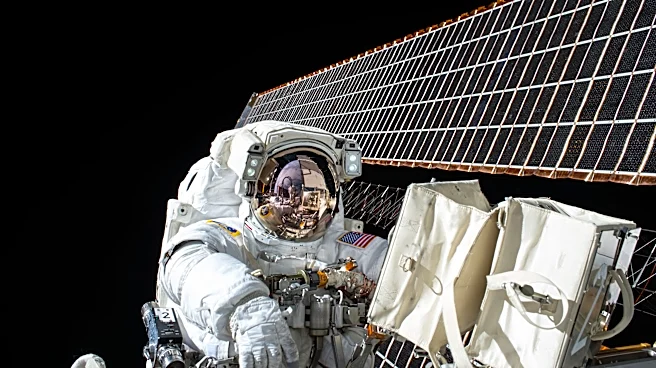
Buzz Aldrin's performance during Gemini 12 was a testament to these innovations. He conducted three periods of EVA, totaling 5 hours and 30 minutes. His two-hour, twenty-minute tethered spacewalk was particularly significant. During this EVA, Aldrin successfully photographed star fields, retrieved a micrometeorite collector, and completed other tasks, definitively demonstrating that astronauts could work effectively outside a spacecraft. The two additional stand-up EVAs also proceeded smoothly, further solidifying the program's success in this critical area.
Rendezvous and Docking Expertise
Beyond the challenges of EVA, Gemini 12 also continued to refine the crucial skills of space rendezvous and docking. The mission achieved the fifth rendezvous and fourth docking with an Agena target vehicle. This maneuver, which had become somewhat routine by this point in the Gemini program, was performed with an added layer of complexity during Gemini 12. When the rendezvous radar failed, Aldrin, who had written his doctoral thesis on rendezvous, manually guided the process. He used a sextant to measure the angle between the spacecraft and the Agena, then calculated the necessary actions with the onboard computer. Lovell then flew the spacecraft based on these calculations, successfully completing the docking.
This manual rendezvous and docking capability highlighted the crew's proficiency and the robustness of the mission's planning. Although a planned orbital maneuver into a higher orbit using the Agena's propulsion system was canceled due to concerns about the Agena booster's performance, the successful rendezvous and docking were vital achievements. The mission also included a tethered stationkeeping exercise and was designed to demonstrate an automatic reentry, further showcasing the program's advancements in spaceflight operations.
A Successful Conclusion and Apollo's Foundation
Gemini XII marked a successful conclusion to the Gemini program, achieving its final goals. The mission's success in demonstrating effective extravehicular activity was instrumental in paving the way for the Apollo program. The ability of astronauts to work outside their spacecraft was a prerequisite for the complex operations envisioned for lunar missions, including lunar module deployment and surface activities. The lessons learned and techniques developed during Gemini 12, particularly in EVA and rendezvous, directly contributed to the confidence and capabilities needed for Apollo to achieve its ambitious goal of landing a man on the Moon by the end of the 1960s. The mission's duration of 3 days, 22 hours, 34 minutes, and 31 seconds, completing 59 orbits, underscored the program's overall success in preparing for future human space exploration.