







Moussaka, a dish recognized globally, has a history as rich and layered as its ingredients. Its journey from ancient culinary practices in the Middle East and Balkans to its modern, iconic status, particularly in Greece, showcases a fascinating evolution of flavors, techniques, and cultural adaptations. The very name of the dish offers clues to its deep historical roots and widespread influence, reflecting centuries of culinary exchange across diverse
regions.
Linguistic Origins and Early Mentions
The English name for moussaka is a borrowing from the Greek word "mousakás," which itself, along with other Balkan languages, adopted the term from Ottoman Turkish. This Turkish word, in turn, originated from the Arabic "muṣaqqa‘a," meaning 'pounded' or 'cold.' Food historian Charles Perry suggests that the Arabic root might also be linked to the word "musaqqâ," meaning "moistened," possibly referring to the dish being soaked in broth. This linguistic lineage underscores the dish's extensive travel and transformation across different cultures.
The word "moussaka" first appeared in English in 1862, specifically in an English translation of a Turkish cookbook titled "Melceü't-Tabbâhîn," where it was written as "mùzàkkà." This early documentation indicates that a form of the dish was already established and recognized in culinary texts by the mid-19th century, long before its modern Greek iteration became famous.
The Greek Transformation: Nikolaos Tselementes' Influence
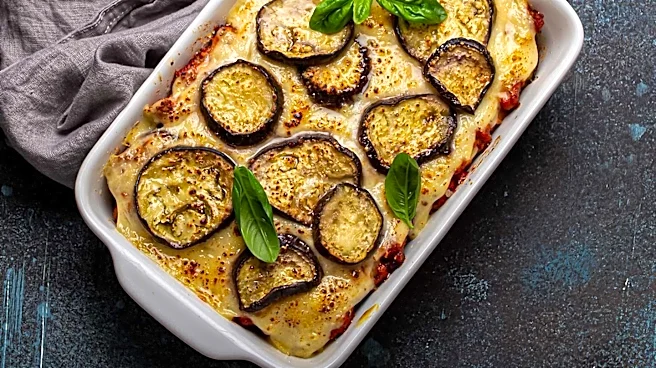
The most significant turning point in moussaka's history, particularly for its global recognition, came in the 1920s with the work of Nikolaos Tselementes. This French-trained Greek chef is credited with creating the modern Greek variant of moussaka. Before Tselementes, various eggplant and meat dishes existed in the region, but his recipe standardized the layered structure and introduced the now-famous béchamel sauce topping. His innovation combined an existing eggplant dish with a French-style gratin topping, elevating it to a more refined culinary experience.
Tselementes' recipe involves three distinct layers, each prepared separately before being combined for the final baking. The bottom layer consists of sliced eggplant, sautéed in olive oil. The middle layer is made of ground lamb, lightly cooked with chopped or puréed tomatoes, onion, garlic, and a blend of spices such as cinnamon, allspice, and black pepper. The dish is then crowned with a béchamel sauce or a savory custard. This structured approach and the addition of the creamy top layer distinguished the Greek moussaka and contributed to its widespread popularity. Tselementes also demonstrated the dish's versatility by proposing a vegan variant for Orthodox fast days, substituting ground eggplant for meat and omitting dairy products, instead using tomato sauce and bread crumbs.
Diverse Paths of Evolution Across Regions
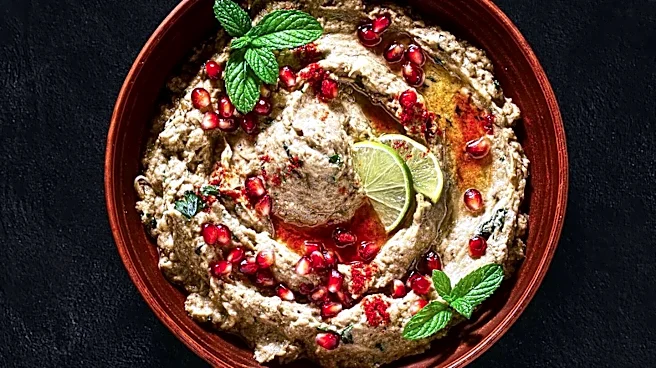
While Tselementes' version became the standard for Greek moussaka, the dish continued to evolve independently in other regions. In the Balkans, for instance, potatoes often replaced eggplant, and pork or beef mince became common, with milk or yogurt-based custards often topping the dish instead of béchamel. In the Levant, moussaka often took on a stew-like consistency, sometimes served cold as a mezze, and could include chickpeas or be primarily tomato-based. The Egyptian mesaqa’ah, documented as early as 1893, featured fried eggplant layers in tomato sauce, often with seasoned ground beef, and was frequently chilled to enhance its flavor. These diverse regional developments highlight how a core concept—layered ingredients, often with eggplant and meat—could be adapted and reinterpreted to suit local tastes, ingredients, and culinary traditions, creating a rich tapestry of dishes all falling under the broad umbrella of moussaka.