
The Jerry Springer Show, a prominent fixture in daytime television for 27 seasons, involved a complex production process and faced rigorous censorship to meet broadcast standards. From its initial taping
locations to its evolving set designs and the meticulous efforts to bleep and pixelate controversial content, the show's behind-the-scenes operations were as dynamic as its on-screen drama. Understanding these elements provides insight into how such a provocative program managed to stay on air for nearly three decades.
Production Journey: From Chicago to Stamford
The show's production began in Chicago, where it was taped at the NBC Tower from its inception in 1991. This location served as its home for nearly two decades. In 2009, a significant change occurred when production moved to Stamford Studios in Connecticut. This relocation marked a new chapter for the show, though many of its established production elements, such as the logo and stage design, were carried over to the new studio with only minor adjustments. NBCUniversal was the primary producer for the majority of the show's extensive run, overseeing the creation of 3,891 episodes.
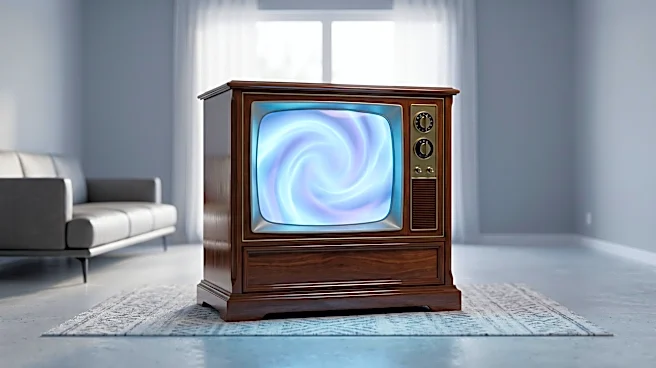
Throughout its history, the set of The Jerry Springer Show underwent several major transformations. The initial set in 1991 was quite basic, featuring white walls, designed to evoke the feel of traditional talk shows. This look was largely maintained when the show first moved to Chicago in 1992, characterized by an unpolished, open-air aesthetic with bright colored shapes. However, after the show's format shifted to tabloid talk in 1993, the studio received a makeover in the fall of 1994. This new design aimed for a warmer, more inviting atmosphere, incorporating brick walls, artwork, and bookcases. The stage walls were even designed to project outward, creating a catwalk used in specific episodes. By late 2000, the set was completely revamped into an "industrial" look, a change initially welcomed due to declining ratings. A final slight modification in 2007 introduced a larger studio audience area, a bigger stage, and a balcony, which Jerry Springer famously used for his entrance by sliding down a fireman's pole.
The Intricacies of Censorship
One of the most defining aspects of The Jerry Springer Show's production was its extensive censorship. All syndicated episodes, regardless of their broadcast time, were rigorously censored to comply with Federal Communications Commission (FCC) broadcast decency standards. This was a constant and evolving challenge given the show's often explicit and confrontational content.
Initially, the censorship primarily involved bleeping out profanity. However, as the show's content became more extreme, the methods of censorship also intensified. Later episodes featured such extensive bleeping for explicit language that speech sometimes became incomprehensible. To further prevent viewers from understanding censored dialogue, the mouths of speakers were spot-blurred, making lip-reading impossible. Beyond audio censorship, visual elements were also heavily modified. Nudity, including the flashing of breasts, buttocks, and genital areas, as well as the display of the middle finger, was pixelated. A New York Times report from April 1998 highlighted the sheer volume of censorship, finding that each episode typically contained between 85 and 130 bleeps. After longtime producer Richard Dominick departed, the show reportedly reverted to a more traditional style of bleeping, which remained in place until its conclusion. This continuous and often extreme censorship was a testament to the show's controversial nature and the constant balancing act between provocative content and regulatory compliance.