


The 1971-72 season marked the 46th year for the New York Rangers franchise, a period that saw the team achieve significant success, ultimately reaching the Stanley Cup Finals. This season was characterized by strong regular-season performance, highlighted by key offensive players, and a challenging playoff run that showcased their resilience against formidable opponents. Despite their impressive journey, the Rangers ultimately fell short of capturing
the coveted Stanley Cup, concluding a memorable season with a hard-fought battle.
The team's regular season performance was robust, positioning them as a top contender in the East Division. They finished second in their division, accumulating 109 points, a testament to their consistent play throughout the schedule. This strong showing placed them just behind the Boston Bruins, who had an even more dominant season. The Rangers' offensive prowess was particularly notable, with several players ranking among the league's top scorers, contributing significantly to their overall success and high point total.
Offensive Powerhouse: The GAG Line's Impact
A major factor in the Rangers' offensive strength was the formidable "GAG line," comprising Jean Ratelle, Vic Hadfield, and Rod Gilbert. These three players were instrumental in the team's scoring efforts, with Ratelle, Hadfield, and Gilbert ranking third, fourth, and fifth overall in the league's scoring race, respectively. Their collective skill and chemistry on the ice created a potent attacking force that was difficult for opposing teams to contain. This line's ability to consistently generate goals and assists was a cornerstone of the Rangers' strategy and a key reason for their high standing in the division.
However, the season also presented challenges, including a significant injury to Jean Ratelle. A scoring race that saw Ratelle leading Boston's Phil Esposito was unfortunately cut short when Ratelle broke his ankle during a game against California. This injury sidelined him for over a month of play, impacting his individual scoring title aspirations. Despite this setback, Ratelle still managed to finish third in scoring, demonstrating his exceptional talent and the strong start he had to the season. His teammates, Hadfield and Gilbert, continued to perform at a high level, ensuring the team's offensive output remained strong even in Ratelle's absence.
A Challenging Playoff Gauntlet
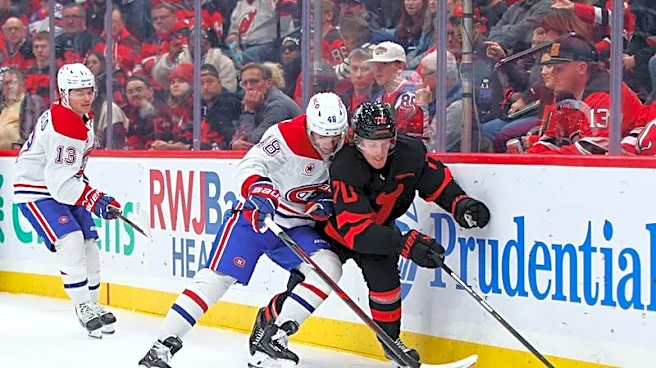
The Rangers' playoff journey was a rigorous test of their capabilities, beginning with a quarterfinals matchup against the Montreal Canadiens. In a hard-fought series, the Rangers emerged victorious, defeating the Canadiens 4-2. The series saw the Rangers take an early lead, winning the first two games at home with scores of 3-2 and 5-2. Montreal responded by winning Game 3, 2-1, but New York quickly regained control with a 6-4 win in Game 4. Although Montreal managed another win in Game 5, 2-1, the Rangers closed out the series in Game 6 with a 3-2 victory, advancing to the semifinals.
Their next challenge came in the semifinals against the Chicago Black Hawks, a series in which the Rangers displayed dominant form. They swept the Black Hawks 4-0, showcasing their ability to perform under pressure and execute effectively. The Rangers won Game 1 on the road 3-2, followed by a 5-3 victory in Game 2, also away from home. Returning to New York, they secured Game 3 with a 3-2 score and completed the sweep with a decisive 6-2 win in Game 4. This impressive performance propelled them into the Stanley Cup Finals, setting up a highly anticipated showdown.
The Stanley Cup Finals: A Battle Against Boston
The ultimate test for the 1971-72 Rangers came in the Stanley Cup Finals, where they faced their East Division rivals, the Boston Bruins. This series was a clash between two of the league's top teams, and it proved to be a competitive affair. The Bruins ultimately prevailed, defeating the Rangers 4-2. The series began with two close games in Boston, with the Bruins winning Game 1 by a score of 6-5 and Game 2 by a tighter 2-1 margin, taking an early 2-0 lead.
The Rangers fought back, securing a 5-2 victory in Game 3 in New York, narrowing Boston's lead to 2-1. However, the Bruins responded with a 3-2 win in Game 4, pushing the Rangers to the brink of elimination. New York showed resilience in Game 5, winning 3-2 to keep their Stanley Cup hopes alive. Despite their efforts, the Bruins closed out the series in Game 6 with a 3-0 victory, claiming the Stanley Cup. This final loss marked the end of a remarkable season for the New York Rangers, who, despite not winning the championship, demonstrated their strength and competitive spirit throughout their 46th season.