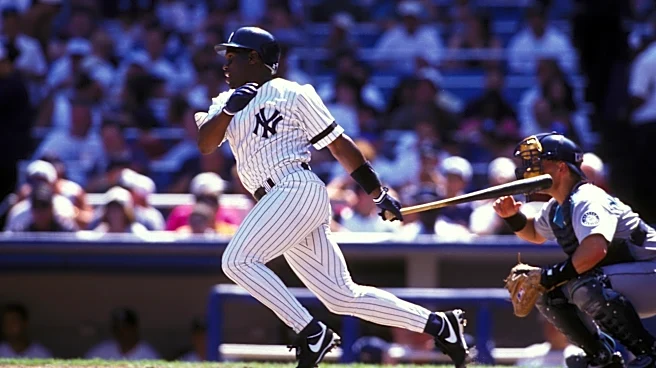



The 1961 Major League Baseball season is etched in history for the dramatic home run chase involving New York Yankees teammates Mickey Mantle and Roger Maris, famously dubbed the "M&M Boys." Their pursuit of Babe Ruth's single-season record of 60 home runs captivated the nation, but it also highlighted the contrasting relationships each player had with the demanding New York press and fan base.
The Pressure of the Chase
Five years prior to 1961, Mantle had already made a significant
run at Ruth's record, ultimately falling short with 52 home runs. During that earlier chase, the New York press had been notably protective of Ruth's legacy, and many reporters expressed relief when Mantle did not surpass the record. In his early years with the Yankees, Mantle faced harsh criticism from the New York media, who often focused on his frequent strikeouts, injury proneness, and perceived rural background, often unfavorably comparing him to the legendary Joe DiMaggio.
However, by 1961, Mantle had learned to navigate the New York media landscape, aided by teammate Whitey Ford. He had gained the favor of the press, a stark contrast to his earlier reception. This shift in media perception played a crucial role in how the 1961 home run chase unfolded, creating a unique dynamic between the two sluggers.
Maris, Mantle, and the Media Divide
Unlike Mantle, Roger Maris was relatively new to the intense New York sports scene, having been traded to the Yankees before the 1960 season. Maris struggled to adapt to the relentless demands of the New York press, many of whom began to portray him as surly and rude. During the 1961 season, the media actively promoted the narrative that the Yankees were "Mantle's team," often belittling Maris and casting him as an outsider, not a "true Yankee."
Mantle himself acknowledged this shift in public sentiment, stating, "I couldn't do anything wrong after Roger beat me. I became the underdog; they hated him and liked me. Everywhere I went I got standing ovations. It was a lot better than having them boo you." This sentiment underscores the significant difference in how the two players were perceived and treated by the media and fans during their historic pursuit.
The Climax and Aftermath of 1961
As the season neared its end, Mantle's participation in the chase was dramatically cut short. He was hospitalized with a severe abscessing septic infection on his hip. This infection was a consequence of a "miracle shot" he had received from physician Max Jacobson, a revelation that years later exposed Jacobson as a fraud whose injections contained substances like amphetamines and methamphetamines, leading to his medical license being revoked in 1975.
Despite this setback, Mantle finished the 1961 season with an impressive 54 home runs, setting a single-season record for a switch-hitter that stood for decades. He also led the American League in runs scored and walks. Maris went on to break Babe Ruth's record on the final day of the season. For the second consecutive year, Mantle narrowly missed winning his third MVP award, finishing second to Maris. Under new manager Ralph Houk, the Yankees won the World Series against the Cincinnati Reds that year, though neither Mantle nor Maris performed particularly well in the series, combining for only three hits and two RBIs in twenty-five at-bats over five games.