






The Peace Corps, an independent agency of the United States government, was officially established on March 1, 1961, by Executive Order 10924, signed by President John F. Kennedy. This initiative, later authorized by Congress on September 22, 1961, through the Peace Corps Act, emerged from a blend of political foresight and a desire to redefine America's relationship with developing nations. Its creation was deeply rooted in Kennedy's campaign themes
of self-sacrifice and volunteerism, aiming to counter negative stereotypes of the "Ugly American" and "Yankee imperialism" in newly independent African and Asian countries.
Early Conceptualization and Kennedy's Vision
The idea for a volunteer organization to assist developing countries had been circulating in various forms before Kennedy's presidency. As early as December 1951, then-Representative John F. Kennedy suggested that young college graduates could provide technical advice and assistance to the Middle East, following the model of religious missionaries. Senator Brien McMahon also proposed an "army" of young Americans as "missionaries of democracy" in 1952. However, the first legislative initiative came from Senator Hubert H. Humphrey, Jr., who introduced a bill to create the Peace Corps in 1957, three years before Kennedy would popularize the concept.
The concept gained significant traction during Kennedy's 1960 presidential campaign. Walter Reuther, president of the United Auto Workers, had proposed a "youth peace corps" for developing nations in 1950 and later lobbied Kennedy to commit to creating such an executive agency. Kennedy publicly announced the idea on October 14, 1960, during a late-night campaign speech at the University of Michigan, later naming it the "Peace Corps." This appeal to volunteerism resonated with students, and Kennedy, upon taking office, tasked respected academics like Max Millikan and Chester Bowles with outlining the organization's goals.
Sargent Shriver's Leadership and Initial Growth
Sargent Shriver, Kennedy's brother-in-law and a key figure in his presidential campaign, was appointed as the first director of the Peace Corps on March 22, 1961. Shriver played a crucial role in fleshing out the organization's structure and goals, energetically lobbying Congress for its approval. He largely managed the administration of the Corps, often advised by Sally Bowles, particularly concerning maternity protocols for volunteers and the organization's overseas representation. To avoid any appearance of favoritism, the Peace Corps deliberately did not place its volunteers with religious agencies.
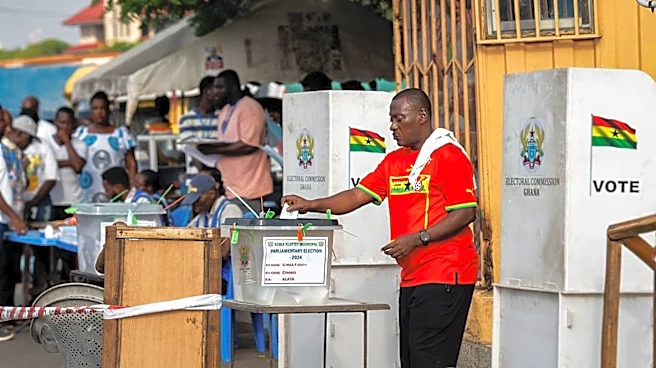
In its inaugural year, the Peace Corps deployed 900 volunteers to 16 countries. The first group of volunteers departed for Ghana and Tanganyika (now part of Tanzania) on August 28, 1961, following an address from Kennedy. The organization experienced rapid growth, with over 7,300 volunteers serving in 44 countries within two years. By June 1966, the number of volunteers peaked at 15,000, serving in 52 countries, marking the largest number in the organization's history. Shriver also implemented affirmative action policies, leading to women comprising about 40 percent of the first 7,000 volunteers. The Corps developed its own comprehensive training program, which included nine weeks at an American university focusing on conversational language, world affairs, and job skills, followed by three weeks at a Peace Corps camp in Puerto Rico and an orientation in the host country.
Early Challenges and Public Perception
The Peace Corps faced its first major controversy early in its operation. On October 13, 1961, a postcard from a volunteer in Nigeria, Margery Jane Michelmore, describing her living conditions as "squalor and absolutely primitive," was intercepted. This led to protests from the University of Ibadan College Students Union, who demanded her deportation and accused volunteers of being "America's international spies" and the project of fostering "neocolonialism." The incident garnered international press attention, prompting questions within the U.S. administration. Nigerian students protested, while American volunteers responded with a hunger strike, eventually leading to a dialogue between the groups. Despite these initial hurdles, the Peace Corps continued to expand its reach and impact, solidifying its place as a unique instrument of American foreign policy and humanitarian aid.