



The nursery rhyme 'Mary Had a Little Lamb' is a staple of childhood, known for its simple yet charming story of a girl and her pet lamb. However, the origins of this beloved rhyme are shrouded in controversy. While it is often attributed to Sarah Josepha Hale, questions about its true authorship have persisted over the years. This article delves into the debate surrounding who really penned this iconic piece of children's literature.
The Case for Sarah Josepha Hale
Sarah Josepha
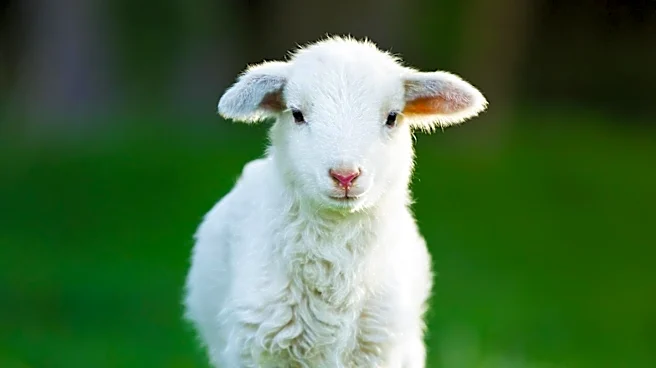
Hale is widely credited with writing 'Mary Had a Little Lamb.' The poem was first published by the Boston publishing firm Marsh, Capen & Lyon on May 24, 1830. Hale, a prominent writer and editor, included the poem in her collection 'Poems for Our Children.' The story goes that Hale was inspired by an actual incident involving a girl named Mary who brought her pet lamb to school, causing quite a stir among her classmates. This real-life event supposedly took place at a small school near Hale's home in Newport, New Hampshire.
Hale's version of the story emphasizes the moral lesson that love and kindness can foster loyalty and affection. The poem's narrative, where the lamb follows Mary to school and waits for her outside, captures the innocence and simplicity of childhood. Despite the widespread acceptance of Hale's authorship, the story of Mary and her lamb has another layer that complicates the narrative.
Mary Tyler's Claim
In 1876, Mary Tyler, at the age of 70, came forward with a claim that she was the 'Mary' from the poem. According to Tyler, as a young girl, she indeed had a pet lamb that she took to school one day, which led to a commotion. Tyler recounted that a young man named John Roulstone, who was visiting the school, was so taken by the incident that he wrote the original three stanzas of the poem and handed them to her the next day.
This account suggests that Roulstone, rather than Hale, may have been the original author of the poem. Tyler's story adds a personal touch to the rhyme, linking it directly to her childhood experience. However, there is no concrete evidence to definitively prove Roulstone's authorship, leaving the question open to interpretation.
The Lasting Debate
The authorship controversy of 'Mary Had a Little Lamb' highlights the complexities of literary history, where oral traditions and personal anecdotes often intertwine with documented facts. While Hale's version remains the most recognized, Tyler's claim adds an intriguing dimension to the story. The debate over who truly wrote the rhyme continues to capture the imagination of those interested in the origins of cultural artifacts.
Ultimately, whether penned by Hale or inspired by Roulstone's verses, 'Mary Had a Little Lamb' endures as a timeless piece of children's literature. Its simple narrative and moral lesson continue to resonate with audiences, ensuring its place in the pantheon of classic nursery rhymes.