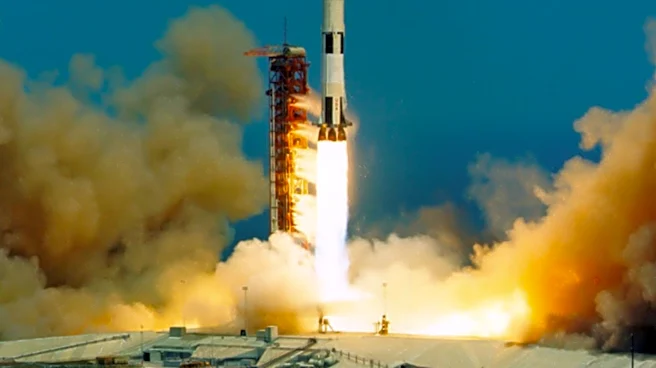





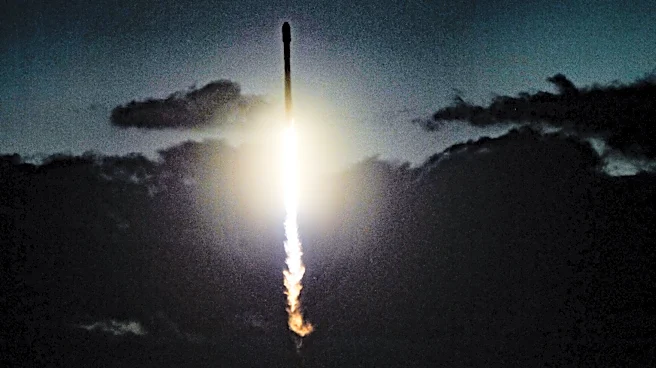
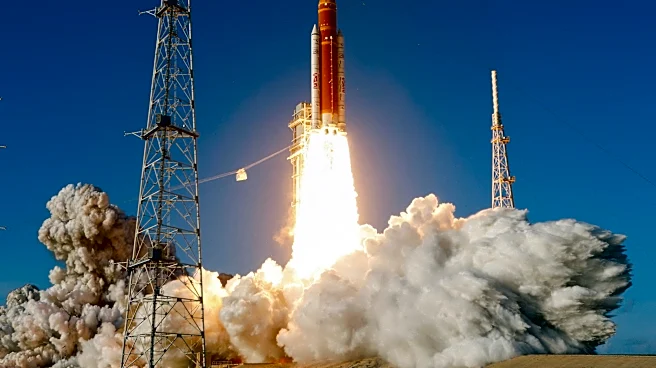
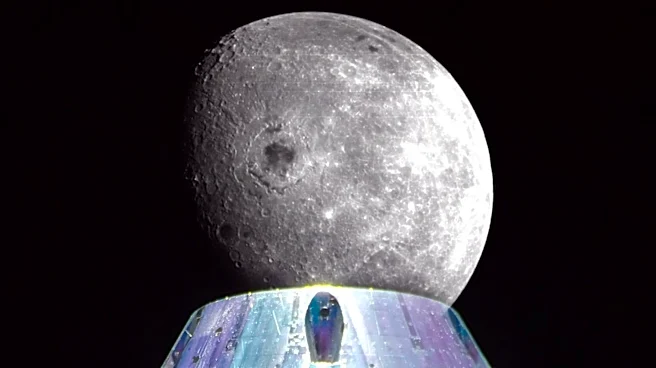
Apollo 4, also known as Apollo-Saturn 501 and AS-501, marked a pivotal moment in the United States' Apollo program. Launched on November 9, 1967, from the Kennedy Space Center, it was the inaugural uncrewed test flight of the colossal Saturn V launch vehicle. This mission was deemed a complete success by NASA, significantly advancing the Apollo program's ambitious goal of landing an astronaut on the Moon. Without a crew onboard, Apollo 4's primary
purpose was to rigorously test the new hardware and ground systems that would eventually carry humans to lunar orbit and back.
The Genesis of a Giant: Saturn V and the Lunar Goal
In 1961, U.S. President John F. Kennedy set the audacious goal of landing an astronaut on the Moon and ensuring their safe return to Earth before the decade's end. To achieve this, NASA selected the Saturn C-5 rocket, a three-stage launch vehicle based on existing rocket developments. This choice was approved in 1962, with initial test launches envisioned for 1965 and crewed flights by 1967, providing ample time to meet Kennedy's deadline. The C-5 was later redesignated as the Saturn V in early 1963.
A crucial decision made in late 1962 was the adoption of a "lunar orbit rendezvous" mode for lunar missions. This strategy involved the complete Apollo spacecraft being propelled into lunar orbit by the S-IVB, the third stage of the launch vehicle. Once in lunar orbit, the astronauts designated for the landing would transfer to the Lunar Excursion Module (LEM), which would then separate, land on the Moon, and later take off to rejoin the main spacecraft. After the crew transferred back, the LEM would be discarded, and the remaining vehicle would return to Earth. This complex mission profile necessitated a powerful and reliable launch vehicle like the Saturn V.
Innovative Testing: The "All-Up" Approach
Apollo 4 was notable for being the first mission where NASA employed "all-up" testing for the Saturn V. This revolutionary approach, decided upon in late 1963, mandated that every stage of the launch vehicle be fully functional and that the vehicle carry a working spacecraft during its test flights. This was a significant departure from previous methods, where Wernher von Braun's team at the Marshall Space Flight Center would test each rocket stage incrementally.
Dr. George Mueller, then head of the NASA Office of Manned Space Flight, a systems engineer with experience in military missile projects, recognized the success of all-up testing in the rapid development of the Air Force's Minuteman ICBM program. He believed it could accelerate the Apollo schedule. In a 1963 memo, Mueller ordered that both the first Saturn IB and Saturn V flights be uncrewed, with each stage fully functional and carrying a working spacecraft. The second flight of each rocket type would also be uncrewed, with the third being crewed. This decision dramatically streamlined the program's test flight phase, eliminating four missions, but it placed immense pressure on every component to perform flawlessly from the outset. Despite initial misgivings from Apollo program managers, they agreed to this approach, understanding that incremental testing would likely push the lunar landing beyond the 1970 target.
Objectives and Equipment: A Comprehensive Test
Beyond qualifying the launch vehicle, Apollo 4's objectives included testing the Apollo spacecraft and the ground systems for future crewed lunar landing missions. As the Saturn V's maiden flight, it was the first time its S-IC first stage and S-II second stage flew. The S-IVB third stage had previously flown as the second stage of the smaller Saturn IB. NASA sought to gather flight data on the Saturn V's structural integrity and compatibility with the spacecraft, including flight loads and stage separation dynamics. Data on subsystem operations, such as the emergency detection system, was also crucial.
A key objective was to evaluate the Apollo Command Module's (CM) heat shield under conditions simulating a return from a lunar mission. The mission also aimed to test the S-IVB's ability to restart in space. All these objectives were successfully achieved. The spacecraft carried was CSM-017, a Block I command and service module designed for testing and early Earth orbit flights. Although it lacked the docking capability of the Block II spacecraft destined for the Moon, CSM-017 underwent significant Block II modifications for certification purposes, including an upgraded heat shield and Block II-style antennae. Notably, the CM's hatch, redesigned after the Apollo 1 fire, had its seals flight-qualified on Apollo 4, with a test panel simulating the new window and exterior heat shield. Special equipment allowed Mission Control to operate the CSM remotely, and an automatic camera captured 755 color images of Earth from high altitude, providing valuable data for Earth sciences.