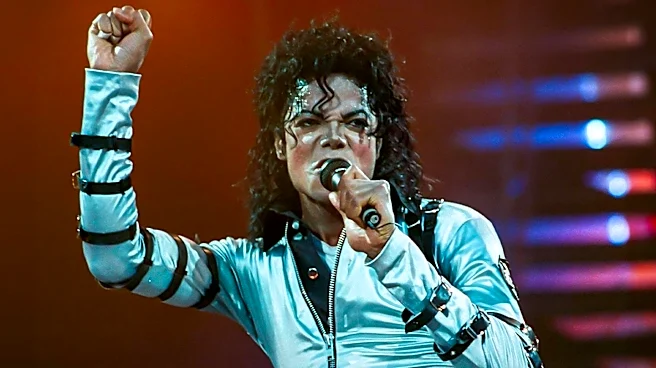








Michael Jackson's 1995 song "Childhood" serves as a poignant biographical reference to the challenging years of his youth. The track, which Jackson solely wrote, produced, and sang, delves into his difficult relationship with his father, Joseph Jackson, and the immense pressures of achieving world fame at a very young age as the lead singer of the Jackson 5. The song's themes are deeply rooted in Jackson's personal history, reflecting experiences
that profoundly affected him throughout his life. It appeared on his 1995 studio album *HIStory: Past, Present and Future, Book I* and was released as a double A-side with his single "Scream."
Allegations of Abuse and Its Lasting Impact
From an early age, Michael Jackson and his siblings reportedly endured physical and emotional abuse from their father. This abuse allegedly manifested through relentless rehearsals, whippings, and derogatory name-calling. The lasting impact of these childhood experiences on Jackson was significant, shaping his later life. Marlon Jackson once recounted an altercation where Joseph held Michael upside down by one leg and "pummelled him over and over again with his hand, hitting him on his back and buttocks." Joseph was also said to frequently trip up or push his sons into walls.
One particularly disturbing incident involved Joseph climbing into a young Michael's bedroom window one night while he was asleep. Wearing a fright mask, Joseph entered the room screaming and shouting, explaining that he wanted to teach his children not to leave the window open when they went to sleep. For years afterward, Jackson suffered nightmares about being kidnapped from his bedroom, highlighting the deep psychological scars left by these events.
Public Revelations and Parental Denials
While reports of Jackson's abusive childhood circulated for several years, he first spoke openly about these experiences in a 1993 interview with Oprah Winfrey. During this interview, he visibly grimaced when discussing the abuse at his father's hands. He stated that he felt he had missed out on much of his childhood, admitting that he often cried from loneliness. In the same interview, Jackson expressed complex feelings about his father, saying, "There were times when he'd come to see me, I'd get sick...I'd start to regurgitate. I'm sorry...Please don't be mad at me...But I do love him." A decade later, in his 2003 interview *Living with Michael Jackson*, he covered his face and cried when discussing his childhood abuse.
Jackson recalled his father sitting with a belt in his hand during rehearsals, threatening, "If you didn't do it the right way, he would tear you up, really get you. It was bad. Real bad." When accepting his Living Legend award at the 1993 Grammys, presented by Janet Jackson, he remarked, "I don't read all the things written about me, I wasn't aware the world thought I was so weird and bizarre. But when you grow up like I did in front of 100 million people since the age of five, you're automatically different... My childhood was completely taken away from me. There was no Christmas, no birthdays. It was not a normal childhood, no normal pleasures of childhood. Those were exchanged for hard work, struggle and pain, and eventual material and professional success." Despite these accounts, both of Jackson's parents denied the abuse allegations. His mother, Katherine, acknowledged that while whippings are now viewed as child abuse, such disciplinary methods were considered normal at the time. His brothers Jackie, Tito, Jermaine, and Marlon also denied their father was abusive, with Jermaine stating Joseph was, next to Michael, one of the most misunderstood people.
"Childhood" in Film and Compilations
Beyond its place on *HIStory*, "Childhood" also served as the main theme song for the film *Free Willy 2: The Adventure Home*, continuing Jackson's association with the *Free Willy* series, as he had previously provided the main theme for the first film with his hit single "Will You Be There." In *Free Willy 2*, "Childhood" played a pivotal role in a scene where the character Elvis runs away after feeling rejected by his foster family. An instrumental version of the song is also featured later in the film when Elvis is alone. The song, along with an instrumental version, was included in the film's soundtrack, released by Epic Soundtrax, 550 Music, and Jackson's label MJJ. "Childhood" also appeared on compilations such as *Movie Music: The Definitive Performances* and *Sony Music 100 Years: Soundtrack for a Century*.