





The Sea Venture, a 17th-century English sailing ship, holds a significant place in maritime history due to its dramatic wreck in Bermuda in 1609. This event not only inspired literary works but also played a crucial role in the establishment of Bermuda as a permanent settlement. The ship's journey and its aftermath are a fascinating tale of survival, exploration, and cultural impact.
The Voyage and Shipwreck
The Sea Venture was the flagship of the Virginia Company, designed
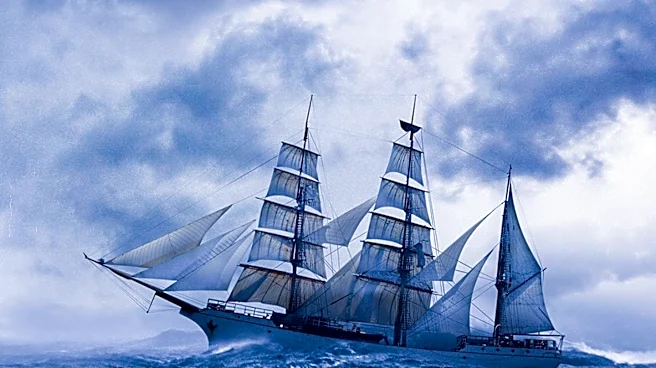
specifically for transatlantic voyages. It was a unique vessel for its time, built to transport emigrants and equipped with 24 cannons. In 1609, the Sea Venture embarked on its maiden voyage to Jamestown, Virginia, as part of a fleet carrying settlers and supplies. However, the ship encountered a severe storm, which led to its wreck on the shores of Bermuda.
The ship struggled against the storm for three days, and despite efforts to keep it afloat, it began to take on water. The crew and passengers worked tirelessly to plug leaks, but the situation worsened. Eventually, the ship was deliberately run aground on Bermuda's reefs, allowing all 150 passengers to survive. This unplanned landing marked the beginning of Bermuda's first human settlement.
Establishing Bermuda
The survivors of the Sea Venture's wreck found themselves on the uninhabited island of Bermuda. Utilizing materials from the wreck, they constructed two smaller ships, Deliverance and Patience, to continue their journey to Jamestown. However, some men remained on the island to establish a settlement, marking the start of Bermuda's colonization.
The settlement on Bermuda proved to be a strategic location for the Virginia Company. In 1612, the company's charter was extended to include Bermuda, officially incorporating it into the Virginia Colony. This expansion was crucial for the company's operations, providing a new base for trade and exploration in the Atlantic.
Cultural and Literary Impact
The Sea Venture's wreck had a lasting impact beyond its historical significance. It is widely believed to have inspired William Shakespeare's play "The Tempest," written in 1611. The themes of shipwreck, survival, and exploration in the play mirror the real-life events experienced by the Sea Venture's passengers.
Additionally, the image of the Sea Venture has become a symbol of Bermuda, appearing on the island's coat of arms. This emblem serves as a reminder of the ship's role in the island's history and its contribution to the cultural heritage of Bermuda.
The Sea Venture's journey is a testament to the resilience and determination of early explorers. Its story continues to captivate historians and literary enthusiasts alike, highlighting the interconnectedness of history, culture, and literature.