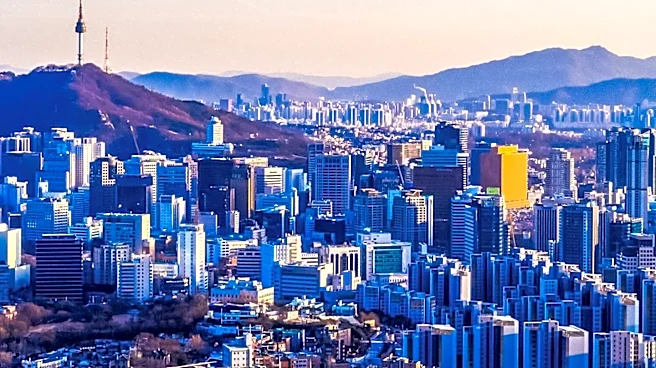







Seoul, the capital of South Korea, is renowned for its impressive skyline, which is dominated by the towering Lotte World Tower. As of 2024, the city boasts 126 buildings that rise over 150 meters, reflecting its rapid urban development and architectural innovation. This article delves into the evolution of Seoul's skyline, highlighting key milestones and the significance of these towering structures.
The Rise of Skyscrapers in Seoul
Seoul's journey into the world of skyscrapers began
with the construction of the 63 Building in 1985, which was the first structure in the city to exceed 150 meters. This marked the beginning of a new era in Seoul's architectural landscape, as the city embraced modernity and vertical expansion. The 63 Building set a precedent for future developments, showcasing the potential for high-rise construction in the capital.
The city's skyline continued to evolve with the construction of the Lotte World Tower in 2017, which stands at an impressive 555 meters. This building not only became the tallest in Seoul but also the sixth-tallest in the world, symbolizing South Korea's economic growth and technological prowess. The Lotte World Tower is a testament to Seoul's ambition to be a global city, attracting tourists and businesses alike.
Concentration of Tall Buildings
Seoul's tallest buildings are strategically concentrated in four key areas: the traditional city center at Jongno, the modern business district in Gangnam, the financial hub on Yeouido Island, and the affluent residential neighborhood of Dogok-dong. Each of these areas plays a crucial role in the city's economic and social fabric, with skyscrapers serving as landmarks and centers of activity.
Gangnam, in particular, has become synonymous with wealth and modernity, with its high-rise buildings symbolizing the district's status as a business and cultural hub. The concentration of skyscrapers in these areas reflects Seoul's strategic urban planning, aimed at maximizing space and fostering economic growth.
Challenges and Regulations
Despite the impressive growth of Seoul's skyline, the city faces challenges in managing its vertical expansion. The presence of Namsan Mountain in the center of Seoul has led to strict height regulations to preserve the iconic view of Namsan Tower. These regulations ensure that new developments do not obstruct the line of sight to this historic landmark.
Additionally, national security concerns have influenced building height restrictions, as emphasized by the Korean and U.S. Air Forces. These regulations highlight the delicate balance between urban development and preserving the city's cultural and historical heritage. As Seoul continues to grow, it must navigate these challenges to maintain its status as a leading global city.