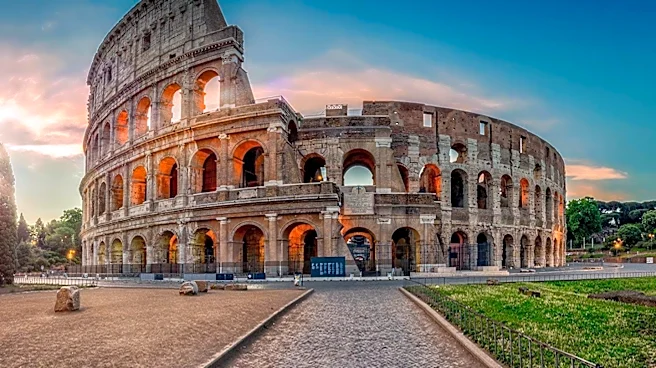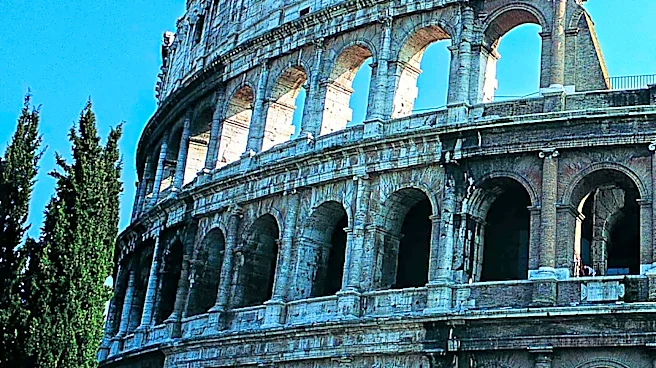







The Colosseum, initially conceived as the Flavian Amphitheater, served as the epicenter of Roman public entertainment for centuries. However, its story extends far beyond its initial purpose, encompassing periods of decline, repurposing, and eventual transformation into a global symbol. From its grand inauguration in 80 AD to its current status as a major tourist attraction and a beacon against capital punishment, the Colosseum's history reflects
the changing tides of Rome itself. Its journey from a vibrant arena to a partially ruined monument, and then to a site of historical and moral significance, underscores its enduring legacy.
Decline and Transformation in the Medieval Era
After centuries of hosting gladiatorial contests, animal hunts, and other public spectacles, the Colosseum ceased to be used for entertainment in the early medieval era. This marked a significant turning point in its history, as the grand amphitheater began a long process of transformation and decay. By the late 6th century, a small chapel had been built into the structure, though this did not immediately imbue the entire building with religious significance. The arena itself was converted into a cemetery, a stark contrast to its former lively purpose.
The numerous vaulted spaces within the arcades, originally designed for seating and access, found new uses. They were converted into housing and workshops, with records indicating they were still being rented out as late as the 12th century. Around 1200, the powerful Frangipani family took control of the Colosseum, fortifying it and using it as a castle. The early to mid-14th century saw a decline in Rome's population due to the Pope's relocation to Avignon, leading to the Colosseum being largely abandoned by the public and becoming a popular haunt for bandits. This period of neglect and repurposing highlights the adaptability of the structure, even as its original function faded.
Damage, Despoliation, and Early Restoration Efforts
The Colosseum suffered severe damage over the centuries, both from natural disasters and human intervention. A major fire in 217 AD, reportedly caused by lightning, destroyed the wooden upper levels of the amphitheater's interior. It was not fully repaired until around 240 AD, with further repairs in 250 or 252 AD and again in 320 AD. Earthquakes also took a heavy toll; a significant earthquake in 1349 caused the outer south side, situated on less stable alluvial terrain, to collapse. Much of the tumbled stone from this collapse was subsequently reused to construct palaces, churches, hospitals, and other buildings throughout Rome.
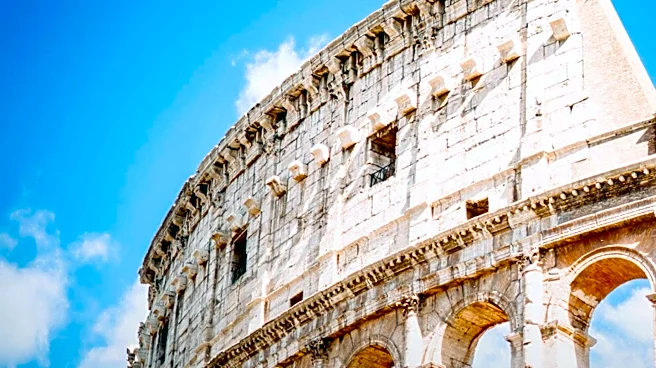
The interior of the amphitheater was extensively stripped of its stone, which was either repurposed elsewhere or, in the case of marble facades, burned to produce quicklime. The iron clamps that held the stonework together were pried or hacked out of the walls, leaving the numerous pockmarks visible on the building today. Despite this despoliation, some restoration efforts began. In 1377, after the Pope's return to Rome, a religious order known as Arciconfraternita del SS. Salvatore ad Sancta Sanctorum restored a northern portion of the Colosseum and inhabited it until the early 19th century. Later popes initiated further stabilization and restoration projects, including reinforcing the facade with triangular brick wedges in 1807 and 1827, and repairing the interior in 1831, 1846, and the 1930s. The arena substructure was also partly excavated in the 19th century and fully exposed under Benito Mussolini in the 1930s.
Modern Significance and Symbolism
Today, the Colosseum is one of Rome's most popular tourist attractions, drawing millions of visitors annually. Its iconic status has also led to its adoption as a symbol for various modern causes. Since 2000, the Colosseum has become a prominent symbol in the international campaign against capital punishment, which was abolished in Italy in 1948. As a gesture against the death penalty, the local authorities in Rome change the color of the Colosseum's nighttime illumination from white to gold whenever a person condemned to death anywhere in the world has their sentence commuted or is released, or when a jurisdiction abolishes the death penalty. For example, it was illuminated in gold in November 2012 following Connecticut's abolishment of capital punishment. This modern use of the ancient monument highlights its continued relevance and power as a symbol in contemporary society.