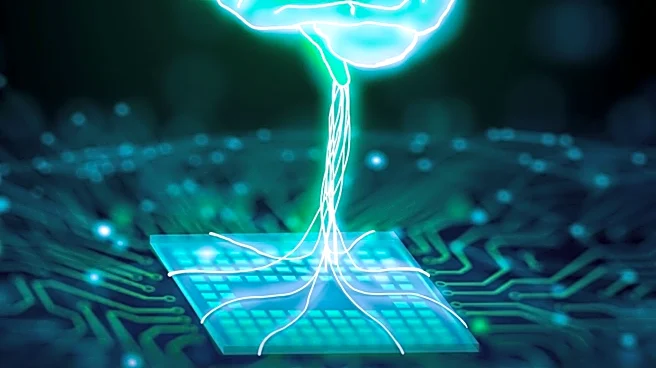








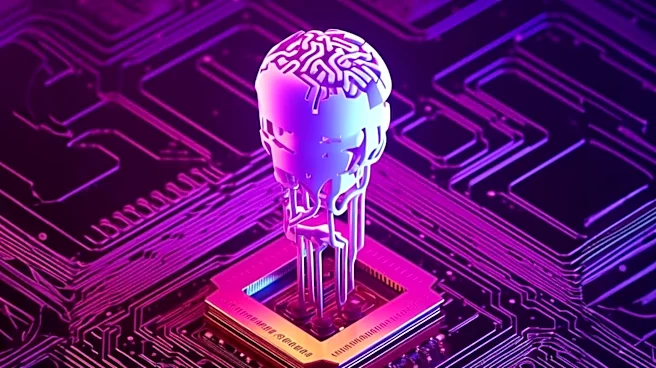
The Dehaene–Changeux model (DCM), also known as the global neuronal workspace or the global cognitive workspace model, represents a significant effort to understand consciousness through a computational lens. Introduced in 1986 by cognitive neuroscientists Stanislas Dehaene and Jean-Pierre Changeux, this model is programmed as a neural network and aims to replicate the complex "swarm behavior" of the brain's higher cognitive functions. These functions include
consciousness itself, decision-making processes, and the central executive functions that govern our thoughts and actions. The DCM is closely associated with Bernard Baars's global workspace theory for consciousness, providing a concrete, simulated framework for many of its theoretical concepts.
Origins and Theoretical Foundations
The development of the Dehaene–Changeux model began with the goal of creating a computer simulation that could shed light on the neural correlates of consciousness (NCC). The NCC formalism defines consciousness as a state-dependent property of a complex, adaptive, and highly interconnected biological system, focusing on the minimal set of neuronal events and mechanisms sufficient for a specific conscious percept. The DCM attempts to embody these principles within a neural network, offering a dynamic representation of how conscious experience might arise from brain activity.
This model builds upon the broader global workspace theory (GWT), which posits that conscious experience is akin to information illuminated on a stage by a spotlight of attention. Unconscious processes operate in parallel, vying for access to a "global workspace" that then broadcasts winning content throughout the brain. The DCM provides a computational instantiation of this theory, simulating how information might be selected, amplified, and disseminated across different brain regions to achieve a conscious state.
Simulating Brain Dynamics and Cognitive Functions
The Dehaene–Changeux model is designed to reproduce the intricate dynamics of the brain's higher cognitive functions. It has been described as an interaction of "meta neural networks" or thalamocortical columns, which are themselves programmed as a hierarchy of neural networks. This hierarchical structure allows the model to act as an intelligent agent, predicting the self-organized behavior of the neural correlates of consciousness. Researchers like Cohen & Hudson (2002) had previously utilized "meta neural networks as intelligent agents for diagnosis," a concept that resonates with Dehaene and Changeux's approach.
The model's ability to simulate complex brain activity has made it a valuable tool for research. For instance, it has been used to provide a predictive framework for studying phenomena such as inattentional blindness, where individuals fail to perceive visible objects because their attention is directed elsewhere. Additionally, the DCM has been applied to understand how the brain solves cognitive tasks like the Tower of London test, which assesses planning and problem-solving abilities. These applications demonstrate the model's utility in exploring how conscious and unconscious processes contribute to various cognitive functions.
Contributions to Understanding Self-Organized Criticality
A significant contribution of the Dehaene–Changeux model lies in its role in studying nonlinearity and self-organized criticality within the brain. Criticality, in this context, refers to a state where a system is poised between order and disorder, allowing for optimal information processing and adaptability. The DCM has helped confirm that criticality is a fundamental property of human brain functional network organization across all physiological bandwidths, as demonstrated by studies like Kitzbichler et al. (2011a) which examined phase-locking and large-scale synchronization.
Furthermore, the model has been instrumental in exploring how cognitive effort impacts brain networks. Kitzbichler et al. (2011b), building on the DCM, showed that cognitive effort can temporarily break the modularity of the mind, leading human brain functional networks to adopt a more efficient, though less economical, configuration. Werner (2007a, 2007b) also utilized the global neuronal workspace concept to advocate for statistical physics approaches in understanding phase transitions and universality properties of the brain's "Dynamic Core," linking it to macroscopic electrical activity observed in EEG and EMG. These insights highlight the DCM's importance in understanding the complex, dynamic nature of brain activity underlying consciousness.