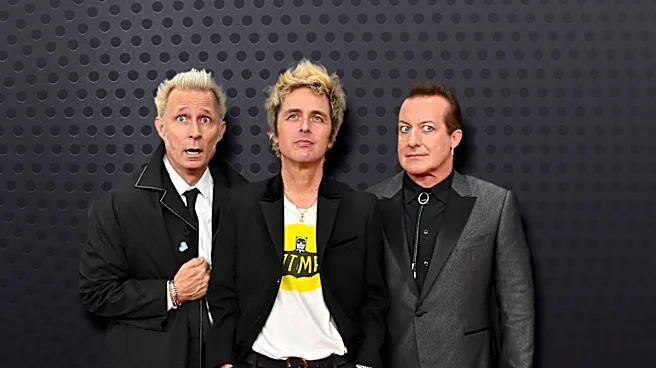





Green Day's seventh studio album, "American Idiot," released on September 21, 2004, by Reprise Records, marked a significant turning point for the band. Produced by Rob Cavallo in collaboration with the group, the album was conceived as a "punk rock opera." Recording sessions spanned from 2003 to 2004, taking place at Studio 880 in Oakland and Ocean Way Recording in Hollywood, California. This ambitious project aimed to tell the story of Jesus of Suburbia,
a lower-middle-class American adolescent anti-hero, while expressing the disillusionment of a generation shaped by events like 9/11 and the Iraq War.
Crafting a Punk Rock Opera
The album's unique structure began with the band members individually crafting ambitious 30-second songs. Billie Joe Armstrong recalled how this process became a competition to outdo one another, leading to the connection of these short musical bits into longer suites. This method resulted in the creation of "Homecoming" and "Jesus of Suburbia," which fundamentally changed the album's development. The band started viewing songs not just as individual tracks but as chapters or movements, even considering the potential for a feature film or novel.
Armstrong soon penned the title track, which explicitly addressed sociopolitical issues, solidifying the band's decision to steer the album toward a "punk rock opera." Prior to recording, Green Day rented rehearsal space at Studio 880 in Oakland, where Armstrong invited Cavallo to guide their writing. Cavallo encouraged the concept album idea, recalling a decade-old conversation where Armstrong expressed a desire for a "Beatles-like arc to their creativity." During these sessions, the band spent days writing, staying up late discussing music, and even setting up a pirate radio station for jam sessions and prank calls. They thoroughly demoed the album, ensuring it was fully written and sequenced before formal recording.
The Recording Process and Artistic Vision
To clear his head and develop new song ideas, Armstrong traveled alone to New York City for several weeks, renting a loft in the East Village. He spent this time walking, participating in jam sessions at a Manhattan bar called Hi-Fi, and socializing with songwriters like Ryan Adams and Jesse Malin. Many songs, including "Boulevard of Broken Dreams" and "Are We the Waiting," were inspired by his time in Manhattan, where he also formulated much of the album's storyline about individuals leaving home and confronting inner demons.
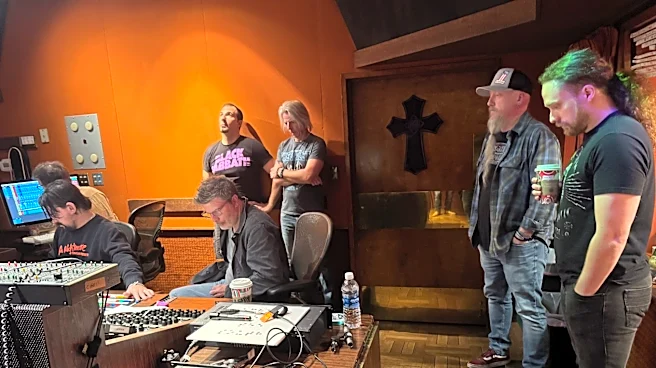
With demos complete, Green Day moved to Los Angeles, recording first at Ocean Way Recording and then Capitol Studios. Drummer Tré Cool brought over 75 snares and multiple drum kits, recording tracks on two-inch tape for a compressed sound before transferring them to Pro Tools for digital mixing. Ocean Way Studio B, chosen for its high ceiling and acoustic tiling, was used for all drum tracks to achieve optimal sound. Unusually for Green Day, songs were recorded in the order they appear on the track listing, with each song completed before moving to the next. They also reversed the typical recording order for guitars and bass, laying down guitars first, inspired by the Beatles' approach. Armstrong described the immense effort as akin to climbing a mountain.
The band adopted a relaxed approach during the five months of LA sessions, staying at a Hollywood hotel where their late-night music often drew complaints. Armstrong admitted to scheduling vocal sessions around frequent hangovers, reflecting a period where the band felt they had separated from their past identities. He stated, "For the first time, we fully accepted the fact that we're rock stars." The entire project took 10 months and cost $650,000. By its conclusion, Armstrong felt "delirious" but also believed the band was "peaking right now," sensing they were on the cusp of something significant.