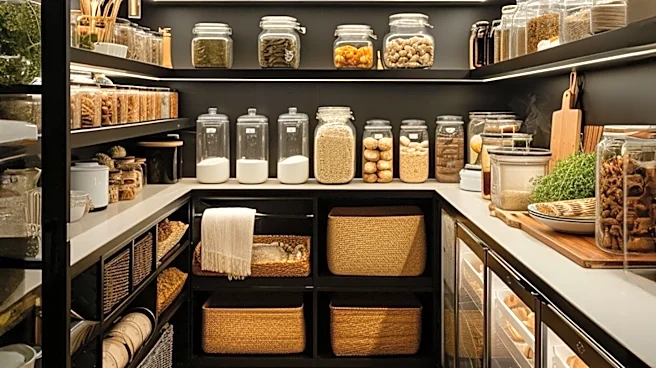





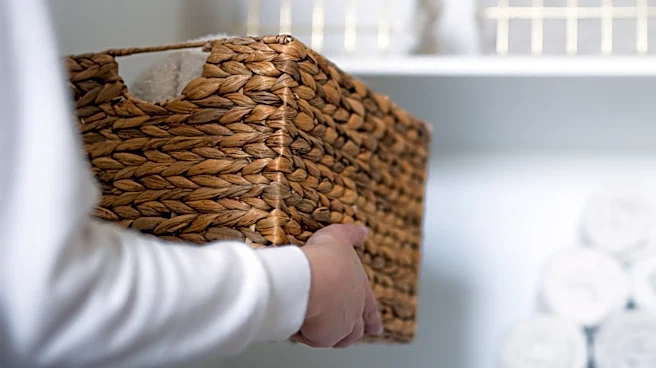

The term "pantry" often conjures images of shelves laden with food items, a traditional extension of the kitchen. However, the modern pantry has evolved significantly, encompassing a much broader range of storage and utility functions within both homes and offices. From housing beverages and cleaning supplies to linens and specialized serving ware, today's pantries are versatile spaces designed to organize and streamline various aspects of daily life,
reflecting a shift towards more integrated and efficient domestic and professional environments.
Multifunctional Storage Hubs
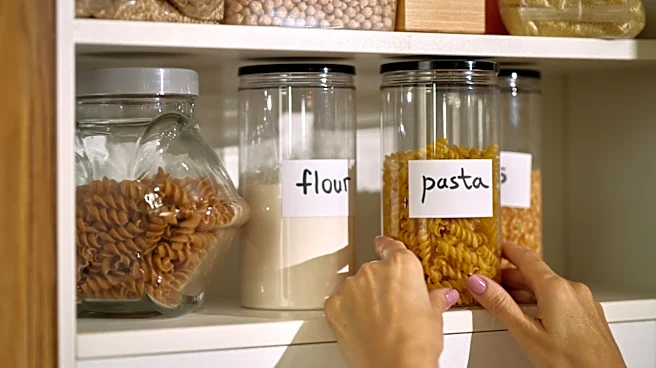
At its core, a pantry serves as a storage room or cupboard. While food and beverages remain primary occupants, the scope has expanded to include a variety of household provisions. This can range from dishes and glassware to household cleaning products and linens. In an office setting, a pantry might store breakroom supplies, small appliances, or even stationery, adapting its purpose to the specific needs of the environment. The key characteristic is its ancillary capacity, supporting the main functions of a kitchen or workspace by keeping essential items organized and readily accessible.
Historically, the pantry's role was often intertwined with other specialized rooms. For instance, in some middle-class houses, the larder, pantry, and storeroom might have been large wooden cupboards, each with a distinct purpose. The pantry itself was once a place where tableware like china, glassware, and silverware were stored. If it included a sink for washing these delicate items, it was typically a wooden sink lined with lead to prevent chipping. This historical context highlights the pantry's long-standing role in managing not just consumables, but also valuable household goods.
The Specialized Butler's Pantry
One prominent example of the pantry's expanded role is the butler's pantry. While traditionally used for cleaning, counting, and storing silver, its modern iteration has become a sophisticated utility room primarily for serving items rather than just food. These pantries are often located in transitional areas between kitchens and dining rooms, acting as crucial staging areas for meals. They commonly feature countertops and dedicated storage for items such as candles, serving pieces, table linens, and wine, enhancing the dining experience.
Modern butler's pantries can be quite elaborate, sometimes including dishwashers, refrigerators, or sinks, further blurring the lines between a simple storage space and a fully functional utility room. This evolution reflects a desire for greater convenience and organization, particularly in homes where entertaining is frequent. The resurgence in popularity of butler's pantries underscores their value as dedicated spaces that support the smooth operation of a household, extending well beyond the basic storage of bread and provisions to encompass a wide array of domestic needs.
Asian Pantry Traditions and Modern Adaptations
Beyond Western traditions, the concept of a pantry also manifests in diverse ways globally. In Asian cultures, kitchens have historically been more open-format, with the function of a pantry often fulfilled by intricate wooden cabinetry. For example, in Japan, a kitchen cabinet is known as a "mizuya tansu." A rich tradition of woodworking and cabinetry developed in Japan, particularly during the Tokugawa period, leading to a vast array of tansu designs, each tailored for a specific purpose. This approach is similar to the Hoosier cabinet concept, where specific design innovations served a wide variety of functions.
This demonstrates that while the term "pantry" might evoke a specific image in Western minds, the underlying need for organized, specialized storage for household items is universal. Whether through dedicated rooms, built-in cabinetry, or innovative cooling solutions, the pantry, in its various forms, continues to be an indispensable component of efficient living spaces, adapting to cultural practices and technological advancements.