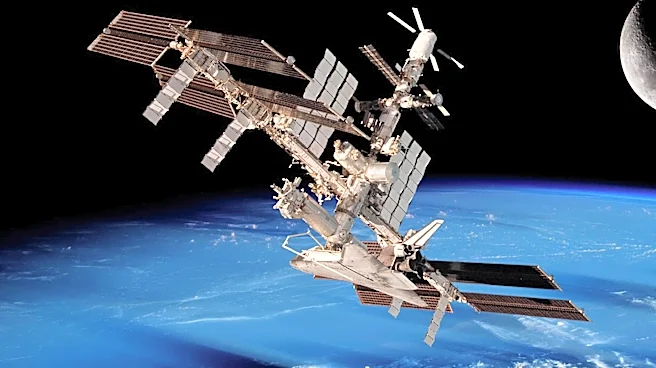

Expedition 16, spanning from October 2007 to April 2008, was a pivotal period for the physical expansion and assembly of the International Space Station (ISS). This long-duration mission saw the delivery
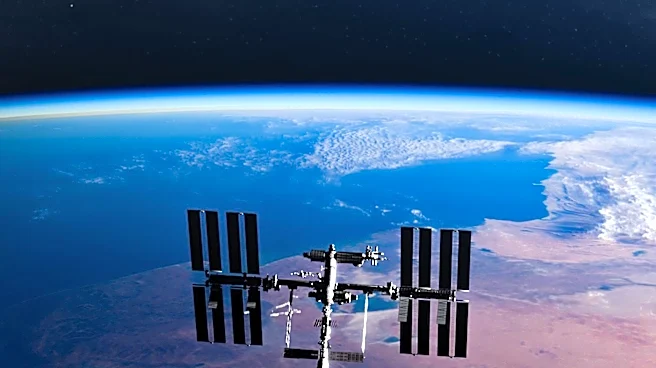
and integration of crucial new modules, significantly increasing the station's volume and capabilities. Through a series of complex spacewalks and robotic operations, the crew meticulously worked to transform the orbiting outpost, laying the groundwork for future scientific endeavors and international collaboration. The mission highlighted the intricate dance between human ingenuity and advanced robotics in constructing humanity's largest space structure.
The Arrival and Integration of the Harmony Module
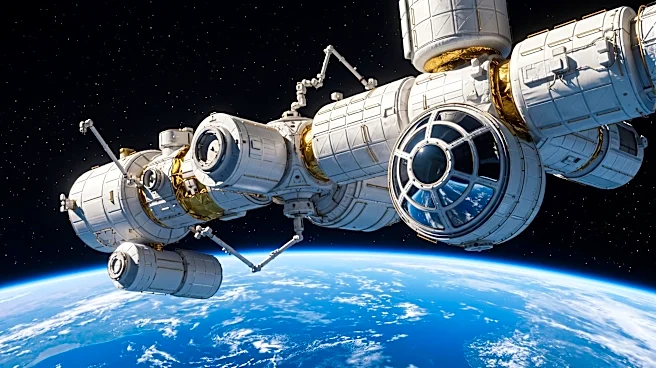
A major objective of Expedition 16 was the delivery and installation of the Harmony module, also known as Node 2. This critical component arrived aboard the Space Shuttle Discovery during the STS-120 mission, which docked with the ISS on October 25, 2007. Upon its arrival, Harmony was initially attached to a temporary location on the Unity module. This new addition was substantial, adding over 2,500 cubic feet to the station's living volume, providing more space for crew activities and equipment. The joint crews of Expedition 16 and STS-120 also undertook the complex task of moving the P6 truss, relocating it from its temporary position on top of the station to its final port-side location during one of four spacewalks, further enhancing the station's structural integrity and power generation capabilities.
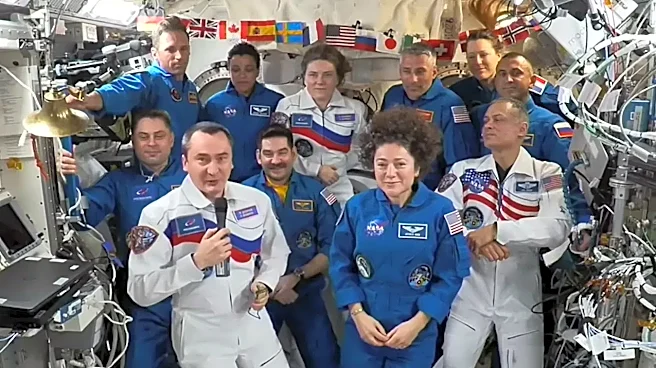
Following the departure of STS-120, the Expedition 16 crew, led by Commander Peggy Whitson and Flight Engineer Yuri Malenchenko, continued the intricate process of configuring Harmony. This involved a series of Extra-vehicular Activities (EVAs) and robotic arm operations. On November 9, Whitson and Malenchenko performed an EVA to prepare the Pressurized Mating Adapter (PMA-2) for relocation. Just three days later, Whitson and Daniel Tani used the station's Mobile Servicing System (robotic arm) to detach PMA-2 from the Destiny laboratory and relocate it to the forward port of Harmony. This precise maneuver was essential for future docking operations.
Outfitting and Finalizing Harmony's Position
The work to integrate Harmony continued with further robotic and spacewalking efforts. On November 14, Tani and Whitson again utilized the robotic arm to move Harmony itself from its temporary spot to its permanent location on the forward port of Destiny. This final positioning was crucial for the station's long-term configuration. To fully outfit the Harmony node in its new position, Whitson and Tani conducted a second EVA on November 20, a spacewalk lasting 7 hours and 16 minutes. During this extensive outing, they successfully accomplished all planned tasks and even performed three additional "get-ahead" tasks, demonstrating their efficiency and dedication.
A third EVA for the increment, lasting 7 hours and 4 minutes, was completed by Whitson and Tani on November 24. This spacewalk finalized the outfitting of Harmony and included a photographic inspection of the starboard Solar Alpha Rotary Joint (SARJ), along with other ISS maintenance tasks. These detailed and demanding operations were fundamental to making Harmony a fully functional part of the International Space Station, ready to support future modules and scientific research. The successful integration of Harmony was a testament to the meticulous planning and execution by the Expedition 16 crew and ground control teams.