



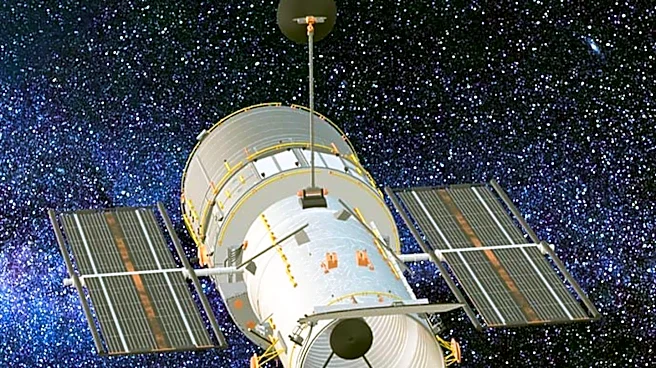
Mae Carol Jemison holds a unique and significant place in history as the first African-American woman to travel into space. Her journey, culminating in a mission aboard the Space Shuttle Endeavour in 1992, broke barriers and inspired a generation. Born in 1956, Jemison's path to becoming an astronaut was marked by a strong educational foundation and a diverse professional background, including engineering, medicine, and humanitarian service. Her achievement
not only represented a personal triumph but also a pivotal moment for representation in space exploration.
Educational Foundations and Early Aspirations
Jemison's academic pursuits laid a robust groundwork for her future career. She attended Stanford University, where she earned both a Bachelor of Arts (BA) and a Bachelor of Science (BS) degree. Following her undergraduate studies, she continued her education at Cornell University, where she obtained her Doctor of Medicine (MD) degree. This combination of engineering and medical expertise provided her with a unique and valuable skill set, making her an ideal candidate for the demanding role of an astronaut.
Even before her space career, Jemison demonstrated a commitment to service and global health. From 1983 to 1985, she served as a medical officer with the Peace Corps. In this role, she was responsible for the health of Peace Corps volunteers in Liberia and Sierra Leone. Her duties were extensive, including supervising medical staff, managing pharmacies and laboratories, providing direct medical care, and developing health and safety guidelines. She also collaborated with the Centers for Disease Control on vaccine research, showcasing her dedication to public health on an international scale.
Joining NASA and the Historic Mission
Jemison's long-held dream of space travel began to materialize when she joined NASA's astronaut corps in 1987. She was part of NASA Group 12, undergoing the rigorous training and preparation required for space missions. Her selection was a testament to her exceptional qualifications and determination. This period marked her transition from a career in medicine and public health to the specialized field of space exploration.
Her historic opportunity came with the STS-47 mission. As a mission specialist aboard the Space Shuttle Endeavour, Jemison embarked on her space journey from September 12 to September 20, 1992. During this nearly eight-day mission, the Endeavour orbited the Earth, and Jemison played a crucial role in the scientific and operational aspects of the flight. Her time in space totaled 7 days, 22 hours, and 30 minutes, making her a pioneering figure in human spaceflight. She retired from NASA in March 1993, leaving an indelible mark on the agency and the world.
Legacy and Impact
Mae Jemison's flight into space was more than just a scientific endeavor; it was a powerful symbol of progress and possibility. As the first African-American woman in space, she shattered racial and gender barriers, demonstrating that the cosmos were accessible to all. Her achievement resonated deeply, inspiring individuals from diverse backgrounds to pursue careers in science, technology, engineering, and mathematics. Her legacy continues to encourage future generations to reach for their dreams and push the boundaries of human achievement.