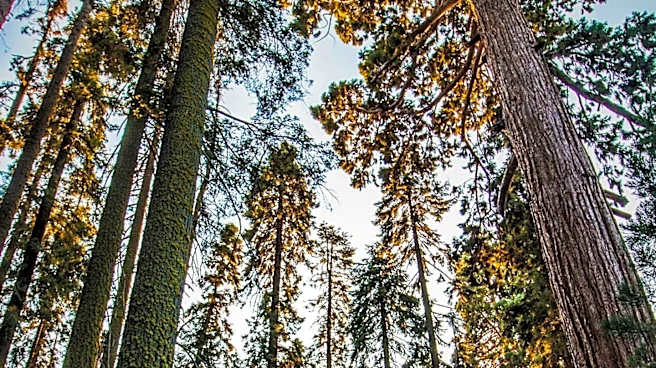








The Redwood National and State Parks, nestled along the picturesque coast of northern California, are home to some of the most awe-inspiring natural wonders on Earth: the coast redwood trees. These magnificent giants are not only the tallest trees globally but also among the largest, creating an unparalleled old-growth temperate rainforest ecosystem. The parks, encompassing Redwood National Park, Del Norte Coast Redwoods State Park, Jedediah Smith
Redwoods State Park, and Prairie Creek Redwoods State Park, collectively safeguard 139,000 acres of this unique environment, including a remarkable 45% of all remaining coast redwood forests, totaling at least 38,982 acres.
An Ecosystem of Giants
The sheer scale of the coast redwood trees is difficult to comprehend without experiencing it firsthand. These trees define the landscape of the Redwood National and State Parks, forming dense, ancient forests that have stood for centuries. Within Jedediah Smith Redwoods State Park, for instance, one can find a grove of 5,000 acres that includes the world's largest (though not tallest) coast redwood, boasting an impressive diameter of 20 feet and a height of 340 feet. This particular park alone contains 9,500 acres of redwood trees, showcasing the immense concentration of these natural marvels.
These old-growth temperate rainforests are more than just a collection of large trees; they are complex ecosystems that support a rich diversity of life. The towering canopy creates a unique microclimate, fostering conditions necessary for the survival of numerous plant and animal species. The parks' commitment to protecting "much nature within the area" extends beyond the redwoods themselves, encompassing the intricate web of life that thrives beneath and around them.
Biodiversity and Threatened Species
The ecological significance of the Redwood National and State Parks is further highlighted by their role in preserving threatened animal species. The diverse habitats within the parks, from the ancient forests to the coastal areas and rivers, provide crucial refuge for vulnerable wildlife. Among the species that find protection here are the tidewater goby, Chinook salmon, northern spotted owl, and Steller's sea lion. The presence of these species underscores the importance of maintaining the integrity of the parks' ecosystems.
For example, the Smith River, which flows through Jedediah Smith Redwoods State Park, is a vital component of this biodiversity. As the last major undammed river in California, it offers an undisturbed environment critical for aquatic life. The river is home to rainbow trout and salmon, and it holds the state record for the largest steelhead rainbow trout, weighing over 27 pounds. Beyond fish, the park's forests and riverbanks support black bears, black-tailed deer, squirrels, chipmunks, and raccoons, illustrating the broad spectrum of mammals that depend on this protected landscape. The parks' designation as a UNESCO World Heritage Site in 1980 further acknowledges their outstanding universal value for natural heritage.