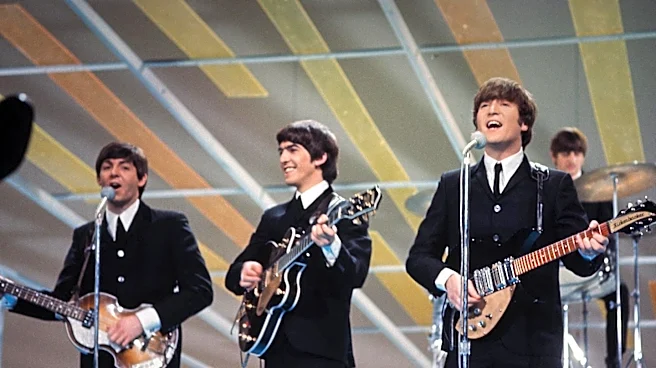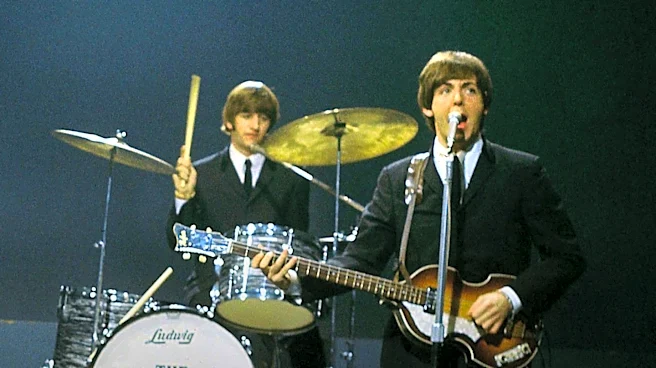




Released on June 1, 1967, The Beatles' "Sgt. Pepper's Lonely Hearts Club Band" quickly transcended its status as a mere musical album to become a profound cultural phenomenon. It was an immediate commercial and critical success, solidifying its place in music history not only for its innovative sound but also for its pioneering role as an early concept album. Musicologists widely regard it as a crucial work of British psychedelia, and its influence
reverberated across the music industry and popular culture, shaping perceptions of what a rock album could achieve.
The Birth of a Concept
The conceptual foundation of "Sgt. Pepper's" emerged from Paul McCartney's idea for the Beatles to release an entire album that would represent a performance by a fictional band. This idea transformed the album from a collection of individual songs into a cohesive artistic statement, presented as if by the "Sgt. Pepper band." This narrative framework allowed the Beatles to experiment with different musical styles and lyrical themes under a unified umbrella, breaking away from the traditional album format.
This conceptual approach was a significant departure for the band and for popular music in general. It invited listeners into an imagined world, encouraging a more immersive and theatrical listening experience. The album's structure, with its recurring themes and character introductions, laid groundwork for future concept albums, demonstrating the potential for rock music to tell a story or explore a central idea beyond individual tracks.
Critical Acclaim and Cultural Resonance
Upon its release, "Sgt. Pepper's Lonely Hearts Club Band" was met with overwhelming critical acclaim. Its innovative sound, complex arrangements, and lyrical depth captivated critics and audiences alike. The album's immediate success was not just in sales, but in its ability to spark conversation and redefine artistic boundaries within popular music. It quickly became a benchmark against which other albums were measured.
Beyond its critical reception, "Sgt. Pepper's" had a profound cultural impact. It became synonymous with the psychedelic era of the late 1960s, embodying the experimental spirit and artistic freedom of the time. Its influence extended beyond music, touching fashion, art, and broader societal trends. The album's iconic cover art, featuring a collage of historical figures and cultural icons, further cemented its status as a cultural touchstone, inviting interpretation and discussion.
Enduring Legacy and Influence
Decades after its release, "Sgt. Pepper's Lonely Hearts Club Band" continues to be celebrated for its enduring legacy. As of 2014, it had sold more than 30 million copies worldwide, making it one of the best-selling albums of all time. This commercial success is matched by its lasting critical importance; the music scholar David Scott Kastan described it as "the most important and influential rock and roll album ever recorded."
Its status as an important work of British psychedelia and an early concept album highlights its pioneering spirit. The album's innovative recording techniques, conceptual unity, and artistic ambition set new standards for what popular music could achieve. Its influence can be traced through countless artists and genres, demonstrating how "Sgt. Pepper's" not only captured the zeitgeist of its time but also helped to shape the future trajectory of rock and roll and album artistry.