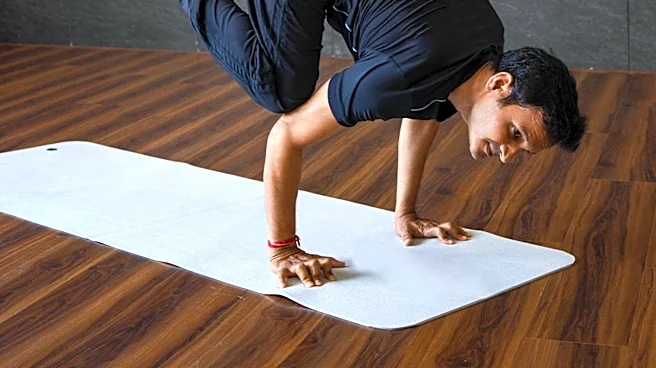


Eka Pada Koundinyasana I, often referred to as the one-legged pose dedicated to Sage Koundinya, is a prominent hand-balancing asana within the practice of modern yoga as exercise. This pose is characterized by its unique structure, where one leg is positioned over the supporting arm while the other leg extends straight. Understanding the etymology of its Sanskrit name provides insight into its meaning and significance, as "Eka" translates to one,
"Pada" means leg, and "Koundinya" refers to the name of a sage, with "asana" denoting a posture. This intricate balance not only challenges physical strength but also requires significant core engagement and precise body placement.
Etymology and Naming
The name Eka Pada Koundinyasana I is rich with meaning, directly translating from Sanskrit to describe its form and dedication. The term "Eka" signifies the number one, highlighting the single-leg aspect of the pose. "Pada" refers to the leg, emphasizing the limb's role in the posture's balance and extension. "Koundinya" is the name of a revered sage, indicating that this asana is dedicated to or named after him, a common practice in yoga to honor ancient teachers or principles. Finally, "asana" is the Sanskrit word for a physical posture or seat, completing the description of this specific yoga position. The pose is also simply known as Sage Kaundinya's pose, reflecting its direct connection to the sage.
This naming convention is typical in yoga, where poses are often named after natural elements, animals, or significant figures, each name carrying a deeper symbolic or historical context. For Eka Pada Koundinyasana I, the dedication to Sage Koundinya suggests a connection to wisdom, discipline, and spiritual pursuit, qualities often associated with ancient sages. The precision and balance required to execute this pose can be seen as a physical manifestation of these mental and spiritual attributes.
Entering the Pose: Traditional and Alternative Approaches
Traditionally, Eka Pada Koundinyasana I is entered from a tripod headstand, which is a variation of Sirsasana. This method requires a strong foundation and control established in the headstand before transitioning into the arm balance. Another common entry point for this asana is from Parsva Bakasana, also known as side crow pose. Both entry methods demand significant upper body strength, core stability, and a clear understanding of weight distribution.
Regardless of the entry method, a crucial element for successfully performing Eka Pada Koundinyasana I is the precise placement of the knee. The knee needs to be positioned far enough up the triceps of the opposite arm. This strategic placement is vital before bending the elbows, as it allows for proper engagement of the core muscles. Engaging the core is essential not only for maintaining balance but also for preventing the leg from sliding down, which could compromise the stability of the pose. The careful alignment and engagement of various muscle groups are key to achieving and holding this challenging hand-balancing asana.
Key Elements for Stability and Engagement
Achieving stability in Eka Pada Koundinyasana I relies heavily on several key elements, primarily the engagement of core muscles and the strategic positioning of the body. As mentioned, the placement of the knee high up on the triceps of the opposite arm is fundamental. This creates a shelf-like support for the leg, allowing the practitioner to shift their weight forward and lift the body off the ground. Without this proper knee placement, the leg is prone to slipping, making the pose difficult to sustain.
Once the knee is correctly positioned, bending the elbows plays a critical role. This action helps to lower the center of gravity and further engage the core muscles, which are paramount for any hand-balancing posture. The core acts as the central stabilizing force, connecting the upper and lower body and distributing weight evenly across the arms. The combination of strong arm support, precise knee placement, and active core engagement allows the practitioner to extend one leg straight forward and the other straight backward, creating the distinctive shape of Eka Pada Koundinyasana I. This intricate interplay of strength and balance makes the pose both challenging and rewarding for those who practice it.