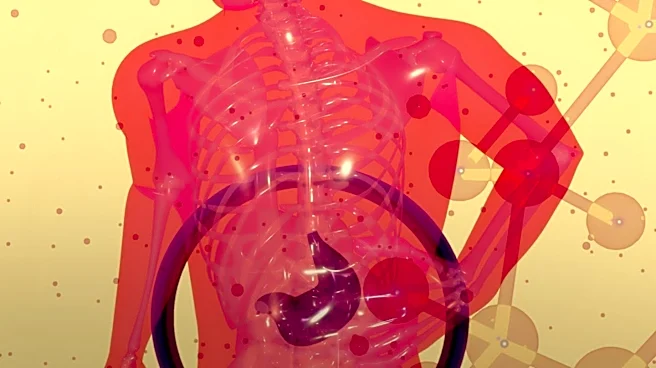







The multifidus muscle, often referred to as multifidus spinae, is a crucial component of the human back's muscular system. This muscle is not a single, uniform structure but rather consists of 23 distinct muscle fasciculi. These fasciculi are strategically positioned to fill the gutter on either side of the spinous processes of the vertebrae, a region sometimes called the spino-transverse groove. Its reach extends from the sacrum, at the base of the spine,
all the way up to the axis, which is the second cervical vertebra. Despite its relatively thin nature, the multifidus muscle plays an exceptionally important role in ensuring the stability of the joints within the spine.
Anatomical Placement and Structure
The multifidus muscle is situated just superficially to the spine itself, meaning it lies close to the vertebral column. It is part of a larger group of muscles known as the transversospinalis set, which also includes the semispinalis and rotatores spinae muscles. This classification highlights its deep location and its intricate connection to the vertebral column. The fasciculi that make up the multifidus muscle vary in length, contributing to its complex structure and multi-segmental function.
Each fasciculus of the multifidus muscle follows a specific path, passing obliquely upward and medially. These fasciculi then insert into the entire length of the spinous process of one of the vertebrae located above their origin point. The longest and most superficial fasciculi span from one vertebra to the fourth vertebra above it. Those next in order of length connect one vertebra to the second or third vertebra above. The deepest and shortest fasciculi are responsible for connecting two adjacent vertebrae, providing localized stability.
Role in Spinal Stability and Function
The primary function of the multifidus muscle is to stabilize the joints within the spine. It achieves this by spanning three joint segments, working to stabilize these joints at each individual level. This multi-segmental action is vital for maintaining the integrity and proper functioning of the vertebral column. The stiffness and stability provided by the multifidus muscle enable each vertebra to operate more effectively, reducing the potential for friction and wear.
This stabilization is particularly important in mitigating the degeneration of joint structures that can result from the friction caused by normal physical activity. By ensuring that the vertebrae are held firmly in place, the multifidus muscle helps to protect the spine from excessive movement and stress. Its deep location, relative to other muscles like the spinal erectors, transverse abdominis, abdominal internal oblique, and abdominal external oblique muscles, underscores its fundamental role as a core stabilizer of the spine.
The Transversospinalis Group Connection
As a member of the transversospinalis set, the multifidus muscle contributes to the overall function of this group, which is primarily involved in the rotation and extension of the vertebral column. While these muscles are generally small and may have a limited mechanical advantage for contributing to large-scale motion, their collective action, particularly in providing stability, is indispensable. The multifidus muscle's specific arrangement of fasciculi, connecting multiple vertebrae, allows it to exert precise control over spinal segments, making it a key player in both subtle movements and the overall structural support of the back.