The Trans-Am Series, presented by Pirelli, stands as a significant sports car racing series in North America, with a history stretching back to its founding in 1966. Sanctioned by the Sports Car Club of America (SCCA), the series has evolved considerably from its origins as a Manufacturers' Championship for modified passenger sedans and coupés. Today, it operates as a Drivers' and Manufacturers' Championship Series, open to GT-style racecars, showcasing
a rich tapestry of automotive competition across various track types, including road courses and street circuits throughout the United States, Canada, Mexico, and even Puerto Rico.
Genesis and Early Evolution: The Trans-American Sedan Championship
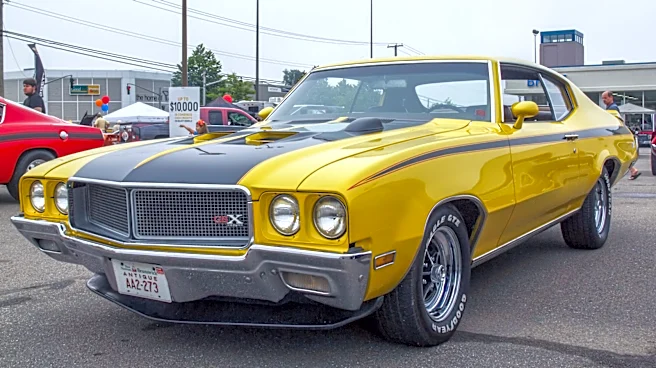
The Trans-Am Series was initially conceived in 1966 by SCCA President John Bishop, under the name Trans-American Sedan Championship. This early iteration focused on modified production cars, specifically FIA Group 2 Touring Cars, and featured two distinct classes: "Over 2.0 Liter" and "Under 2.0 Liter." The "Over 2.0 Liter" class was primarily for American pony cars, with engine displacement limited to 5.0 liters (305 cubic inches) and a wheelbase of 111 inches or less. The "Under 2.0 Liter" class predominantly featured European sedans. Both classes competed simultaneously, creating diverse fields. This era became renowned for intense rivalries among American V8 coupes like the Ford Mustang, Chevrolet Camaro, Plymouth Barracuda, Mercury Cougar, AMC Javelin, Pontiac Firebird, and Dodge Challenger. Legendary drivers such as Mark Donohue, Parnelli Jones, and Dan Gurney graced the tracks during this period, solidifying Trans-Am's reputation as a premier American muscle car showdown.
The "Golden Era" and Subsequent Transformations
The period leading up to 1972 is often regarded as Trans-Am's "golden era." Mark Donohue, in particular, was instrumental in popularizing the series, achieving 29 race victories between 1967 and 1971. However, after 1972, the series underwent significant changes. The focus shifted, and Trans-Am began to evolve into a format more akin to the IMSA GT Championship, moving away from its strict reliance on domestic performance sedans. Factors such as rising insurance premiums for muscle cars and the 1973 oil crisis contributed to this shift. The series briefly abandoned its two-class format from 1973 to 1975, opting for a single class of competition. It later reintroduced a two-category format in 1976, classifying FIA Group 4 and 5 cars as "Category 2," a structure that remained until 1979. Over time, Trans-Am gradually transitioned from production-based cars to tube-frame and silhouette racing cars, marking a significant departure from its original concept.
Modern Eras: Revival, Class Expansion, and Regional Championships
The series faced a cancellation after the 2006 season but was successfully revived in 2009, utilizing SCCA GT-1 based cars. This revival marked a new chapter, with Muscle Milk becoming the title sponsor. In an effort to boost grid sizes, additional classes were introduced in 2011, including TA2 for SCCA GT-2 and GTA class cars, and TA3 for SCCA GT-3 class cars, which were generally smaller and less powerful than the TA1 cars. The series continued to refine its class structure, eventually settling on its current format which includes TA, TA2, TA Cup (TAC) for silhouette cars, and production classes like GT, SGT, and XGT. A significant development in recent years has been the expansion of the series' geographical reach and structure. While Trans-Am has been a national series primarily covering the East Coast, South, and Midwest since 2015, a stand-alone West Coast Championship was added in 2017. This West Coast series features its own schedule, including joint races with the national Championship series where drivers compete together but earn points only in their respective championships. This dual-championship structure, along with the continuous evolution of car classes, demonstrates Trans-Am's ongoing adaptation and commitment to sports car racing in North America.
Pirelli's Influence and Scheduling Dynamics
Since 2017, Pirelli has played a crucial role as the exclusive tire supplier and presenting sponsor for the Trans-Am Series. The transition from bias-ply tires to Pirelli P ZERO radial tires has been well-received, leading to faster average speeds and improved lap times across all classes. The series' schedule has also seen frequent adjustments and expansions to accommodate new venues and regional championships. For instance, the 2017 season saw a reorganization of dates and the addition of the Indianapolis Motor Speedway. Subsequent years brought further changes, including the addition of the Pittsburgh International Race Complex and the return to historic tracks like Lime Rock Park. The integration of the West Coast Championship has also influenced scheduling, with shared events at key venues like Circuit of the Americas. The series has navigated challenges such as the COVID-19 pandemic, which led to postponements, cancellations, and revised schedules, demonstrating its resilience and commitment to continuing the tradition of Trans-Am racing.