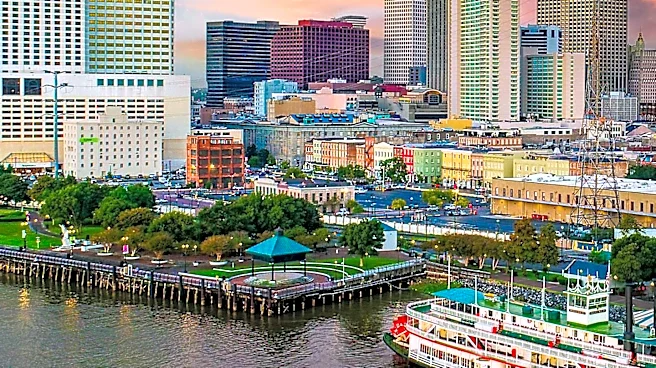







The steamboat New Orleans holds a significant place in American history as the first steamboat to navigate the western waters of the United States. Its inaugural voyage, spanning from 1811 to 1812, traveled from Pittsburgh, Pennsylvania, to New Orleans, Louisiana, utilizing the Ohio and Mississippi rivers. This journey marked the beginning of commercial steamboat navigation on these vital continental waterways, fundamentally changing trade and transportation
in the region. The vessel was a collaborative venture among Robert Fulton, Robert R. Livingston, and Nicholas Roosevelt, with Roosevelt overseeing its construction.
The Genesis of Western Steamboat Commerce
Before the New Orleans, commercial activity on the western rivers faced significant limitations. While settlers had been arriving in western lands via the Ohio and Mississippi rivers for decades, especially after the Louisiana Purchase in 1803, moving goods upstream was a formidable challenge. Methods for upstream travel were slow and arduous, involving laborious rowing, pushing boats with poles, or being pulled by men on shore using towlines. A return trip from New Orleans to an eastern port often necessitated a sea voyage and then a difficult crossing of the Appalachian Mountains to reach an inland departure point.
Robert Fulton, already successful in commercializing steamboat use on the Hudson River with his North River Steamboat (often called Clermont) in 1807, had prior familiarity with the Ohio River from a visit to Pittsburgh in 1786. This experience, combined with Livingston's political influence and wealth, laid the groundwork for their ambitious plan to introduce steamboat technology to the western rivers. Nicholas Roosevelt, the builder, launched the New Orleans in March 1811, setting the stage for its historic journey.
Transforming River Trade and Development
The New Orleans, a sidewheeler, demonstrated impressive capabilities for its time, achieving a downstream speed of 8 to 10 miles per hour and an upstream speed of 3 miles per hour. This ability to travel both ways on the river was revolutionary, converting river commerce from a one-way downstream trip to a dynamic two-way traffic system. This transformation was crucial for opening the Mississippi and Ohio River valleys to extensive commercial trade, fostering economic growth and land development along the inland rivers, particularly below the "Falls of the Ohio" at Louisville.
In its first year of operation on the Mississippi River, specifically between New Orleans and Natchez, the steamboat averaged $2,400 in receipts per trip, completing a round trip approximately every three weeks. After accounting for expenses, this generated a net gain of at least $20,000, a revenue described as "superior to any other establishment in the United States" by Cramer. Despite initial public skepticism and the higher cost compared to other river transport methods, which initially led to an increase in freight carried by flatboats and keels, the long-term impact was undeniable.
Overcoming Challenges and Securing Monopoly
The river environment presented numerous challenges, including dangerous snags, gravel, and sandbars. The "Falls of the Ohio" at Louisville also effectively divided navigation into two distinct sections. Over time, efforts were made to clear the riverbed, and the construction of the Louisville and Portland Canal later facilitated easier passage along the 981-mile route between Pittsburgh and the Mississippi River junction. These improvements, alongside the advent of steamboats, significantly enhanced river navigation.
Fulton and Livingston initially aimed to establish a fleet of eleven steamboats, with six operating between the "Falls of the Ohio" and New Orleans, and five between the Falls and Pittsburgh. With the assistance of Livingston's brother, Edward, a New Orleans politician, they secured exclusive rights to steam navigation on the new Louisiana Territory's rivers for 18 years, starting April 8, 1812. This concession stipulated that freight rates could not exceed three-quarters of the rates charged by non-steam-powered boats. However, their attempts to maintain a monopoly were eventually challenged by court decisions in New York and Louisiana, which ultimately broke their exclusive control over steamboat commerce. Despite these legal battles, the New Orleans had already signaled the dawn of a new era for river transportation and commerce in the American West.
The Legacy and End of the Pioneer Steamboat
The New Orleans, unfortunately, had a relatively short operational life. On July 14, 1814, just two years after its historic maiden voyage, the steamboat sank near Baton Rouge, Louisiana, after hitting a snag that punctured its hull. This incident set a pattern for the average lifespan of a Western Rivers steamboat, which was typically about three years. Following the sinking, Fulton's steamboat company salvaged the engine and machinery, transferring them to a new hull, which was also named New Orleans. This successor vessel continued to operate in the Natchez steamboat trade.
While Livingston died in 1813 and Fulton in 1815, Nicholas Roosevelt lived until 1854, witnessing the profound impact of their venture. The New Orleans represented the first step in a rapid technological development that included more efficient steam engines and improved steamboat designs tailored for western rivers. Its success quickly led to the construction of several other steamboats in Pittsburgh, such as the Comet (1813), Vesuvius (1814), and Aetna. By 1817, with twelve steamboats on the mid-western rivers, public skepticism waned, and within two years, over sixty steamboats plied the western waters. By 1826, 143 steamboats were in service, despite the constant dangers of boiler explosions and river obstructions, solidifying the steamboat's role in American expansion and commerce.