
The 2004 Summer Olympics in Athens witnessed a remarkable display of American dominance in the men's 200 meters, as athletes from the United States secured all three medal positions. This achievement marked
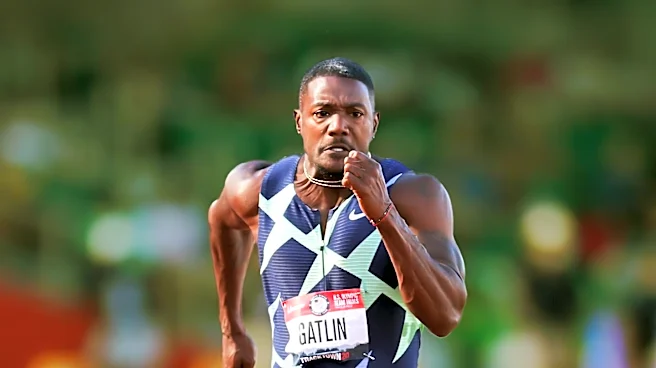
the sixth time in the event's history that American sprinters had swept the podium, and the first such instance since the 1984 Los Angeles Games. Shawn Crawford led the charge, claiming the gold medal, followed by his teammates Bernard Williams with silver and Justin Gatlin earning the bronze. This impressive performance underscored the nation's strong legacy in Olympic track and field, particularly in this specific sprinting discipline.
A Resurgent Force: Reclaiming the Podium
Four years prior to the Athens Games, the United States had failed to secure any medals in the men's 200 meters, a rare occurrence for a nation with such a rich history in the event. The 2004 sweep, therefore, represented a significant resurgence. Shawn Crawford's victory was the 17th gold medal for the United States in the men's 200 meters, further solidifying their position as a powerhouse in the sport. The collective effort of Crawford, Williams, and Gatlin not only brought glory to their country but also re-established American supremacy in this particular race.
The final race itself was a testament to the American sprinters' strategic execution and raw speed. The starting lineup featured several strong contenders, including Justin Gatlin, Francis Obikwelu, and Shawn Crawford, positioned centrally on the track. Bernard Williams, known for his strong starts, was also a key figure. From the gun, Williams gained an early advantage, quickly closing the stagger on Crawford. However, Crawford maintained his pace through the turn, effectively covering the longer distance of his lane. As the race progressed through the curve, Crawford and Gatlin appeared to be running neck and neck, with Crawford showing a more powerful stride than Williams and Gatlin on either side.
The Race Unfolds: A Battle for Gold and Silver
By the end of the turn, the three American athletes had established a clear lead, with Crawford at the forefront. Francis Obikwelu of Portugal emerged as the closest challenger, trailing by approximately a step. As the sprinters entered the final straightaway, Crawford began to pull away from Gatlin, making it evident that the race for gold was largely decided. The focus then shifted to the battle for the silver medal.
Gatlin initially held the advantage down the straight, but in the final ten meters, he appeared to struggle. This allowed Bernard Williams to surge forward, cruising past Gatlin to secure the silver medal. Meanwhile, veteran sprinter Frankie Fredericks of Namibia, who had been near the back at the start of the straight, steadily gained ground. He managed to dip past Obikwelu for fourth place, though his late surge was not enough to break up the American sweep of the medals. The final results saw Crawford win by a margin of 0.22 seconds, a clear indicator of his dominant performance on that day.
Historical Context and Event Details
The men's 200 meters event at the 2004 Summer Olympics was the 24th appearance of this discipline in the Olympic program, having been a consistent feature since its reintroduction after missing the inaugural Games in 1896. The competition took place at the Athens Olympic Stadium from August 24 to 26, featuring 54 competitors representing 41 nations. The United States, with its 23rd appearance, holds the record for the most participations in this event, having only missed the boycotted 1980 Games. The conditions for the final race included a wind speed of +1.2 m/s, which is within acceptable limits for record purposes. No new world or Olympic records were set during this particular competition, despite the impressive times posted by the medalists.