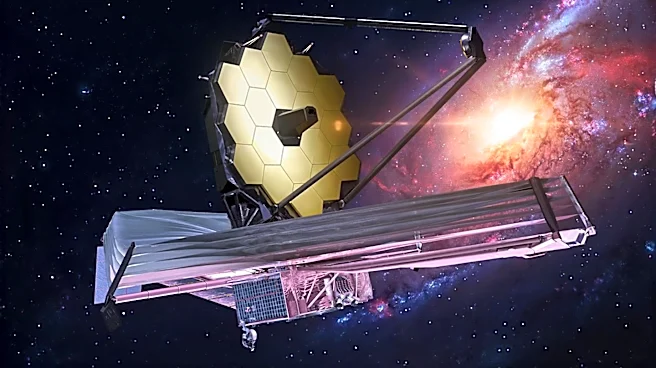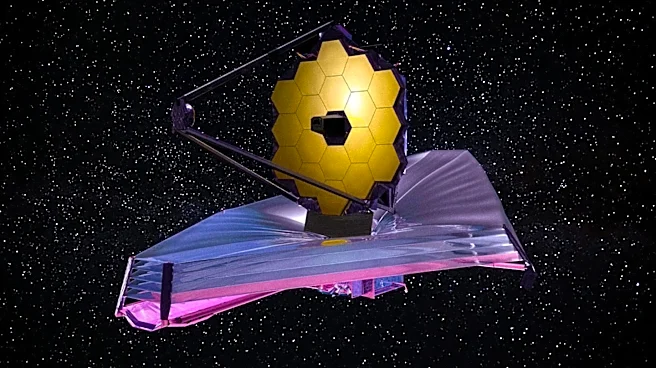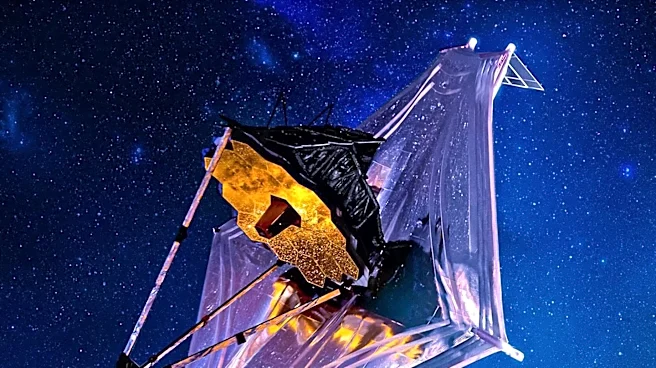


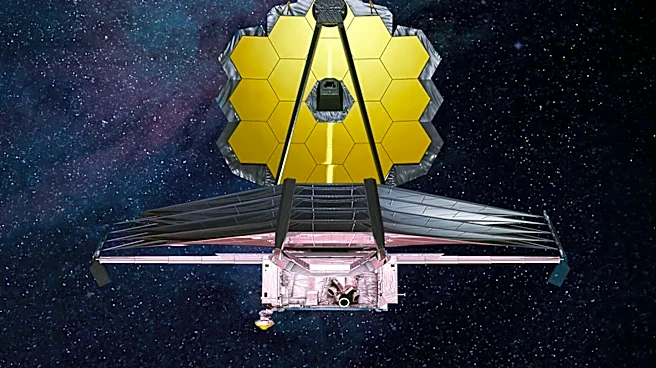


Webb's First Deep Field is a groundbreaking image that marks a new era in astronomical observation. Captured by the James Webb Space Telescope (JWST), this image reveals thousands of galaxies, some as old as 13 billion years, offering the deepest view of the universe to date. Released on July 11, 2022, it showcases the capabilities of the JWST and its Near-Infrared Camera (NIRCam), providing a high-resolution infrared view of the cosmos.
The Image and Its Development
Webb's First
Deep Field is centered on SMACS 0723, a galaxy cluster located in the constellation of Volans. This cluster acts as a gravitational lens, magnifying and distorting the images of more distant galaxies behind it. The image is a composite, created from multiple exposures taken at different wavelengths over 12.5 hours. This method allows for the capture of faint structures in extremely distant galaxies, revealing details that were previously unseen.
The image was first revealed to the public by U.S. President Joe Biden, highlighting its significance as the deepest infrared image of the universe ever captured. The use of false-color imaging techniques further enhances the visibility of these distant galaxies, making Webb's First Deep Field a crucial tool for understanding the early universe.
Scientific Insights from Webb's First Deep Field
The scientific results from Webb's First Deep Field are profound. The image shows the galaxy cluster SMACS 0723 as it appeared 4.6 billion years ago, covering an area of sky approximately the size of a grain of sand held at arm's length. Many objects in the image have undergone redshift due to the expansion of space, with the highest redshift measured at 8.498. This data provides insights into the age, mass, and composition of these galaxies, offering a glimpse into the universe's formative years.
Webb's NIRCam has brought distant galaxies into sharp focus, revealing tiny, faint structures such as star clusters and diffuse features. These observations are crucial for understanding galaxy evolution and the cosmic history of active galactic nuclei.
The Impact of Webb's First Deep Field
Webb's First Deep Field represents a significant milestone in astronomy, surpassing the capabilities of previous telescopes like Hubble. The image's depth and clarity allow researchers to study the universe's earliest galaxies, providing a detailed view of the cosmos that was previously unattainable.
This image not only advances scientific knowledge but also inspires the public by showcasing the vastness and complexity of the universe. As researchers continue to analyze Webb's First Deep Field, it will undoubtedly lead to new discoveries and deepen our understanding of the universe's origins.