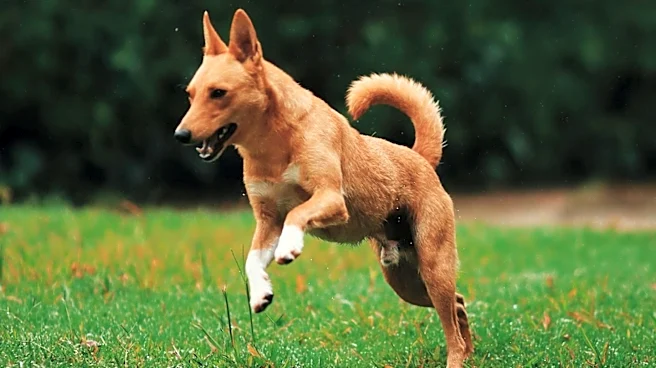







The Norwegian Lundehund is a fascinating breed with several unique traits that set it apart from other dogs. Originating from Norway, this small Spitz-type dog was developed for a specific purpose: hunting puffins. Its name, a combination of 'lunde' meaning puffin and 'hund' meaning dog, reflects this heritage. The breed's physical and behavioral characteristics are perfectly suited to its original role, making it a remarkable example of specialized
evolution.
Physical Characteristics
One of the most striking features of the Norwegian Lundehund is its polydactyl nature. Unlike most dogs, which have four toes per foot, the Lundehund typically has six fully formed, jointed, and muscled toes. This unique trait provides the dog with exceptional grip and balance, crucial for navigating the steep and narrow cliff paths where puffins nest. The extra toes are not just a curiosity; they are a functional adaptation that has helped the breed survive in its challenging environment.
In addition to its extra toes, the Lundehund has a remarkable range of motion in its joints. This flexibility allows the dog to bend its head backward along its spine and turn its forelegs to the side at a 90-degree angle, much like human arms. These abilities enable the Lundehund to maneuver through tight spaces and extract itself from narrow passages, skills that were essential for hunting puffins in their cliffside nests.
Behavioral Traits
The Norwegian Lundehund's behavior is as unique as its physical traits. The breed is known for its active nature and requires a fair amount of exercise to stay healthy and happy. This energy level is a reflection of its working dog heritage, where it needed to be agile and alert to successfully hunt puffins.
Lundehunds are also known for their ability to fold their ears shut, protecting them from dirt and parasites. This trait, combined with their dense and rough outer coat, makes them well-suited to the harsh conditions of their native environment. Despite their working dog background, Lundehunds are good family dogs and can tolerate children well if properly socialized.
Adaptations and Modern Uses
While the Norwegian Lundehund was originally bred for hunting, its unique traits have found new applications in modern times. For example, the breed is being tested at Tromsø airport by the Norwegian Air Traffic and Airport Management as a solution to airplane bird strikes. The dogs are used to search for bird eggs around the airport for disposal, showcasing their adaptability and usefulness in contemporary settings.
The Lundehund's journey from a specialized hunting dog to a breed with modern applications highlights its versatility and resilience. Despite facing near extinction in the 1960s, preservation efforts have ensured that this unique breed continues to thrive, with an estimated 1,500 dogs worldwide today.