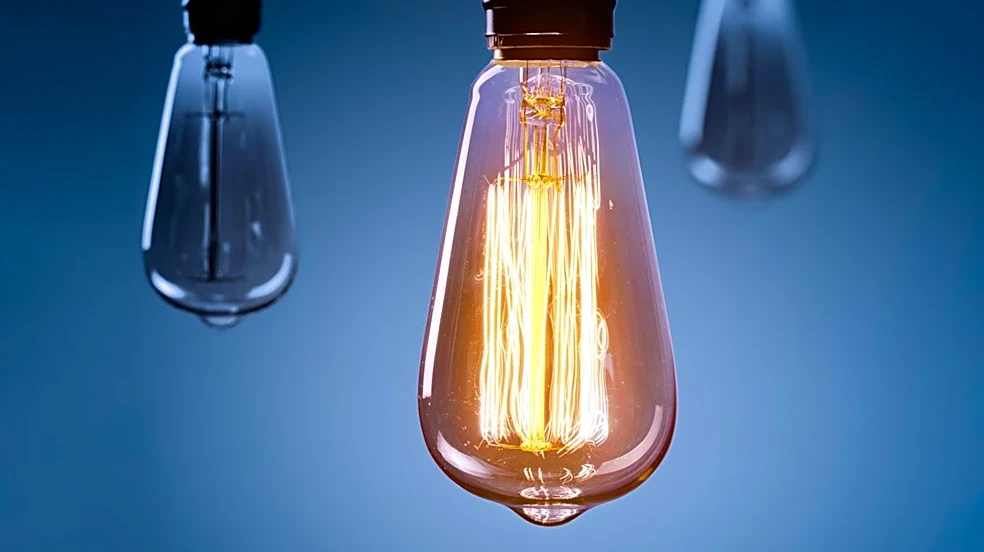









The Edison screw, a ubiquitous feature in modern lighting, represents a significant achievement in standardization and electrical engineering. Developed by Thomas Edison and patented in 1881, this threaded metal base for light bulbs revolutionized how electric lights were connected and powered. Its design, which allowed bulbs to be screwed into matching sockets, quickly became a dominant standard, displacing numerous incompatible designs from other
early manufacturers. The Edison screw's influence extended beyond lighting, serving as a primary connector for various appliances in the early days of electrification before dedicated wall outlets became common. Today, these sockets adhere to international standards, designated by an 'Exx' format where 'xx' indicates the diameter in millimeters.
The Genesis of a Standard
In the nascent years of incandescent lighting during the 1880s and 1890s, the United States saw a proliferation of different and often incompatible lamp bases. Edison, in designing his screw, drew inspiration from a kerosene can lid, even creating a prototype by sawing one off in 1880. This innovative approach contrasted with other designs, such as the Thomson-Houston Electric Company's threaded stud and flat contact ring, or the Sawyer-Man/Westinghouse base which utilized a spring clip and a contact stud. The existence of multiple competing designs forced smaller lamp manufacturers to produce bulbs compatible with all major types, alongside their own proprietary designs.
Edison filed his patent applications for the screw base in 1881 and 1890. While Edison was developing his screw, Reginald Fessenden introduced the bi-pin connector for the 1893 World's Fair as a response to Edison's patent. After refinements, Edison settled on a screw with a 1-inch diameter and 7 threads per inch, which would later evolve into the E26 standard. Early screw shells from as far back as 1888 featured a lighter taper compared to contemporary designs.
Consolidation and International Adoption
The landscape of lamp bases began to consolidate following the 1892 merger of Edison General Electric Company with Thomson-Houston, forming General Electric. This new entity progressively adopted the Edison screw, contributing significantly to its widespread prevalence. By approximately 1908, the Edison base had become the most common in the U.S., with other designs gradually fading from use. The drive for standardization soon extended internationally.
Proposals for international standards for Edison screws emerged in 1918 when France suggested to the International Electrotechnical Commission (IEC) that they address sockets and holders. Although initial IEC attempts to reach a consensus by 1925 were unsuccessful, lamp manufacturers continued the work independently. This led to the development of two standards—one for Europe and another for the Americas—which the IEC endorsed in 1930 and 1931, respectively. It was during this period that E-designations for screws originated in Germany, with seven DIN VDE standards enacted between 1924 and 1925, subsequently adopted by the IEC.
Diverse Types and Applications
Edison screw types are designated as "Exx," where "xx" represents the diameter of the socket in millimeters. These standards are largely harmonized between ANSI (American National Standards Institute) and IEC publications, though some screw mount types remain defined in only one standard. For instance, the large E39 "Mogul" and E40 "Goliath" bases are commonly found in street lights and high-wattage lamps, such as 100 W, 200 W, or 300 W three-way bulbs, as well as many high-intensity discharge lamps. In regions adhering to the U.S. National Electrical Code, general-use lamps exceeding 300 W must use an E39 base rather than an E26.
Various sizes cater to specific needs. Medium Edison Screw (MES) bulbs for 12 V are produced for recreational vehicles. Large outdoor Christmas lights and some desk lamps, along with many microwave ovens, utilize an Intermediate base. Historically, emergency exit signs also used the intermediate base, though current U.S. and Canadian regulations mandate long-life, energy-efficient LED lamps, often available as retrofits in conventional Edison base bulbs. The E29 "Admedium" base is reserved for specialized applications, such as UV spotlight lamps in magnetic crack detection machines. In countries with 220–240 volt AC domestic power, E27 and E14 are the most common screw-mount sizes, prevalent across continental Europe and China. For 120-volt North America, 100-volt Japan, and 110-volt Taiwan, the E26 is the standard for general-purpose lamps. Smaller bases like E12 are typically used for candelabra fixtures, while E14 or E17 appear in small table lamps, novelty lighting, and some newer ceiling fans. Christmas lights employ several base sizes, including E17 for C9 bulbs, E12 for C7 bulbs, and E10 for older series-wired C6 sets in the U.S., with early mini-lights even using E5 screw bases. Tiny E5 or E5.5 sizes are exclusively for extra-low voltages, such as in model buildings and vehicles, often called "pea bulbs." E10 bulbs are common in battery-powered flashlights. The E11 base, known as the "mini-can" in North America, is used for 50/75/100 Watt halogen lamps and features tighter threads to prevent their use in E12 base nightlights, where they could pose a fire risk.
Beyond Illumination: Other Uses and Innovations
The Edison screw socket's versatility extended beyond light bulbs. In the early days of electrification, when mains electricity was primarily for lighting and wall outlets were scarce, Edison screw sockets served as outlets for appliances like toasters. In North America, buildings wired before 1960 often used Edison base fuses, which screwed into fuse sockets similar to those for incandescent lamps. Adapters exist to convert light sockets into ungrounded electrical outlets, or to split them for multiple lamps or pull-chain switches. Conversely, adapters can transform wall outlets into lamp holders. Various accessories have also been developed, including smoke detectors that recharge via a lamp socket, allowing the attached lamp to function normally, and electronics that enable lamps to flash, dim, or operate on a timer. Even some vacuum tubes, such as certain rectifiers, have utilized an Edison screw base, showcasing the broad impact of this foundational design.