






Bleaching agents, while effective for cleaning and lightening, pose significant safety risks due to their chemical reactivity. Both chlorine-based and peroxide-based bleaches can cause harm if not handled properly, and their interactions with other substances can lead to the release of toxic gases or the formation of hazardous compounds. Understanding these chemical reactions and their potential consequences is crucial for safe use and environmental
protection.
Hazardous Chemical Reactions
One of the most well-known dangers of bleach involves its reaction with acids. Mixing a hypochlorite bleach with an acid cleaner can liberate chlorine gas, a highly toxic substance. Chlorine is a respiratory irritant that attacks mucous membranes and burns the skin. Even a concentration as low as 3.53 parts per million (ppm) can be detected by its odor, and 1000 ppm is considered potentially fatal after a few deep breaths. The U.S. OSHA has limited exposure to chlorine to 0.5 ppm over an eight-hour time-weighted average.Another dangerous reaction occurs when hypochlorite bleach is mixed with ammonia. The hypochlorites in liquid bleach and bleaching powder can react with ammonia to form a series of products, including monochloramine, dichloramine, and nitrogen trichloride. Similar reactions can occur with amines or related compounds found in biological materials like urine. These compounds are extremely irritating to the eyes and lungs and are toxic above certain concentrations. Chronic exposure, such as from air in swimming pools where chlorine is used as a disinfectant, has been linked to the development of atopic asthma. Furthermore, nitrogen trichloride is a very sensitive explosive.
Environmental and Health Impacts
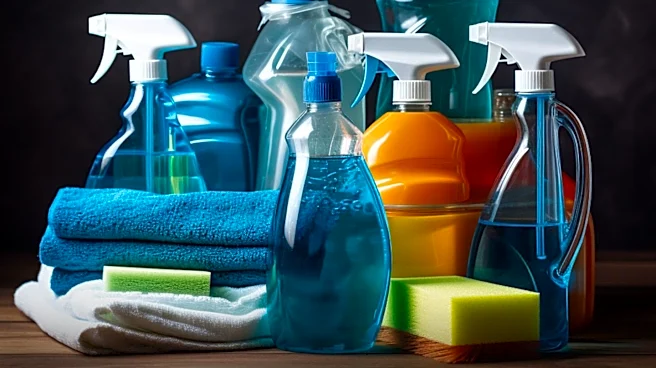
Beyond immediate chemical reactions, the use of bleaches can have broader environmental and health implications. A 2008 European study indicated that sodium hypochlorite, when combined with organic chemicals like surfactants and fragrances found in many household cleaning products, can generate chlorinated volatile organic compounds (VOCs). These VOCs are emitted during cleaning applications, and some are toxic and probable human carcinogens. The study observed significant increases in indoor air concentrations of chloroform (8–52 times above baseline) and carbon tetrachloride (1–1170 times above baseline) during the use of bleach-containing products. The highest increases were noted with "thick liquid and gel" bleach products, suggesting that bleach use can be a significant source of inhalation exposure to these compounds, potentially increasing cancer risk.Industrial bleaching agents also raise environmental concerns. For instance, the use of elemental chlorine in wood pulp bleaching produces organochlorines and persistent organic pollutants, including dioxins. While the use of chlorine dioxide in these processes has reportedly reduced dioxin generation to under-detectable levels, the respiratory risk from chlorine and highly toxic chlorinated byproducts still exists. Chlorine-releasing products can also cause corrosion of many materials and unintended bleaching of colored items, though rinsing after application can help mitigate corrosion of metals and degradation of organic materials.