








Uluru-Kata Tjuta National Park, located in the southern part of Australia's Northern Territory, is a protected area renowned for its iconic natural landmarks, Uluru and Kata Tjuta. This UNESCO World Heritage Site, established in 1987 for both its natural and cultural landscape, spans 1,326 square kilometers (512 sq mi). It represents a unique blend of geological marvels, diverse ecosystems, and profound indigenous cultural heritage. The park is not
just a destination for tourists but a living landscape deeply connected to the ancestral beliefs and traditions of the Anangu people, its traditional owners.
A Landscape Shaped by Time and Ancestors
The park's most prominent features are Uluru, a massive sandstone monolith, and Kata Tjuta, a group of 36 conglomerate rock domes located 40 kilometers (25 mi) to its west. Uluru stands 348 meters (1,142 ft) high, with most of its bulk lying underground, and is composed of coarse-grained arkose. Kata Tjuta, meaning 'many heads' in its Aboriginal name, is a sacred place relating to knowledge considered very powerful and dangerous, suitable only for initiated men. These domes are the eroded remains of sedimentary rock from an ancient seabed, dating back 500 million years, and are composed of conglomerate, a rock consisting of cobbles and boulders cemented by sandstone.Both Uluru and Kata Tjuta are physical manifestations of the feats performed by ancestral beings during the creation period, according to the Anangu. The Anangu believe that their culture was created at the beginning of time by these beings, who traveled widely across the land, shaping the landscape through processes of creation and destruction. The park is still inhabited by the spirits of dozens of these ancestral creator beings, known as Tjukuritja or Waparitja. The area around Uluru, with its springs, waterholes, rock caves, and ancient paintings, provides tangible links to these ancient stories and traditions.
Adapting to Extreme Conditions: Flora and Fauna
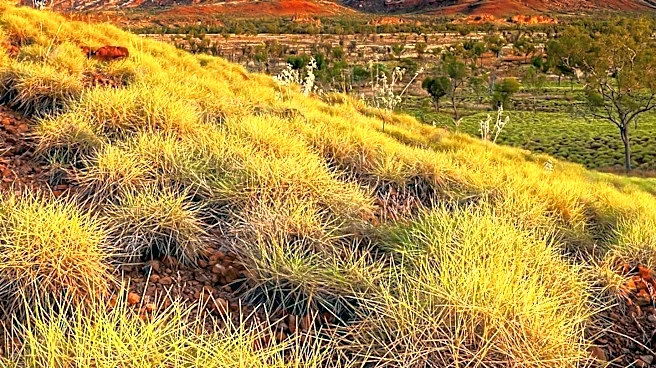
The Uluru-Kata Tjuta National Park is ranked as one of the most significant arid land ecosystems in the world. As a Biosphere Reserve under the UNESCO Man and the Biosphere Program, it is part of an international network dedicated to preserving the world's major ecosystem types. Despite its seemingly stark appearance, the Central Australian environment is a complex ecosystem teeming with life. Plant and animal life in the park have remarkably adapted to extreme conditions, including temperature extremes ranging from 45 °C (113 °F) in summer to -5 °C (23 °F) during winter nights, and an average rainfall of 307.7 millimeters per year.The park's flora represents a large portion of plants found in Central Australia, with many species considered rare and restricted to the park or immediate region. The desert flora's growth and reproduction rely on irregular rainfall, and some plants have adapted to survive or even depend on fire for reproduction. Plants are integral to Tjukurpa, the Anangu's ancestral law and way of life, with ceremonies dedicated to major plant foods. Many plants are associated with ancestral beings, and the collection of plant foods remains a culturally important activity, reinforcing traditional links with country and Tjukurpa. Examples include trees like mulga and centralian bloodwood used for tools, and the witchetty bush, whose roots host witchetty grubs, a traditional food source.
Joint Management and Cultural Education
Since 1985, the Uluru-Kata Tjuta National Park has been managed through a unique 'joint management' process involving the Anangu traditional owners and Parks Australia. This arrangement came about after the Aboriginal Land Rights (Northern Territory) Act was passed in 1976, recognizing Aboriginal law and land rights. The traditional owners were granted freehold title deeds for the park and subsequently leased the land back to the Australian Government for 99 years. This partnership ensures that the park's management respects both its natural environment and its profound cultural heritage.Anangu actively lead walking tours within the park, sharing their knowledge of local flora and fauna, bush foods, and the Aboriginal Dreamtime stories with visitors. This educational aspect is crucial for informing visitors about the deep connection between the Anangu people and their ancestral lands. The park's role as a focal point for acknowledging Australian indigenous culture is further enhanced by these interactions, making it a place where ancient traditions are not only preserved but also actively shared and understood by a global audience.