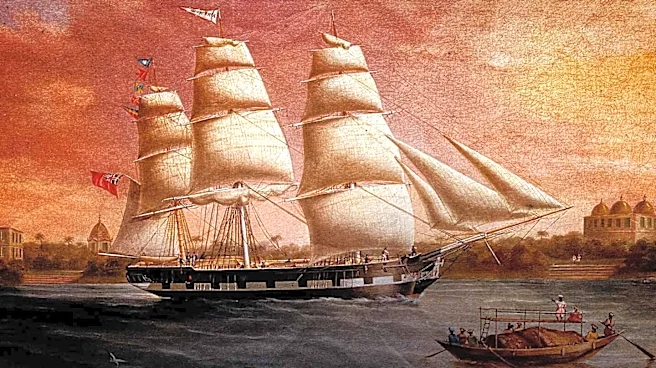








John Forbes, a figure whose entrepreneurial spirit left an indelible mark on Indian commerce, founded Forbes & Company Limited in Mumbai in 1767. Hailing from Aberdeenshire, Scotland, and a descendant of the ancient Lord Forbes of Pitsligo family, Forbes embarked on a journey that would establish one of India's oldest companies. His early career as a purser for the East India Company provided him with invaluable insights into the intricacies of trade,
which he later leveraged to build a diversified business empire. His vision extended beyond simple trade, encompassing shipping, shipbuilding, and banking, thereby laying a significant foundation for future economic development in the region.
Early Life and Arrival in India
Born in 1743, John Forbes's path to becoming a prominent merchant began with his voyage to India in 1764. He traveled aboard the ship Asia, serving as a purser for the East India Company. This role would have exposed him to the vast network of trade routes, commodities, and commercial practices prevalent in the Indian subcontinent and beyond. His initial three years in India were spent as a 'free mariner' and subsequently as a 'free merchant,' terms that denote individuals operating independently of the East India Company's direct employment but still participating in the broader commercial ecosystem.
This period of independent operation allowed Forbes to gain practical experience and establish crucial connections. It was during these formative years that he honed his understanding of the local markets and identified opportunities for establishing his own enterprise. His decision to transition from a company employee to an independent merchant was a pivotal step, demonstrating his ambition and readiness to take on the risks and rewards of entrepreneurship in a foreign land.
Establishing a Commercial Empire
In 1767, John Forbes officially established his business in Mumbai, initially focusing on the trade of Indian cotton. Cotton was a highly sought-after commodity in global markets, and Forbes's entry into this trade proved to be a strategic move. The success of his cotton trading venture provided the capital and reputation necessary for further expansion. The company soon diversified its operations, moving into ship brokerage, which involved facilitating transactions for ships, and even into shipbuilding, a complex and vital industry for maritime trade.
Beyond these ventures, Forbes & Company also entered the banking sector. This expansion into financial services was a natural progression, as banking was essential for supporting large-scale trade and shipping operations. By offering banking services, Forbes created a more integrated and robust business model, capable of financing its own ventures and those of other merchants. This comprehensive approach to commerce solidified John Forbes's legacy as a pioneering entrepreneur who significantly contributed to the economic landscape of 18th-century India.