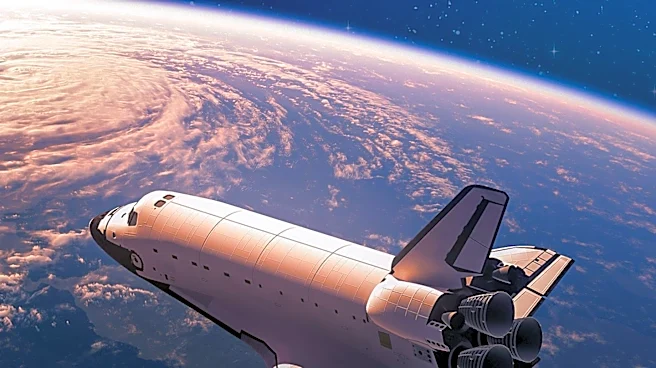





The STS-7 mission, launched on June 18, 1983, was a pivotal moment in NASA's Space Shuttle program. As the seventh Space Shuttle mission and the second for the Space Shuttle Challenger, STS-7 was notable for several reasons, including the deployment of multiple satellites and the participation of Sally Ride, the first American woman in space. This mission marked a significant advancement in space exploration and demonstrated the capabilities of the Space Shuttle as a versatile
platform for scientific research and satellite deployment.
Mission Objectives and Achievements
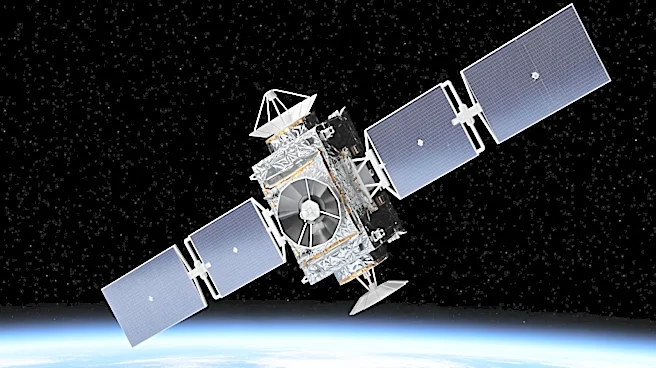
The primary objectives of the STS-7 mission included the deployment of two communications satellites: Anik C2 for Telesat of Canada and Palapa B1 for Indonesia. These satellites were successfully deployed during the first two days of the mission, showcasing the Space Shuttle's ability to facilitate international satellite launches. The mission also carried the first Shuttle pallet satellite (SPAS-1), designed to operate both in the payload bay and as a free-flying satellite.
SPAS-1 was equipped with ten experiments to study the formation of metal alloys in microgravity, the operation of heat pipes, and remote sensing observations. The satellite was deployed by the Remote Manipulator System, also known as the Canadarm, and performed various maneuvers alongside Challenger. This allowed for the first photographs of the Space Shuttle in orbit, taken by a camera mounted on SPAS-1. The successful deployment and retrieval of SPAS-1 demonstrated the effectiveness of the Canadarm and the versatility of the Space Shuttle.
Crew and Contributions
The STS-7 mission featured a crew of five, the largest to fly in a single spacecraft at the time. The crew included Robert Crippen, commander; Frederick Hauck, pilot; and mission specialists Sally Ride, John M. Fabian, and Norman Thagard. Sally Ride's participation as the first American woman in space was a historic milestone, drawing significant media attention and inspiring future generations of women in science and technology.
Norman Thagard conducted medical tests concerning space adaptation syndrome, a bout of nausea frequently experienced by astronauts during the early phase of a space flight. The crew's successful execution of the mission objectives highlighted the collaborative efforts of NASA's Group 8 astronaut class, which had been selected in 1978 to fly the Space Shuttle.
Legacy and Impact
The STS-7 mission lasted 6 days, 2 hours, 23 minutes, and 59 seconds, covering approximately 3,570,000 kilometers during 97 orbits of the Earth. Although the mission was scheduled to land at Kennedy Space Center's Shuttle Landing Facility, unacceptable weather conditions forced a change to Runway 15 at Edwards Air Force Base.
The mission's success reinforced the Space Shuttle's role as a reliable platform for scientific research and satellite deployment. The achievements of STS-7, including the deployment of international satellites and the participation of Sally Ride, contributed to the Space Shuttle program's legacy as a pioneering force in space exploration. The mission's impact continues to be felt in the ongoing efforts to advance space technology and exploration.