





The Library of Congress (LOC) is not only the largest library in the U.S. but also a significant innovator in the field of library science, particularly through its development of the Library of Congress Classification (LCC) system. This system, designed specifically for the purposes and collection of the Library of Congress, has become a cornerstone for organizing knowledge in many large research and academic libraries across the United States. Its
creation marked a departure from earlier methods, including the fixed location system previously used by Thomas Jefferson for his personal collection, which formed the basis of the library's early holdings. The LCC's influence extends beyond its physical shelves, as it provides a structured approach to categorizing vast amounts of information.
The Genesis of LCC: Replacing Jefferson's System
For its initial decades, the Library of Congress operated using a classification system devised by Thomas Jefferson for his own collection. However, as the library grew exponentially, especially after gaining the right to receive two copies of every copyrightable work printed in the United States in 1870, a more robust and scalable system became imperative. The LCC was developed in 1897 by James Hanson, the chief of the Catalog Department, with assistance from Charles Martel. Their goal was to create a classification system tailored to the unique and expanding collection of the Library of Congress, moving away from the limitations of a fixed location system.The LCC was designed with the practical needs of the Library of Congress in mind, rather than purely theoretical epistemological considerations. This pragmatic approach has led to some criticism, as it is essentially enumerative, providing a guide to the books actually held in one library's collections rather than a universal classification of all knowledge. Despite this, its utility for large academic and research libraries has been widely recognized. The system divides all knowledge into twenty-one basic classes, each identified by a single letter of the alphabet. Most of these classes are further subdivided into two and three-level subclasses, with numerical ranges assigned to topics, moving from general to more specific. Unlike the Dewey Decimal Classification, LCC's numerical ranges are strictly hierarchical, corresponding to their level within the outline.
Structure and Components of LCC
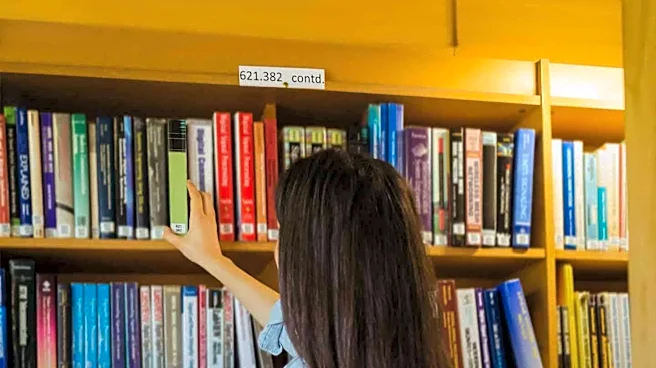
The LCC system is characterized by its enumerative nature, meaning that all classes are listed in officially published schedules. These schedules are regularly updated by the Library of Congress to accommodate new subjects and evolving fields of knowledge. A typical LCC call number is composed of several elements. It begins with the letter(s) representing the broad subject area, followed by numbers that denote more specific topics within that class. For instance, a book on glaciers might fall under the broad class of "Geography, Anthropology, Recreation," then the subclass of "Physical Geography," and finally the topic of "Ice. Glaciers. Ice sheets. Sea ice."Beyond the topical division, LCC call numbers often include one or more Cutter numbers. These are modeled after the unfinished Cutter Expansive Classification index and can take various forms. They might be described in tables within the full LCC schedules for specific types of media, collections, or geographical areas. Additionally, Cutter numbers can be author-specific codes, consisting of a letter and several numbers corresponding to the author's last name. This helps to further distinguish publications and nominally alphabetize volumes within a topic section. The final component of a typical LCC call number is the full publication year, which provides precise identification. Library collections may also add modifiers, such as "Copy 1," to differentiate specific volumes.
LCC's Place in the Library World and Its Criticisms
The Library of Congress Classification, alongside the Dewey Decimal System (DDC), constitutes the two primary classification systems used in U.S. libraries. LCC is particularly favored by large academic and research libraries due to its hospitality, meaning its ability to accommodate new subjects. This is partly facilitated by five classes (I, O, W, X, and Y) that currently lack assigned topics, offering room for future expansion. LCC call numbers also tend to be shorter than those in DDC.However, LCC has faced criticism. Its design around the Library of Congress's existing collections has resulted in an American, European, and Christian bias, particularly evident in earlier developed schedules like D (World History), E and F (History of the Americas), and B (Philosophy, Psychology, Religion). While later schedules, such as K (Law), give more even weight to global law, updating older schedules to address these biases is considered impractical due to the massive workload involved. The LCC also struggles with interdisciplinary topics, as a book can only be shelved in one location, and has been criticized for "othering" marginalized groups, making it difficult to locate works by or about them. Some libraries with specialized collections on minority groups have even opted for alternative classification systems, such as the Harvard–Yenching Classification for Chinese language materials. Despite these criticisms, the LCC remains a dominant force in library organization, with its various schedules maintained and revised by the Library's Policy and Standards Division in conjunction with field experts.