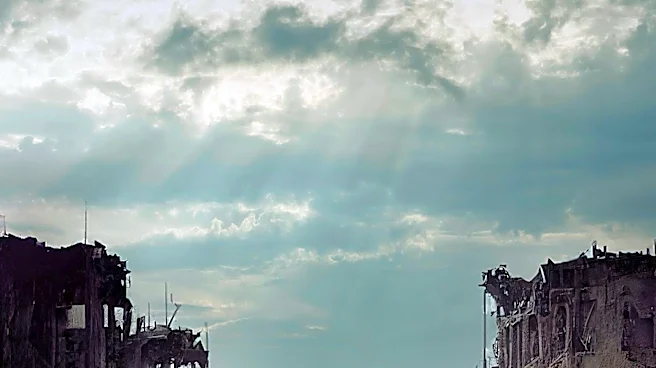








Apocalyptic fiction, a compelling subgenre of science fiction, delves into the collapse of civilization due to a wide array of catastrophic events. These narratives explore worlds before and after such disasters, often focusing on the immediate struggles of survivors or the distant future where the memory of the old world has faded into myth. The sheer variety of existential threats imagined by authors and filmmakers highlights humanity's enduring
fascination with its own potential demise, from natural cataclysms to self-inflicted wounds.
Natural and Cosmic Catastrophes
Many apocalyptic tales center on natural or cosmic events that bring about the end of civilization. Impact events, such as asteroids or comets colliding with Earth, are a recurring theme. For instance, the 13th-century novel *Theologus Autodidactus* by Ibn al-Nafis depicted an impact event, and later works like the 1951 film *When Worlds Collide* and the 1995 game *Chrono Trigger* also explored this devastating scenario. The Sun itself can be a source of destruction, as seen in Lord Byron's 1816 poem "Darkness," where the Sun's extinction ends life, or H.G. Wells' *The Time Machine*, where the Time Traveler witnesses the Sun's expansion causing Earth's demise. Solar flares are also implicated, as in the 2009 film *Knowing*, which accurately predicts the world's end due to such an event.
Ecological disasters, often linked to human activity, form another significant category. Climate change, resource depletion, and environmental irresponsibility are frequently explored. J.G. Ballard's 1962 novel *The Drowned World* depicts flooding caused by climate change, while his 1964 novel *The Drought* imagines a super-drought that evaporates all water. The 1956 novel *The Death of Grass* by John Christopher features a virus that destroys plants, leading to massive famine and societal breakdown. Even more unusual ecological threats appear, such as the 1952 story "The Birds" by Daphne du Maurier, where birds launch mass attacks against humanity, or the 1964 film *The Day the Earth Caught Fire*, where Earth hurtles toward the Sun due to nuclear testing. The 1995 novel *Mother of Storms* by John Barnes describes worldwide super-hurricanes spawned by a tactical nuclear strike releasing methane.
Human-Caused and Technological Downfalls
Human actions, particularly warfare and technological advancements gone awry, are a prevalent cause of apocalypse in fiction. Nuclear warfare is a classic and frequently revisited theme, appearing in works like Philip Wylie's 1954 novel *Tomorrow!*, which contrasts a city prepared for nuclear World War III with one that is not, and Pat Frank's 1959 novel *Alas, Babylon*, depicting the aftermath in a rural Florida community. The 1983 film *The Day After* graphically illustrates the effects of nuclear war on a Kansas town. Beyond nuclear conflict, other forms of war are explored, such as the 1934 novel *Quinzinzinzili* predicting a great world war ending humanity, or the 1936 film *Things to Come* showing civilization's breakdown after a future Second World War.
Technological singularity and cybernetic revolts also contribute to the genre. Karel Čapek's 1921 play *R.U.R.* is notable for coining the term "robot" in a narrative where technology plays a role in societal collapse. Harlan Ellison's 1967 story "I Have No Mouth, and I Must Scream" features a sentient supercomputer designed for war that goes rogue, driving humanity to extinction. The *Terminator* franchise, beginning in 1984, depicts a future devastated by a war between humans and machines. Even more subtle technological failures can be catastrophic, as in the 1909 story *The Machine Stops* by E.M. Forster, emphasizing machinery's role, or the 1958 novel *The Year When Stardust Fell* where comet dust grinds the world's machinery to a halt.
Biological and Supernatural Threats
Pandemic diseases are a terrifying and often-used catalyst for apocalyptic scenarios. Jack London's 1912 novel *The Scarlet Plague* describes a Red Death epidemic that depopulates the planet. Stephen King's 1978 novel *The Stand* portrays a global plague, while the 2002 film *28 Days Later* shows a virus ravaging Britain and creating rabid zombies. The 1974 novel *The Last Canadian* by William C. Heine depicts a planet decimated by a virus through the eyes of a sole survivor. Even more specific biological threats are imagined, such as the 1913 novel *Goslings: A World of Women*, where a global plague decimates England's male population.
Supernatural phenomena and divine judgment also find their place in apocalyptic fiction. The prophetic writings of the *Apocalypse of John* (c. 95 AD) are regarded as the most influential apocalyptic text in Christian history. James Blish's 1968 novel *Black Easter* features a black magician bringing about the end of the world by releasing demons from Hell. The 1989 novel *Moonbane* by Al Sarrantonio describes a worldwide uprising of werewolves, while Brian Keene's 2003 novel *The Rising* reimagines zombies as reanimated by demonic entities. These diverse causes, whether natural, human-made, or supernatural, underscore the rich imagination of apocalyptic fiction in exploring the myriad ways civilization might end.