Sahasrara, often referred to as the Crown Chakra, holds a significant position in various Indian spiritualistic yoga traditions. It is considered the seventh primary chakra, symbolizing a profound level of consciousness and perception. The name itself, derived from Sanskrit, translates to "thousand-petalled," hinting at its intricate and expansive nature. This chakra is typically associated with the color violet and is understood to be the highest
point of spiritual energy within the subtle body system, responsible for perceiving life from an elevated perspective.
Locating the Sahasrara: A Point of Variation
The precise location of the Sahasrara chakra is a subject of some variation across different spiritual texts and traditions. While it is generally placed at the top of the head, specific descriptions differ. Some scriptures, such as the Shiva Samhita, suggest that Sahasrara exists beyond the physical body entirely, indicating a transcendental quality. In contrast, other traditions situate it more concretely at the fontanelle, also known as the brahmarandhra, which is the soft spot on a baby's head that closes as they grow. This location is often considered the point where the soul departs the body at the time of death, underscoring its profound spiritual significance.
Symbolism of the Thousand-Petalled Lotus
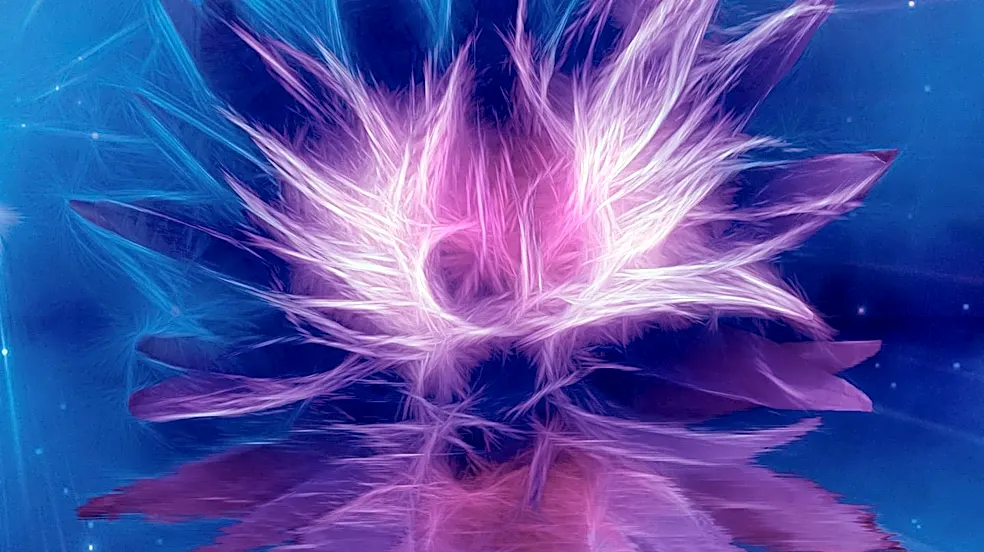
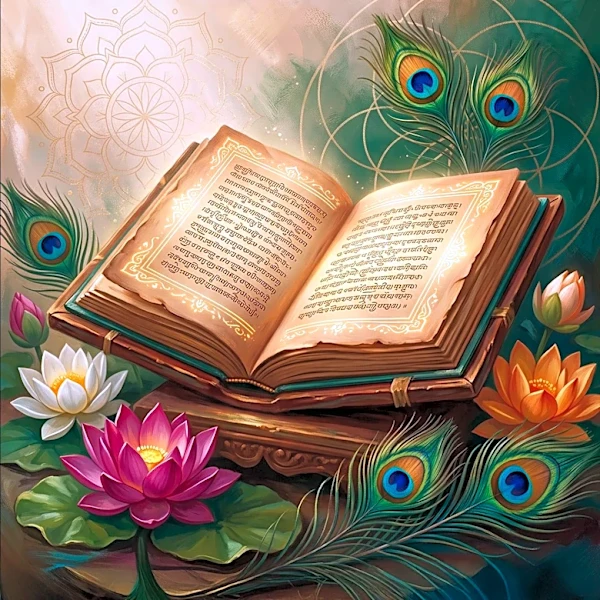
The most iconic symbol for Sahasrara is the lotus flower with 1,000 petals. These petals are not depicted as a single layer but are often described as being arranged in 20 layers, with approximately 50 petals in each layer, creating a rich and complex visual representation. The pericarp, or the central part of the lotus, is typically described as golden. Within this golden pericarp, a circular moon region is inscribed, which contains a luminous triangle. This triangle can be depicted as either upward-pointing or downward-pointing, adding another layer of symbolic interpretation. This intricate imagery emphasizes the chakra's connection to pure consciousness and its role as the emanation point for all other chakras in the system.
Beyond Sound: The Seed Syllable and Silence
In many Tantra traditions, Sahasrara chakra is unique in that it is said to have no specific seed syllable, or bija mantra. Instead, it is associated with silence, reflecting its perceived state as being beyond audible sound. This concept suggests that the ultimate reality represented by Sahasrara transcends the limitations of vocalization. Some interpretations connect this idea to Visarga, which is described as the sound that follows the utterance of a sound, rather than the sound itself. Others, however, link Sahasrara to the sacred syllable Om, similar to the Ajna Chakra, indicating a broader spectrum of understanding regarding its sonic representation.
The Apex of Consciousness: Nirvikalpa Samadhi
Sahasrara is often referred to as the most subtle chakra within the entire system, directly relating to pure consciousness. It is believed that all other chakras emanate from this central point of ultimate awareness. A key concept associated with Sahasrara is the experience of Nirvikalpa Samadhi. This state is achieved when a yogi successfully raises their kundalini, the energy of consciousness, up to this highest chakra. Reaching Sahasrara signifies a profound spiritual awakening, where the individual transcends dualities and experiences a state of complete unity and pure consciousness. This makes Sahasrara the ultimate goal for many practitioners seeking spiritual liberation and enlightenment within these traditions.