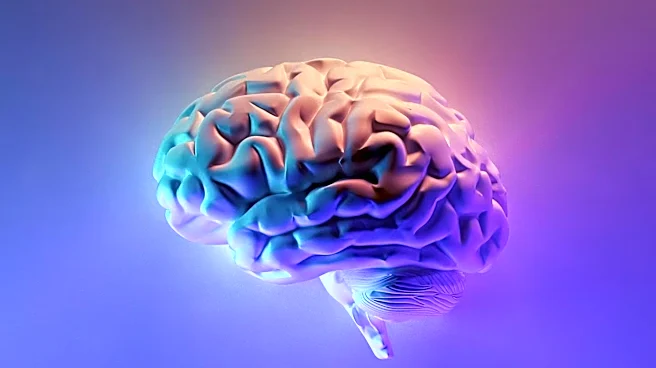








Habits are a fascinating aspect of human behavior, often occurring subconsciously and shaping our daily lives. Understanding how habits form and the science behind them can provide insights into improving or changing these routines. This article delves into the psychological and neurological mechanisms that underpin habit formation, offering a glimpse into the complex processes that govern our habitual actions.
Psychological Foundations of Habit Formation
The concept of habit has been a subject
of interest in psychology for many years. William James, a pioneering psychologist, described habits as the "enormous fly-wheel of society," emphasizing their role in shaping human behavior. Habits are defined as learned behaviors that become automatic responses to specific cues in stable contexts. This automaticity is achieved through repetition, where the link between context and action strengthens over time.
In psychology, habits are often seen as traces of past goal pursuits. They begin with a conscious goal but gradually become automatic as the behavior is repeated in consistent contexts. This process is slow, with research indicating that it can take anywhere from 18 to 254 days for a behavior to reach the asymptote of automaticity. The incremental accrual of information in procedural memory is crucial in this transformation.
Neurological Insights into Habit Formation
Recent neuroscience research has identified specific brain regions involved in habit formation. The basal ganglia, a group of structures in the brain, play a central role in the development and maintenance of habits. These regions are responsible for the automatic execution of habitual behaviors, allowing individuals to perform tasks with little conscious effort.
The habit loop model, consisting of cue, routine, and reward, is widely recognized in behavioral science. The cue triggers the habitual behavior, leading to a craving or desire for the reward. This craving is the motivational force behind the habit, driving individuals to perform the routine to achieve the desired outcome. Over time, the goal becomes less necessary, and the habit becomes more automatic.
Factors Influencing Habit Formation
Several factors can influence the formation and strength of habits. Consistent contexts, such as performing a behavior at the same time or location each day, significantly increase the likelihood of habit formation. Intermittent or uncertain rewards have been found to be particularly effective in promoting habit learning, as they create a sense of anticipation and motivation.
Digital tools, such as mobile apps, have emerged to support habit formation. These tools often use gamification strategies, offering rewards like experience points and gold for completing tasks. However, reviews suggest that many of these tools are poorly designed with respect to theory and fail to support the development of automaticity.