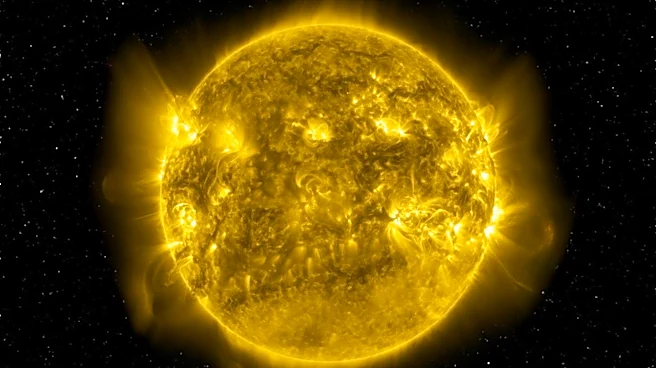









The Ultraviolet Index, or UV index, is more than just a number in a weather report; it's a sophisticated measurement designed to quantify the strength of sunburn-producing UV radiation. This international standard provides a crucial tool for the public to understand and mitigate the health risks associated with excessive sun exposure. Its calculation involves a precise scientific methodology that accounts for various atmospheric and environmental
factors, ensuring an accurate representation of the potential for skin damage.
The Technical Definition of UV Intensity
At its core, the UV index is a number linearly related to the intensity of sunburn-producing UV radiation reaching the Earth's surface. It's important to note that this isn't a simple measure of total irradiance (power per unit area, like W/m2). The complexity arises because UV radiation, particularly the wavelengths most responsible for sunburn, spans a spectrum from 295 to 325 nanometers (nm). Shorter wavelengths within this range are significantly more damaging to human skin but are also largely absorbed by the atmosphere before reaching the surface.
To accurately reflect the sunburn potential, the UV power spectrum (expressed as watts per square meter per nanometer of wavelength) is multiplied by a specific weighting curve. This curve is known as the CIE-standard McKinlay–Diffey erythemal action spectrum. This spectrum assigns different weights to different UV wavelengths based on their capacity to cause erythema, or sunburn. For example, shorter wavelengths receive a much higher weighting due to their increased damaging effect. The result of this multiplication and integration across the relevant spectrum is a weighted figure called the Diffey-weighted UV irradiance (DUV) or the erythemal dose rate. This DUV is then divided by 25 mW/m2 to produce the final UV index, which typically ranges from 0 upwards, though ozone depletion has led to higher values than originally anticipated.
Factors Influencing UV Index Predictions
While the UV index can be directly measured by portable devices, the values reported in weather forecasts are usually predictions derived from complex computer models. These models are designed to account for a multitude of factors that influence the amount of UV radiation reaching the Earth's surface. Key among these are the Sun–Earth distance, which varies throughout the year, and the solar zenith angle, which describes the angle of the sun in the sky and changes with time of day, season, and latitude.
Other critical inputs for these predictive models include the total amount of ozone in the atmosphere, which acts as a natural filter for harmful UV radiation, and the tropospheric aerosol optical depth, representing the amount of particulate matter in the lower atmosphere that can scatter or absorb UV. Elevation also plays a significant role; at higher altitudes, there is less atmosphere to absorb UV, leading to increased intensity. Furthermore, the reflectivity of surfaces like snow and ice can dramatically increase UV exposure, as can cloud transmission, which can either block or, in some cases, scatter UV radiation, potentially increasing localized exposure. These models aim for high accuracy, typically predicting within ±1 UV index unit of what would be measured.
Daily Variation and UVA vs. UVB
When presented on a daily basis, the UV index typically represents the intensity around solar culmination, also known as solar noon. This is the time when the sun reaches its highest point in the sky, usually between 11:30 AM and 12:30 PM, or an hour later in areas observing daylight saving time. This period generally corresponds to the peak UV intensity of the day.
It's also important to distinguish between different types of UV radiation. Sunlight contains UVA (315–400 nm), UVB (280–315 nm), and UVC (100–280 nm). While UVC and most UVB are absorbed by the atmosphere, approximately 95% of the UV reaching Earth's surface is UVA, with about 5% being UVB. The UV index is primarily weighted for sunburn, which is predominantly caused by UVB. Consequently, a low UV index does not necessarily indicate low exposure to UVA, which is a significant contributor to photoaging and deeper skin damage. This distinction highlights that even with a low UV index, prolonged exposure can still have detrimental effects related to UVA radiation.