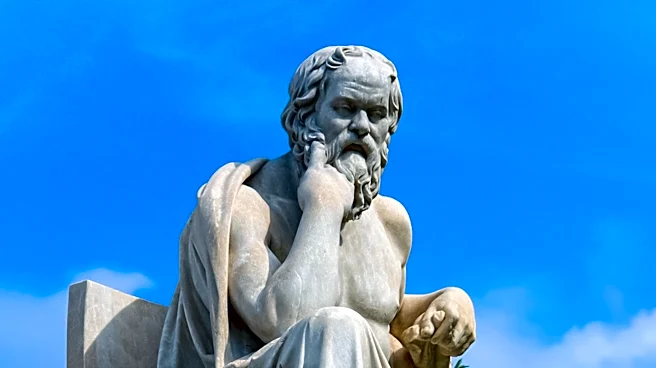










Introspection, the act of examining one's own thoughts and feelings, has been a subject of philosophical inquiry for centuries. Philosophers have long debated its role in understanding consciousness and self-awareness. By exploring the views of key figures like Descartes and Kant, we can gain insight into the philosophical significance of introspection.
Descartes and the Cogito
René Descartes, a pivotal figure in Western philosophy, laid the groundwork for introspection with
his famous dictum, "Cogito, ergo sum" (I think, therefore I am). In his Meditations, Descartes emphasized the importance of reflective consciousness, suggesting that introspection allows individuals to access their own mental states directly. He argued that through introspection, one could achieve certainty about their existence and thoughts, as the act of thinking itself was undeniable proof of being.
Descartes' emphasis on introspection as a means of achieving self-knowledge influenced subsequent philosophical thought. His ideas highlighted the potential of introspection to provide a transparent view of one's own mind, a concept that would be both embraced and challenged by later philosophers.
Kant's Critique of Introspection
Immanuel Kant, another influential philosopher, offered a more critical perspective on introspection. While acknowledging its role in self-awareness, Kant argued that introspection alone could not provide a complete understanding of the mind. He suggested that introspection might offer insights into mental content, such as feelings, but not the processes underlying them.
Kant's critique emphasized the limitations of introspection, pointing out that it could not capture unconscious mental states. He believed that introspection, if understood too narrowly, could lead to misconceptions about the nature of consciousness. Despite these criticisms, Kant recognized the value of introspection in philosophical inquiry, particularly in understanding the subjective experience of the self.
Modern Philosophical Views
In contemporary philosophy, introspection continues to be a topic of interest and debate. Some philosophers argue that introspection provides a unique form of self-knowledge, distinct from other sources like perception or memory. Others, however, caution against over-reliance on introspection, noting its potential for error and bias.
The ongoing philosophical exploration of introspection reflects its enduring significance in understanding the human mind. By examining the perspectives of historical figures and modern thinkers, we can appreciate the complexities and challenges of introspection as a tool for self-discovery. As philosophy continues to evolve, introspection remains a vital area of inquiry, offering insights into the nature of consciousness and the self.