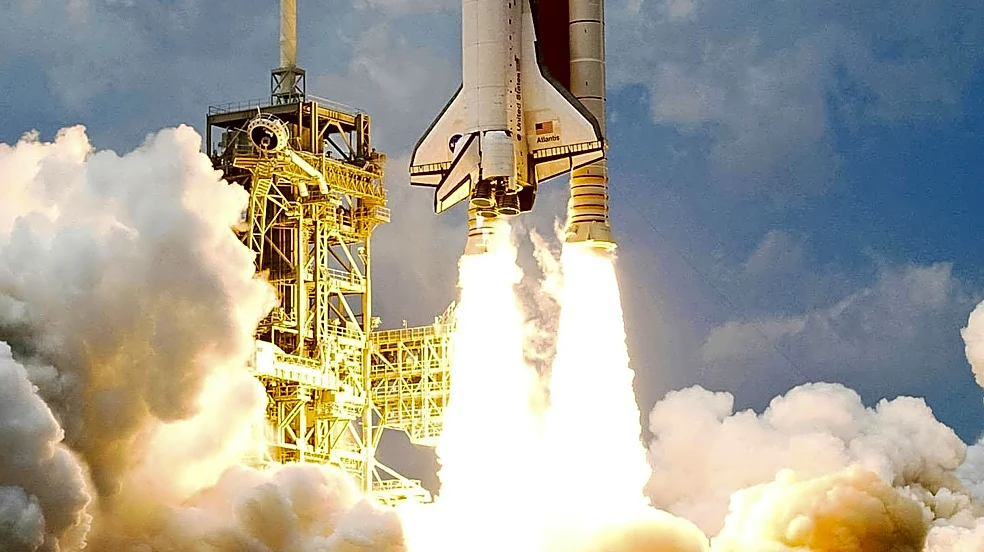

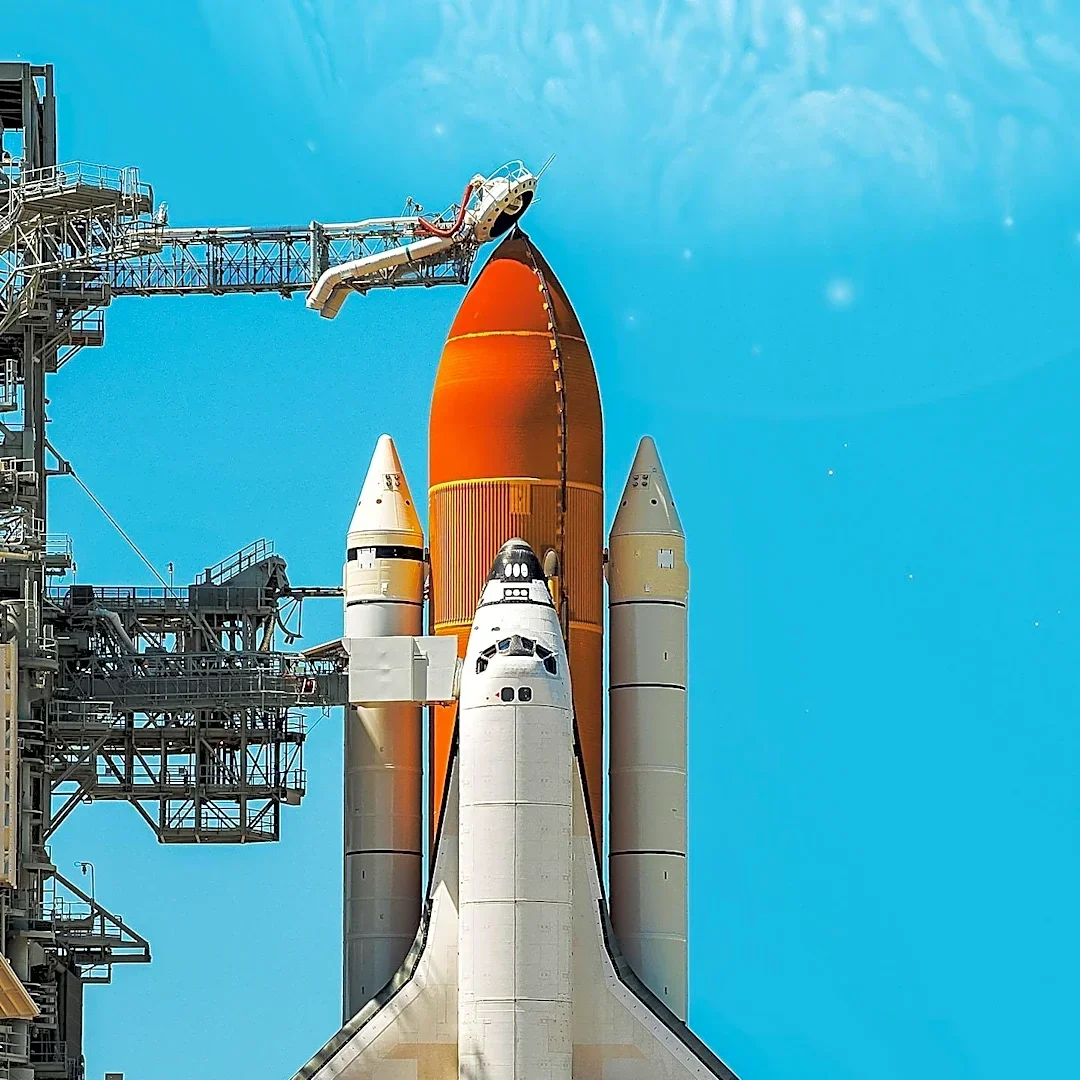



Space Shuttle Atlantis embarked on its fifth mission, STS-34, on October 18, 1989, marking the 31st overall Space Shuttle mission. This flight was particularly significant as its primary objective was to deploy the Galileo spacecraft, destined for Jupiter. The mission, which lasted nearly five days, showcased the capabilities of the Space Shuttle program in launching interplanetary probes, a feat only achieved once before by a shuttle. The crew, consisting
of Donald E. Williams, Michael J. McCulley, Shannon Lucid, Franklin Chang-Díaz, and Ellen S. Baker, navigated through various challenges to ensure the successful start of Galileo's long journey.
Launch Preparations and Delays
The launch of STS-34 from Launch Complex 39B at Kennedy Space Center was not without its hurdles. The mission was initially targeted for October 12, 1989, a date chosen because it fell within a 41-day window when the planets were optimally aligned for a direct flight to Jupiter. However, technical issues led to the first delay. A faulty main engine controller for Space Shuttle Main Engine No. 2 required replacement, pushing the liftoff to October 17.
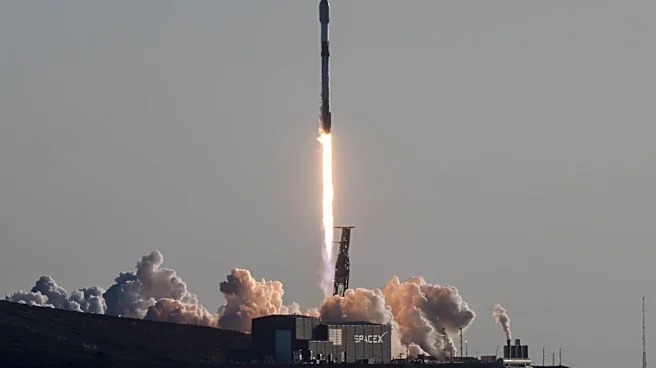
Further delays occurred due to weather conditions. On October 17, rain showers within 20 miles of Kennedy Space Center's Shuttle Landing Facility violated the launch commit criteria for a Return To Launch Site (RTLS) landing, leading to another postponement. The countdown on October 18 was also briefly held at T-minus 5 minutes for 3 minutes and 40 seconds. This pause was necessary to update the onboard computer for a change in the Transoceanic Abort Landing (TAL) site, which was switched from Ben Guerir Air Base in Morocco to Zaragoza Air Base in Spain due to heavy rain at the Moroccan site. Despite these delays, Atlantis successfully lifted off at 12:53:40 EDT on October 18, 1989.
Deploying Galileo: A Journey to the Outer Solar System
The core of the STS-34 mission was the deployment of the Galileo spacecraft, along with its attached Inertial Upper Stage (IUS) booster. This deployment was executed precisely as scheduled at 7:15 PM EDT on October 18, 1989, just over six hours after launch. The IUS booster then successfully propelled Galileo towards Venus, initiating the first leg of its six-year voyage to Jupiter. Galileo was injected into a Venus transfer orbit at 8:20 PM EDT and separated from the IUS 47 minutes later.
Galileo's ambitious trajectory required a triple gravity assist maneuver, utilizing Venus, Earth, and then Earth again, to gain the necessary momentum to travel from the inner Solar System to Jupiter. This complex path also provided opportunities for the spacecraft to observe asteroids 951 Gaspra and 243 Ida. The spacecraft itself comprised two main components: an orbiter designed to study Jupiter and its four largest moons for eight years, and a probe intended to descend into Jupiter's atmosphere for direct sampling before succumbing to the gas giant's extreme heat and pressure. This mission marked only the second time a Space Shuttle had deployed a planetary spacecraft, following STS-30's deployment of the Magellan spacecraft.
In-Flight Anomalies and International Connections
While the mission was largely successful, several minor anomalies were noted during the flight, though none significantly impacted the overall mission objectives. On October 22, 1989, an alarm alerted the crew when the gas generator fuel pump system A heaters on Auxiliary Power Unit (APU) 2 failed to recycle at their upper limits. Other minor issues included problems with the Flash Evaporator System, which is used for cooling the orbiter, and the cryogenic oxygen manifold valve 2, which remained closed for the duration of the mission. Even a Hasselblad camera jammed twice, necessitating the use of a spare.
Astronaut Franklin Chang-Díaz, a native of Costa Rica, described his second flight as more "subdued." He also mentioned that the flight was almost aborted in orbit three times due to malfunctions, but continued because landing Atlantis, with Galileo and its radioisotope thermoelectric generator, at an airport in Senegal could have caused an "international incident." The deployment of Galileo itself was a critical moment, with Chang-Díaz highlighting a tight six-second window for success. The mission also fostered international goodwill, as Costa Rican President Dr. Óscar Arias spoke with Chang-Díaz in Spanish via a special telephone linkup on October 21, praising him for elevating the name of Costa Rica and Latin America. Chang-Díaz also used this opportunity to explain the mission's objectives in Spanish to listeners in Costa Rica. Due to high winds predicted at the original landing time, reentry was moved two orbits earlier, with Atlantis landing on Runway 23 at Edwards Air Force Base in California on October 23, 1989, concluding its nearly five-day journey.