


The creation of *Mary Poppins* was a significant undertaking for Walt Disney Productions, culminating in a film that would become a beloved classic. The movie, released on August 27, 1964, was a United States production, filmed in English, and had a substantial running time of 139 minutes. Its development involved a considerable budget, estimated to be between $4.4 million and $6 million, a testament to the ambitious scope of the project, which blended
live-action with innovative animation sequences and a rich musical score. This investment paid off handsomely, as the film went on to achieve immense critical and commercial success.
The Creative Vision and Production Details
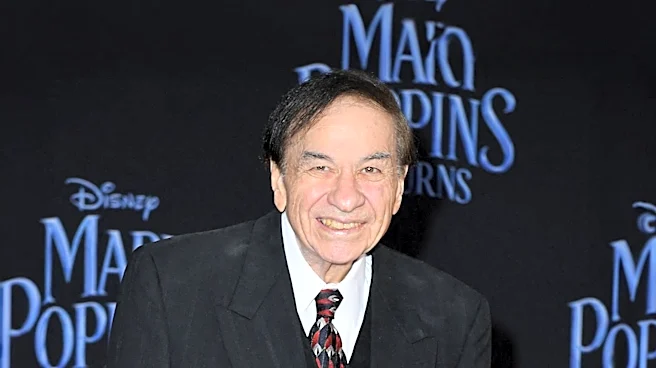
The musical development for *Mary Poppins* began much earlier than its release, with Walt Disney first attempting to acquire the film rights to P. L. Travers' books in the early 1940s. He had promised his daughters, who were fans of the first book, that he would adapt it into a movie. After nearly two decades of negotiations, Disney finally secured the rights in 1961. Following this, Richard M. Sherman and Robert B. Sherman, known as the Sherman Brothers, were assigned to compose the score, building on their success with previous Disney projects. The process of planning the film and composing the songs alone took about two years, highlighting the meticulous attention to detail involved.
Crafting the Soundtrack: A Collaborative Effort
The development of the soundtrack was deeply intertwined with Disney's creative ambitions and the Sherman Brothers' musical ingenuity. They were tasked not only with crafting original songs but also with integrating them seamlessly into the structure of a live-action film that combined fantasy, musical theater, and animation. This marked a significant turning point for the studio's musical output, with Walt Disney personally overseeing key aspects of the film and its musical narrative. The creative process involved extensive collaboration between the composers, director Robert Stevenson, and Walt Disney, who held story meetings with the Shermans to discuss how music could advance character and plot. These meetings, later released as part of expanded soundtrack editions, reveal a deliberate intention to use songs as storytelling tools rather than mere interludes. The goal was to ensure that each musical number was motivated by the characters and their situations, a strategy that became central to Disney’s approach to musical filmmaking.
Orchestration and Recording
The orchestration of the soundtrack was handled by Irwin Kostal, who had previously worked on *West Side Story*, bringing a Broadway sensibility to the arrangements. Kostal's work helped translate the Shermans’ compositions into fully realized orchestral pieces that balanced traditional musical theater structures with cinematic dynamics. The music was recorded with the participation of the film’s principal cast, including Julie Andrews, Dick Van Dyke, David Tomlinson, and Glynis Johns, all of whom performed their own vocals. The recording sessions took place at Walt Disney Studios and were produced in both mono and stereo versions, catering to the audio standards of the era. The soundtrack album was designed to mirror the film experience as closely as possible, with the songs sequenced in a narrative order and accompanied by spoken introductions in some later editions. Over time, the original sessions and demo recordings were preserved, later surfacing in anniversary editions that showcased the early developmental stages of the music and the working relationship between Walt Disney and the Shermans.